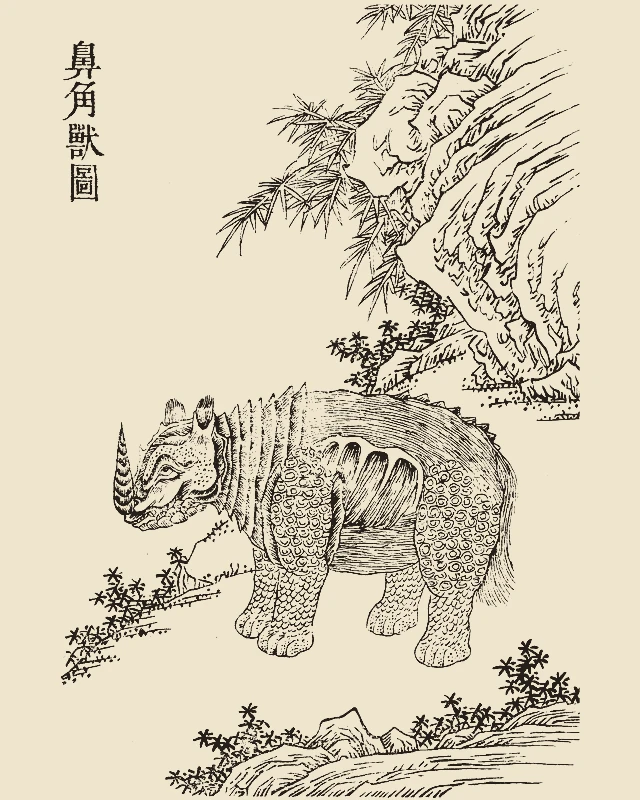
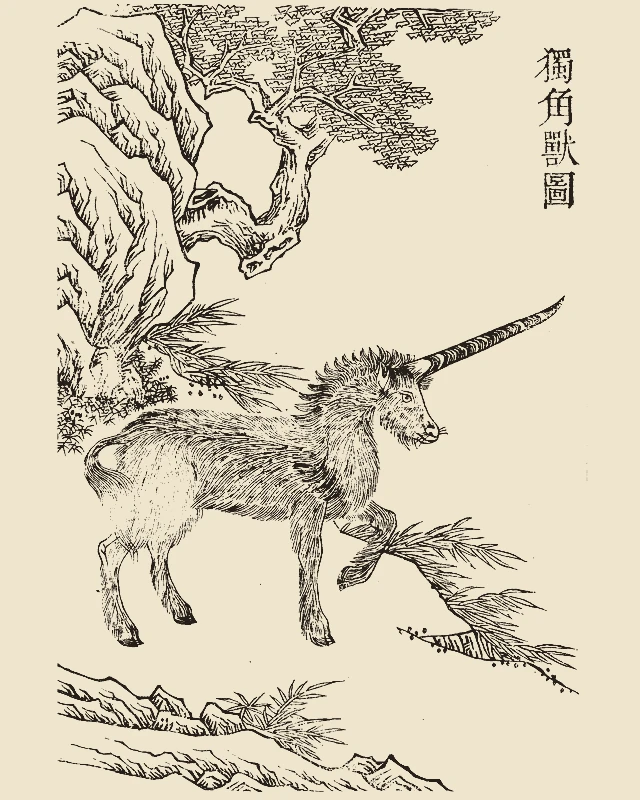
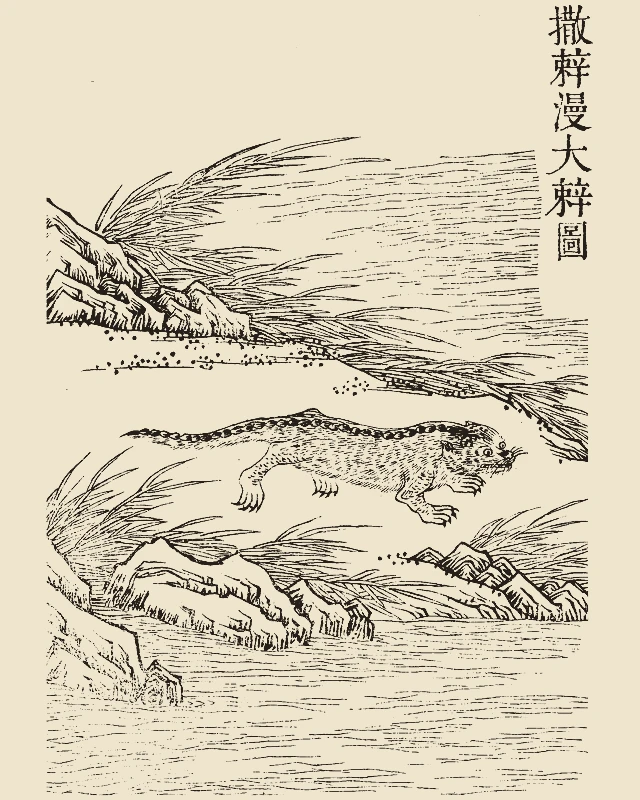
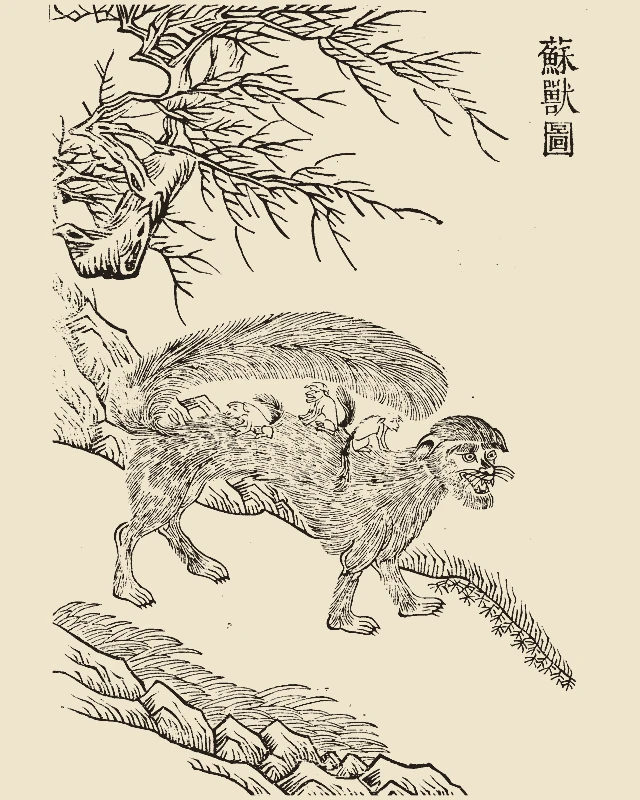
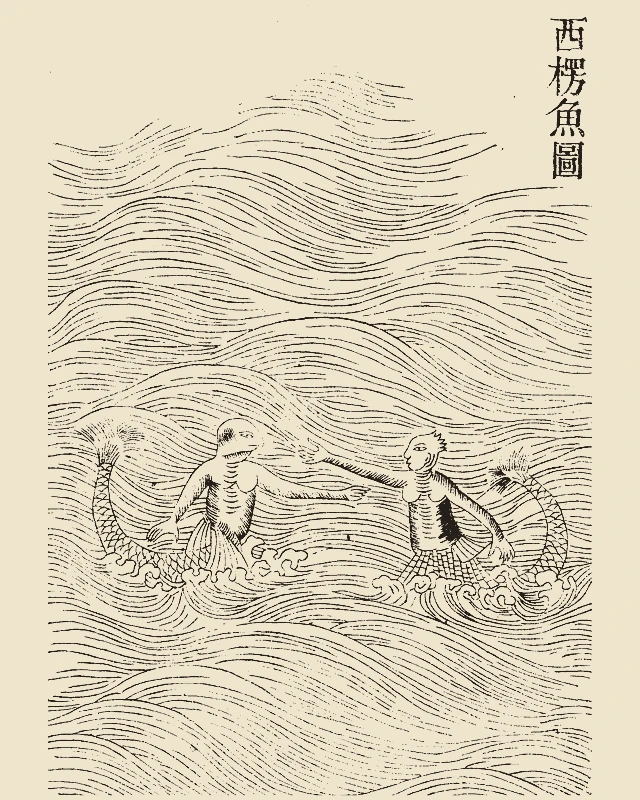
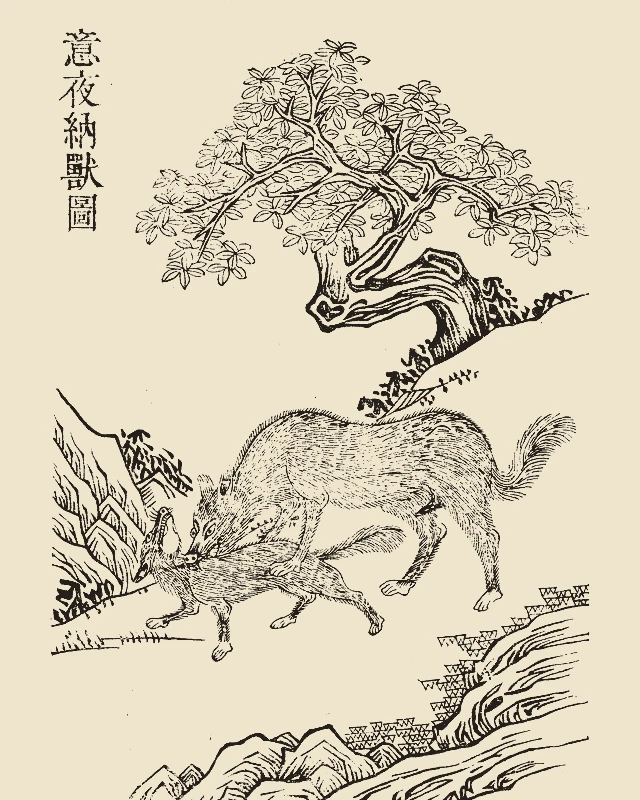
In 1674, Flemish Jesuit Ferdinand Verbiest (南懷仁) presented the Kunyu Tushuo (坤輿圖説) to the Kangxi Emperor, introducing Renaissance European natural history, African wildlife, and South American fauna to late imperial China. The court subsequently incorporated these six extraordinary accounts—the armored Cambay rhinoceros (Bijiaoshou), the unicorn (Dujiaoshou), the fire salamander (Salamandala), the protective Chilean beast (Sushou), the Siren or mermaid (Xirenyu), and the African spotted hyena (Yiyenashou)—into the Gujin Tushu Jicheng with imperial woodblock illustrations.1674年(清康熙十三年),比利时耶稣会士南怀仁向康熙帝呈进《坤舆图说》,将欧洲文艺复兴时期的动物学见闻、非洲与美洲大陆异兽译介引入清代宫廷。清代大型类书《古今图书集成·禽虫典》随后将其全套刻本版画与原文收录入库。此六种生灵——刚霸亚鼻角兽(大独角犀)、印度独角兽(Unicorn)、德意志撒辣漫大辣(火蠑螈)、智勒苏兽、大东洋西楞鱼(海妖塞壬)与利未亚意夜纳兽(斑鬣狗)——见证了早期中西地理知识的碰撞。
Because these accounts originate in European natural history and maritime folklore rather than native pre-Qin Chinese supernatural traditions, they are excluded from the main bestiary lists, random draws, and related recommendations, and are archived here as a dedicated historical collection.因其原型源自西洋动物志与航海神话,而非中国本土山海经与志怪体系,本站已将它们自山海经默认列表、随机抽怪及相关推荐主池中移出混排,独立归档于本专题。