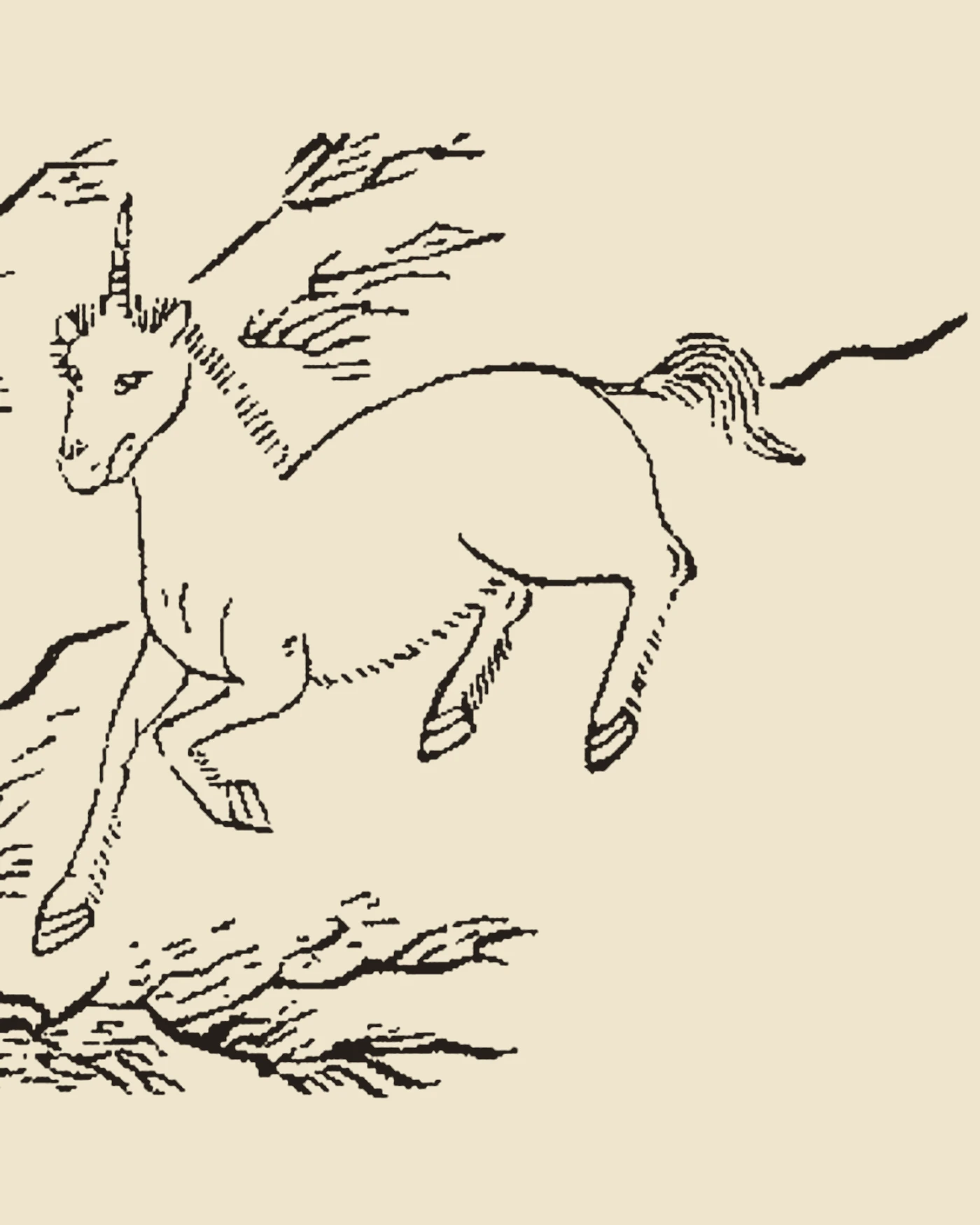
An auspicious single-horned white equine of Mount Duntou with an ox tail and an infant-like shouting voice.《山海经》记载敦头之山旄水之中多𩣡马:牛尾而白身,一角,其音如呼。
Horn角
Single spiral horn额顶直立神角
一角
Coat体
Snowy equine coat素雪骏马之躯
白身
Tail尾
Tufted ox tail修长如牛之尾
牛尾
Voice鸣
Human shouting roar长啸声若人呼
其音如呼
敦頭之山,其上多金玉,無草木。旄水出焉,而東流注于印澤。其中多𩣡馬,牛尾而白身,一角,其音如呼
The Maoshui River emerges from Mount Duntou and flows east into Lake Yinze. In it are many Xima, with an ox tail, white body, one horn, and a voice like shouting.
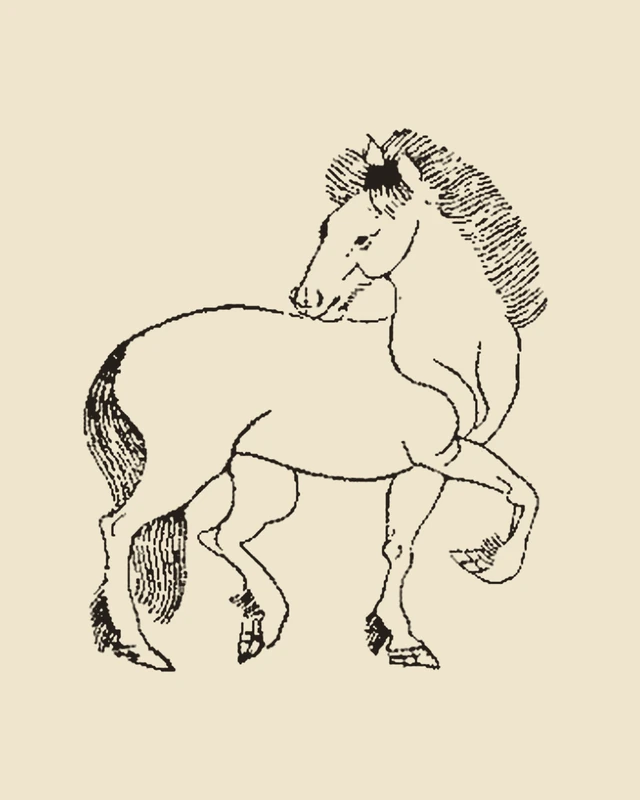
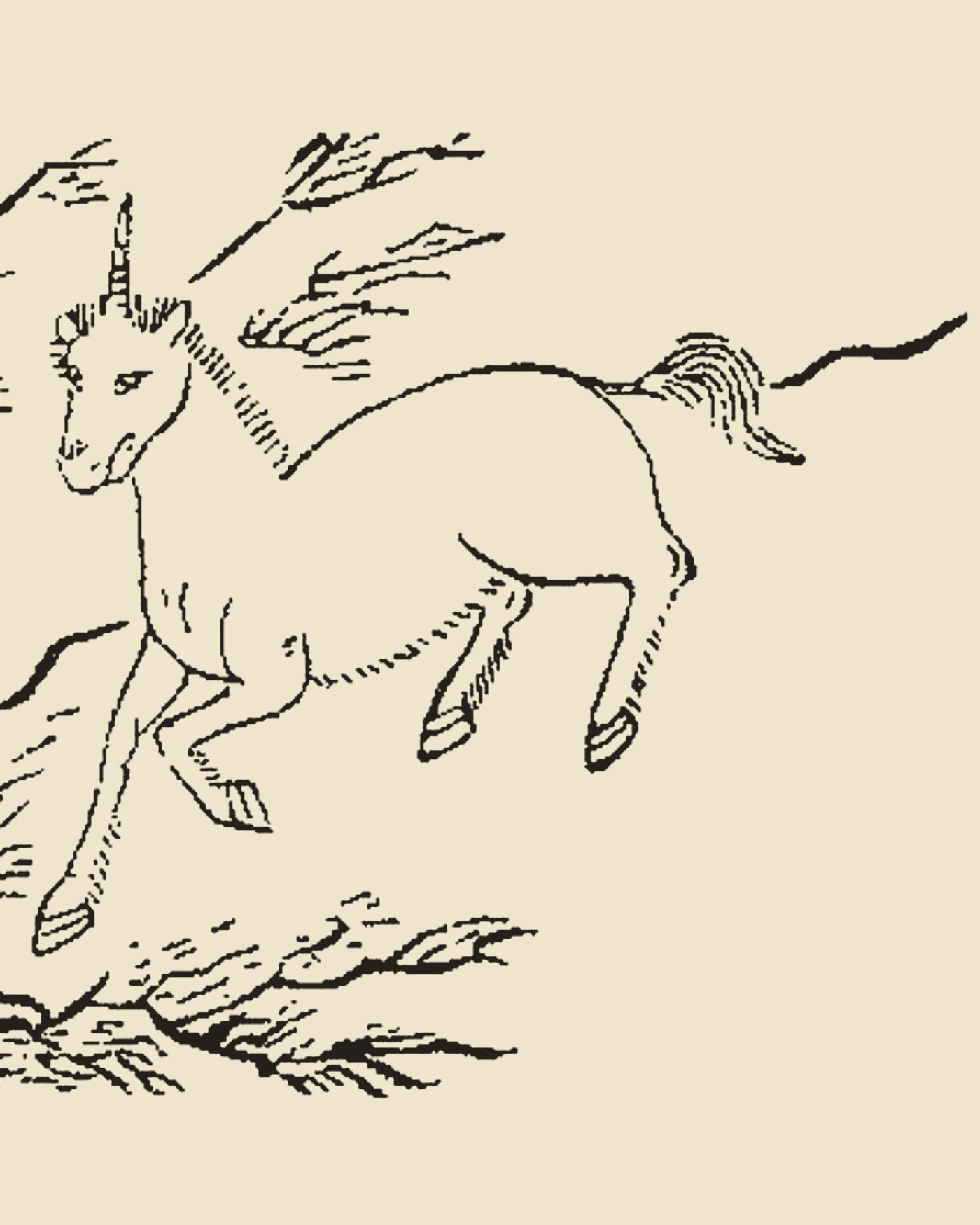
Xīmǎ 𩣡馬, the single-horned white equine of Mount Duntou. Hu Wenhuan 胡文煥, Newly Carved Illustrated Shan Hai Jing 新刻山海經圖, woodblock print, 1593明·胡文焕刻《新刻山海经图》“𩣡马”,万历二十一年(1593)刻本 · Public domain公有领域Other editions & copies其他刊本源流Same design also in: 同一图样亦见于:Hu Wenhuan 胡文煥 (ed.)胡文焕 编, 15931593年
Highlighted words: anatomy part · feature · form type — tap to jump标色词:形态部位 · 特征 · 形态类别,点击可跳转
Three hundred and fifty li further north is Mount Duntou, where there is much gold and jade but no plants. The Maoshui River emerges here and flows east into Lake Yinze. In it are many Xima, with an ox tail, white body, one horn, and a voice like shouting.
山海經·北山經 · Shan Hai Jing · Classic of the Northern Mountains · Wikisource
敦頭之山,其上多金玉,無草木。旄水出焉,而東流注于印澤。其中多𩣡馬,牛尾而白身,一角,其音如呼。
Three hundred and fifty li further north is Mount Duntou, where there is much gold and jade but no plants. The Maoshui River emerges here and flows east into Lake Yinze. In it are many Xima, with an ox tail, white body, one horn, and a voice like shouting.
Comparing the Books典籍对比
Unlike the winged Tianma of Mount Macheng or the striped Lushu, the Xima is explicitly characterized by its singular horn and freshwater river habitat.
The story来历与故事
The Xima is an auspicious unicorn beast of Mount Duntou in the Shan Hai Jing, shaped like a snow-white horse with a tufted ox tail and a single spiral horn upon its brow.
The Single-Horned Equine of Mount Duntou敦头之山与一角𩣡马
Xima is an auspicious white unicorn beast living in the Maoshui River.敦头之山多金玉无草木,山间旄水之中多有白身一角、音如人呼之神异𩣡马。
Three hundred and fifty li north across the northern mountainous frontier stands Mount Duntou, a majestic highland devoid of trees and grasses yet abundantly laden with native gold and fine jade.
Emerging from these mineral-rich crags is the Maoshui River, cascading eastward across wild riverbeds to empty into Lake Yinze. Inhabiting these foaming freshwater shallows is a noble aquatic equine named Xima.
Ancient travelers recorded that Xima possessed a pristine white equine body paired with a tufted ox tail and a single horn upon its crown. When startled amidst river shallows, its echoing cry resounded like human shouting.
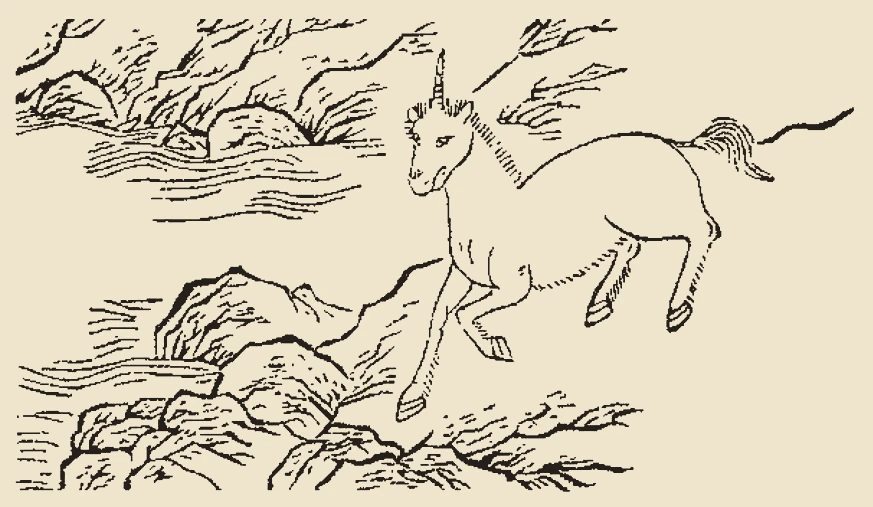
Full woodblock plate of the Xima leaping across mountain waters. Hu Wenhuan, Newly Carved Illustrated Shan Hai Jing, 1593明万历胡文焕刻《新刻山海经图》“𩣡马”完整横幅版面(1593)
Classical Depictions in Ming Dynasty Woodblock Prints明代刻本白描神姿
Ming woodblock prints portray Xima standing alert with a single upright horn.明万历胡文焕刻本生动刻画𩣡马昂首独角、牛尾曳地、踏浪长嘶之雄健威仪。
Throughout dynastic bestiaries, Chinese scholars distinguished Xima as a prime freshwater counterpart to celestial horned beasts like the Qilin and Pegasus-like Tianma.
In the 1593 Illustrated Shan Hai Jing woodblock collection compiled by Hu Wenhuan, Xima is captured standing poised on stony banks, showcasing its upright horn, flowing mane, and tufted tail.
The woodcut features an inscription cartouche inscribed with its classical name, establishing a canonical visual blueprint referenced in Qing encyclopedic gazetteers.
Legacy and Symbolism文学遗响与瑞兽象征
In early Chinese cosmological thought, single-horned equines were regarded as sacred harbingers of moral purity and unblemished righteousness.
敦頭之山,其上多金玉,無草木。旄水出焉,而東流注于印澤。其中多𩣡馬,牛尾而白身,一角,其音如呼。
Three hundred and fifty li further north is Mount Duntou, where there is much gold and jade but no plants. The Maoshui River emerges here and flows east into Lake Yinze. In it are many Xima, with an ox tail, white body, one horn, and a voice like shouting.
— 山海經·北山經 · Shan Hai Jing
The synthesis of equine swiftness, ox-like resilience, and the singular unicorn horn established Xima as an enduring symbol of untamed wilderness thriving along northern watercourses.
Today, cultural scholars and artists celebrate Xima as a magnificent testament to ancient Chinese unicorn mythology, demonstrating how classical geographers harmonized natural quadrupeds into awe-inspiring heraldic marvels.
Record档案
Record Card档案卡
Type
Auspicious Equine (single-horned white water horse of Mount Duntou)
Also known as
Xīmǎ 𩣡馬; Duntou Xima (敦頭之𩣡馬); Unicorn Horse
Habitat
The Maoshui River (旄水) of Mount Duntou, flowing east into Lake Yinze
Nature
Auspicious freshwater unicorn dwelling in gold-bearing mountain streams
What kind of beast is the Xima in Chinese mythology?
The Xima is a mythical single-horned equine recorded in the Classic of the Northern Mountains of the Shan Hai Jing. It has a snow-white horse body, an ox tail, a single horn, and a voice like a human shout.
Where does the Xima live according to classical texts?
According to the Shan Hai Jing, the Xima dwells in the Maoshui River on Mount Duntou, a northern mountain rich in gold and jade whose waters flow east into Lake Yinze.
How is the Xima depicted in historical woodblock prints?
In Hu Wenhuan's 1593 Illustrated Shan Hai Jing, the Xima is drawn standing upright upon craggy river stones, displaying a prominent spiral horn upon its brow, muscular white flanks, and an arched ox tail.