Xiāoyáng

梟陽Xiaoyang

A grinning ape-like humanoid spirit with human facial features, dense dark hair, and backward-facing heels grasping a bamboo tube.《山海经·海内南经》记载枭阳国人面长唇、黑身有毛、反踵,见人笑亦笑,左手操管,为山海经中最具怪诞意趣之山野异灵。

Face面

Human face with long lips面容如人且阔嘴含笑

人面長脣

Coat身

Dense black hairy coat通體披覆漆黑密厚毛髮

黑身有毛

Left Hand操管

Left hand grasping a bamboo tube左臂緊握青綠竹筒

左手操管

Legs踵

Backward-facing heels倒向生長之靈活腳跟

反踵

Woodblock print of Xiaoyang, a tall hairy humanoid with human face, grasping a bamboo tube with backward heels人面長脣Human face人面長脣露笑人面長脣Human face人面長脣露笑黑身有毛Dense hairy coat通體黑身密毛黑身有毛Dense hairy coat通體黑身密毛左手操管Grasping bamboo tube左臂緊握青管左手操管Grasping bamboo tube左臂緊握青管反踵之足Backward heels反踵倒向靈足反踵之足Backward heels反踵倒向靈足
梟陽國在北朐之西,其為人人面長脣,黑身有毛,反踵,見人笑亦笑;左手操管

The state of Xiaoyang lies west of Beiqu. Its people have human faces with long lips, black bodies covered in hair, and backward-facing heels. When they see a person laugh, they laugh too; in their left hand they grasp a bamboo tube.

山海經·海內南經
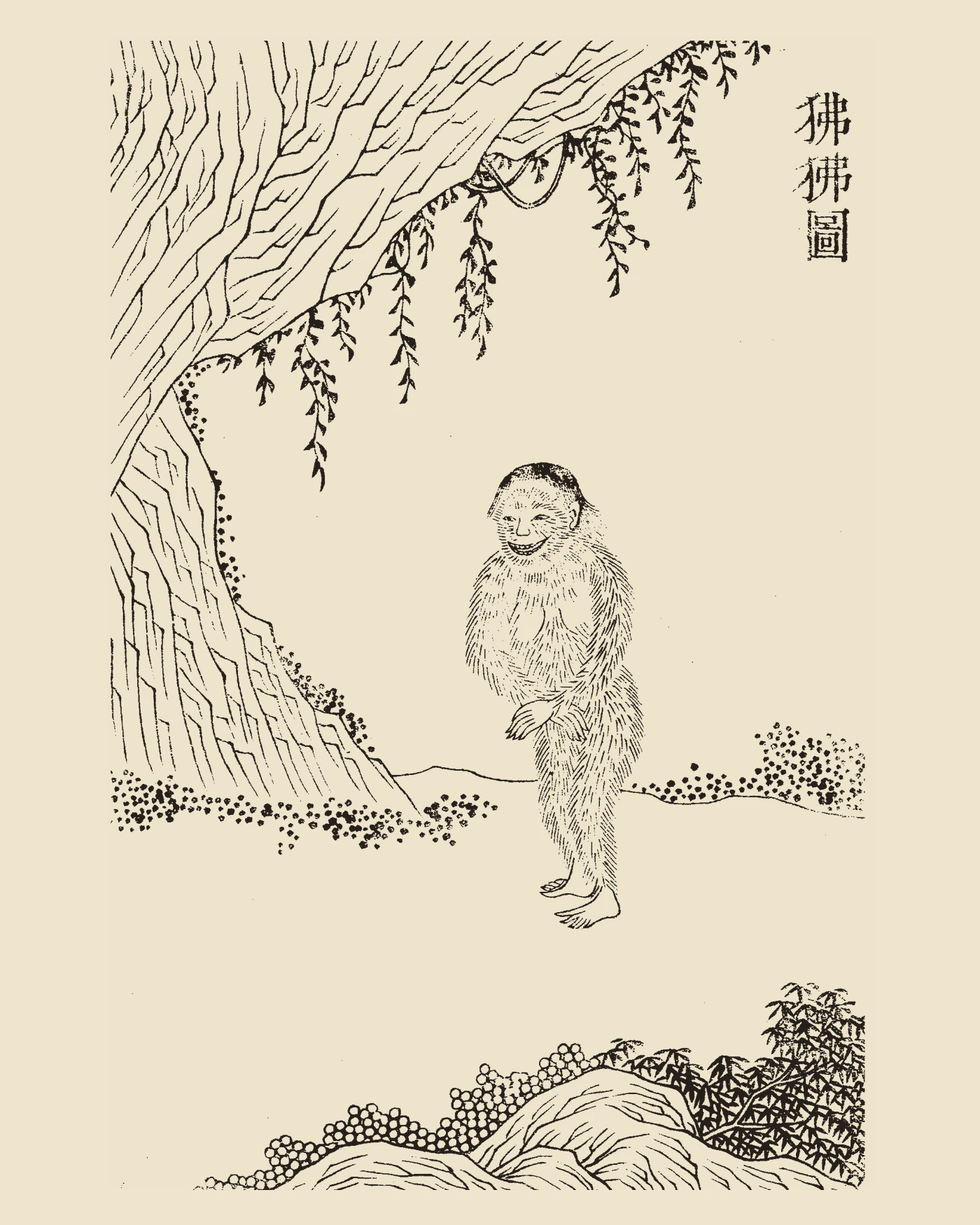
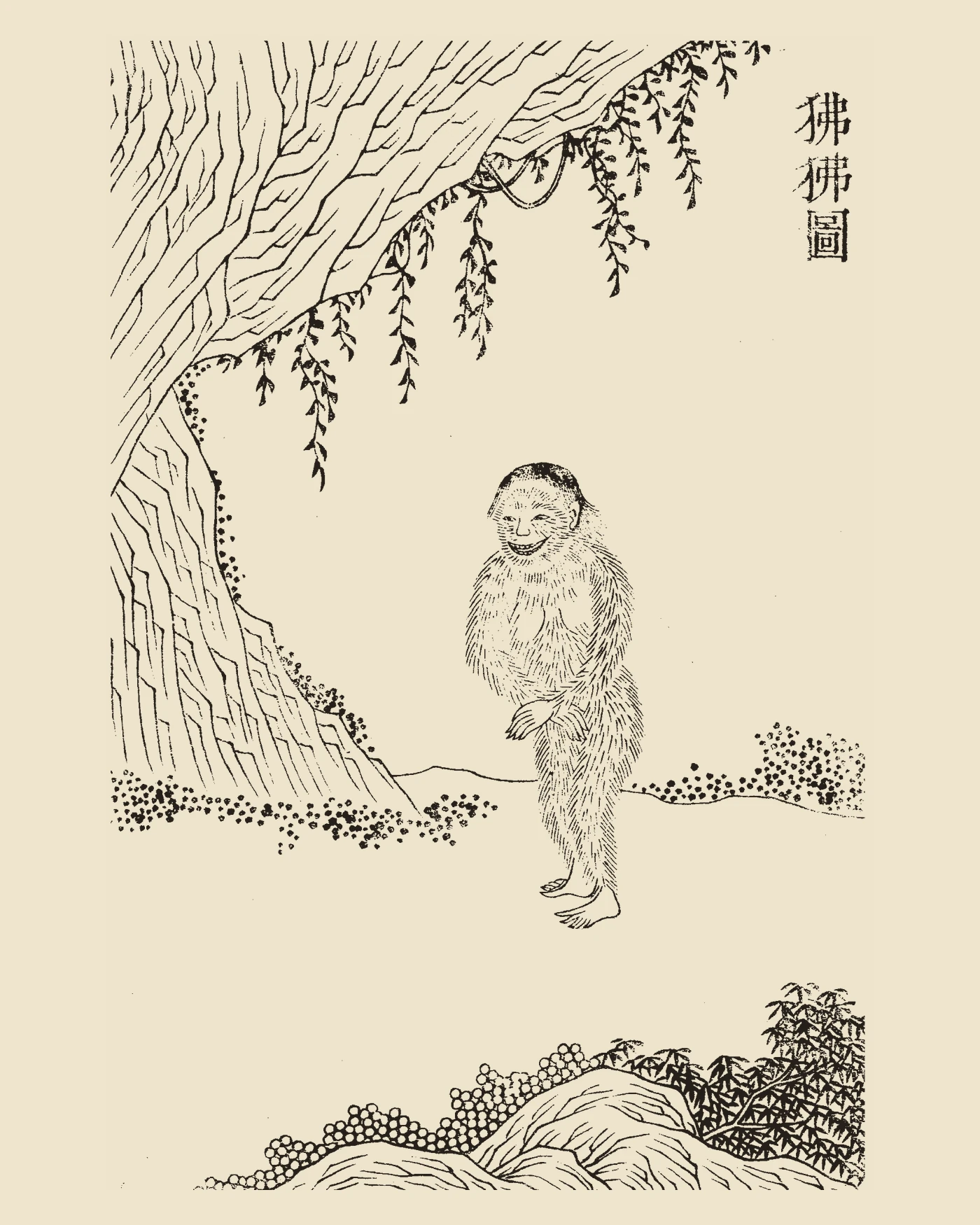
Xiāoyáng 梟陽, the smiling hairy mountain humanoid grasping a tube. Gujin Tushu Jicheng 古今圖書集成, Animal Kingdom pic208, woodblock print, 1726清雍正銅活字版《古今圖書集成·禽蟲典》“狒狒圖”(1726) · Public domain公有领域

Highlighted words: anatomy part · feature · form type — tap to jump标色词:形态部位 · 特征 · 形态类别,点击可跳转

The texts原文

Original Text & Translation原文与译文

山海經·海內南經 · Classic of Mountains and Seas · Wikisource

梟陽國在北朐之西,其為人人面長脣,黑身有毛,反踵,見人笑亦笑;左手操管。
The state of Xiaoyang lies west of Beiqu. Its people have human faces with long lips, black bodies covered in hair, and backward-facing heels. When they see a person laugh, they laugh too; in their left hand they grasp a bamboo tube.

山海經·海內南經 · Classic of Mountains and Seas · Classic of Regions Within the Seas: South · Wikisource

梟陽國在北朐之西,其為人人面長脣,黑身有毛,反踵,見人笑亦笑;左手操管。
The state of Xiaoyang lies west of Beiqu. Its people have human faces with long lips, black bodies covered in hair, and backward-facing heels. When they see a person laugh, they laugh too; in their left hand they grasp a bamboo tube.

Comparing the Books典籍对比

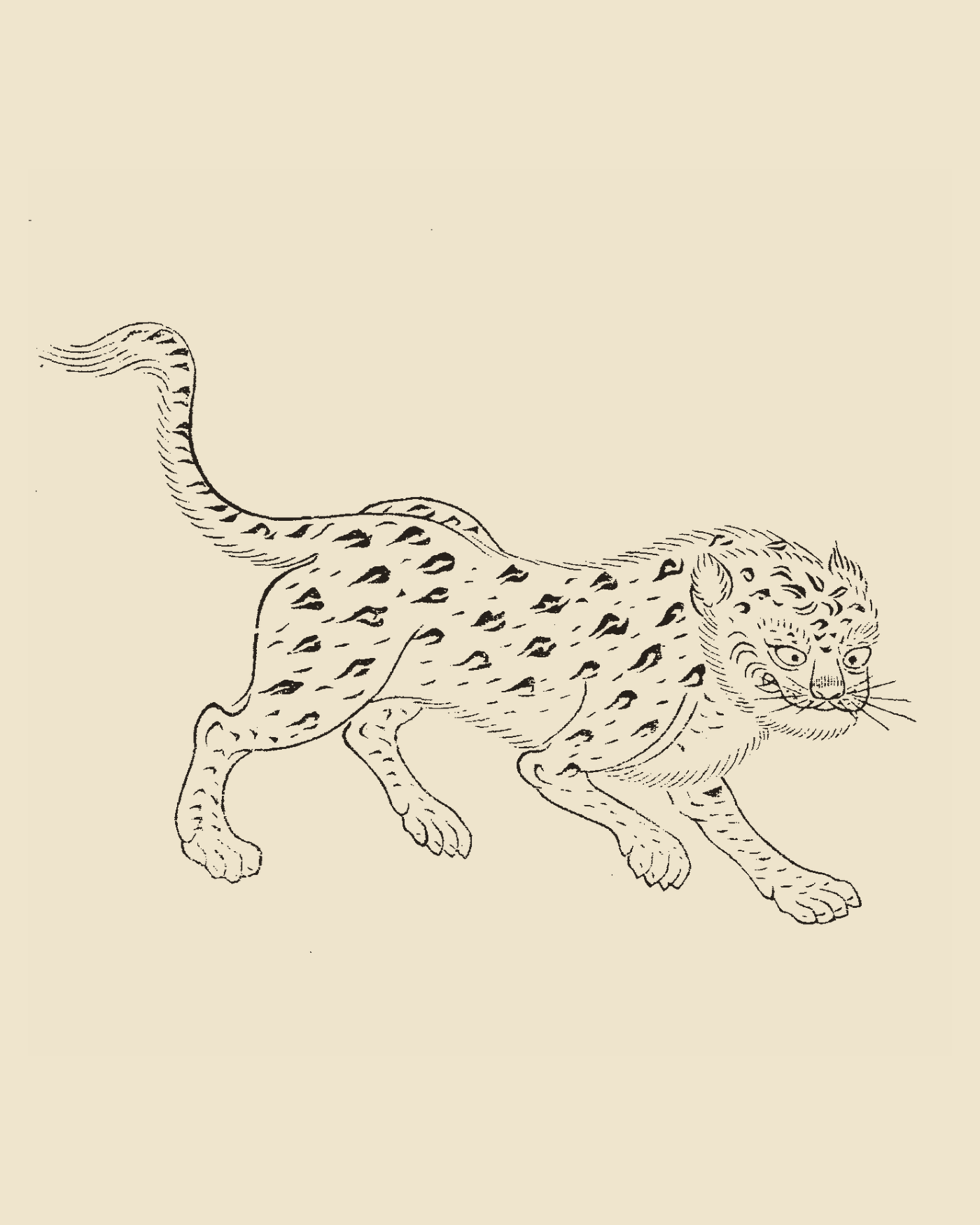
Unlike the ape-like Xingxing that understands human speech and runs on all fours, the mythological Xiaoyang walks upright on backward-facing heels and delights in echoing human laughter while clutching a bamboo tube.
The story来历与故事

The Xiaoyang is an enigmatic humanoid spirit of the southern mountains recorded in the Classic of Mountains and Seas, famous for its human face with long lips, dense black hairy coat, backward-turned heels, and merry booming laughter.

Primeval Humanoid of the Southern Wilds海内南经枭阳奇国

Xiaoyang is a mysterious mountain dweller with backward heels and thick dark fur.《山海经·海内南经》详载枭阳国在北朐之西,其人人面长唇、黑身有毛、反踵而立。

In the Classic of Mountains and Seas: Classic of Regions Within the Seas: South, ancient geographers recorded the mysterious realm of Xiaoyang situated west of Beiqu.

The inhabitants were described as walking upright like mortals but possessing striking ape-like features, including long mobile lips and a coat of glistening dark hair.

Their most eccentric anatomical trait was backward-facing heels, which allowed them to navigate steep crags and rocky mountain scree with astonishing agility.

The Grinning Spirit and the Bamboo Tube见人笑亦笑与操管之谜

Classical texts describe Xiaoyang mirroring human laughter while clutching a hollow tube.古籍记载枭阳生性乐笑,见人笑亦笑,左手常握竹管,在清代《古今图书集成》中留有白描神姿。

According to Han Dynasty commentaries and post-classical encyclopedias, the Xiaoyang possessed a playful habit of bursting into joyful laughter whenever it encountered a human traveler.

The ancient text specifically notes that the creature holds a hollow tube in its left hand, an enigmatic talisman interpreted by dynastic scholars as a forest tool or bamboo pipe.

In the 1726 Gujin Tushu Jicheng, dynastic woodcut carvers immortalized the creature under plate 208 of the Animal Kingdom section, depicting its towering stature and vibrant grin.

Wildman Archetype in Classical Heritage华夏古代野人之灵

Classical Chinese naturalists associated the Xiaoyang with kindred forest spirits such as the Feifei and Shan-du, viewing them as guardians of deep highland primeval groves.

梟陽國在北朐之西,其為人人面長脣,黑身有毛,反踵,見人笑亦笑;左手操管。

The state of Xiaoyang lies west of Beiqu. Its people have human faces with long lips, black bodies covered in hair, and backward-facing heels. When they see a person laugh, they laugh too; in their left hand they grasp a bamboo tube.

— 山海經·海內南經 · Classic of Mountains and Seas

Unlike predatory monsters that terrorized wanderers, the Xiaoyang displayed a jovial and inquisitive nature that mirrored human emotional expressions.

In contemporary Chinese folklore, the Xiaoyang survives as the venerable progenitor of southern wildman legends, celebrating the untamed freedom of primeval ecosystems.

Record档案

Record Card档案卡

TypeMountain Humanoid (smiling ape-like beast grasping a bamboo tube)
Also known asXiāoyáng 梟陽; Feifei (狒狒); Smiling Forest Beast (笑獸)
HabitatSouthern mountainous wilderness and cloud-veiled forests west of Beiqu (北朐之西)
NaturePlayful yet fierce primeval mountain humanoid who wields a bamboo tube and mirrors human smiles
Earliest source山海經·海內南經
Source books山海經·海內南經
Image sourceChen Menglei 陳夢雷 & Jiang Tingxi 蔣廷錫 (1726) · Wikimedia Commons
LicensePublic domain

Frequently Asked Questions

What is the Xiaoyang in classical Chinese mythology?

The Xiaoyang is an ape-like mountain humanoid spirit described in the Classic of Mountains and Seas, characterized by a mortal countenance, thick dark coat, inverted heels, and loud laughter.

Why does the Xiaoyang carry a bamboo tube in its left hand?

Classical commentators suggest the hollow bamboo cane was used as a forest calling device or an ancient ritual tool for mountain wandering.

What is the cultural significance of the Xiaoyang's backward heels?

Backward-facing heels symbolize extraordinary agility in steep mountain terrain and reflect early Chinese imaginations of anomalous wilderness dwellers.