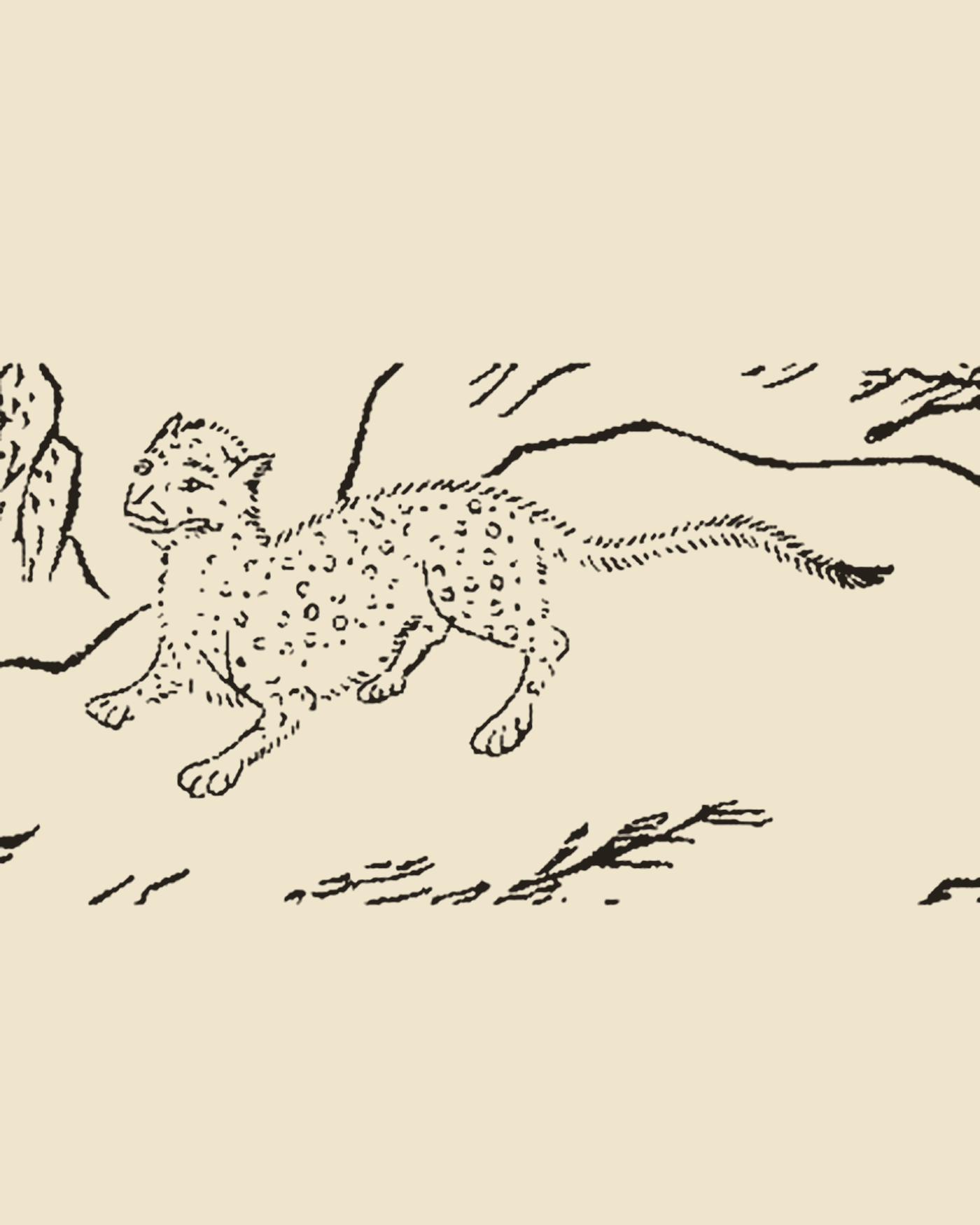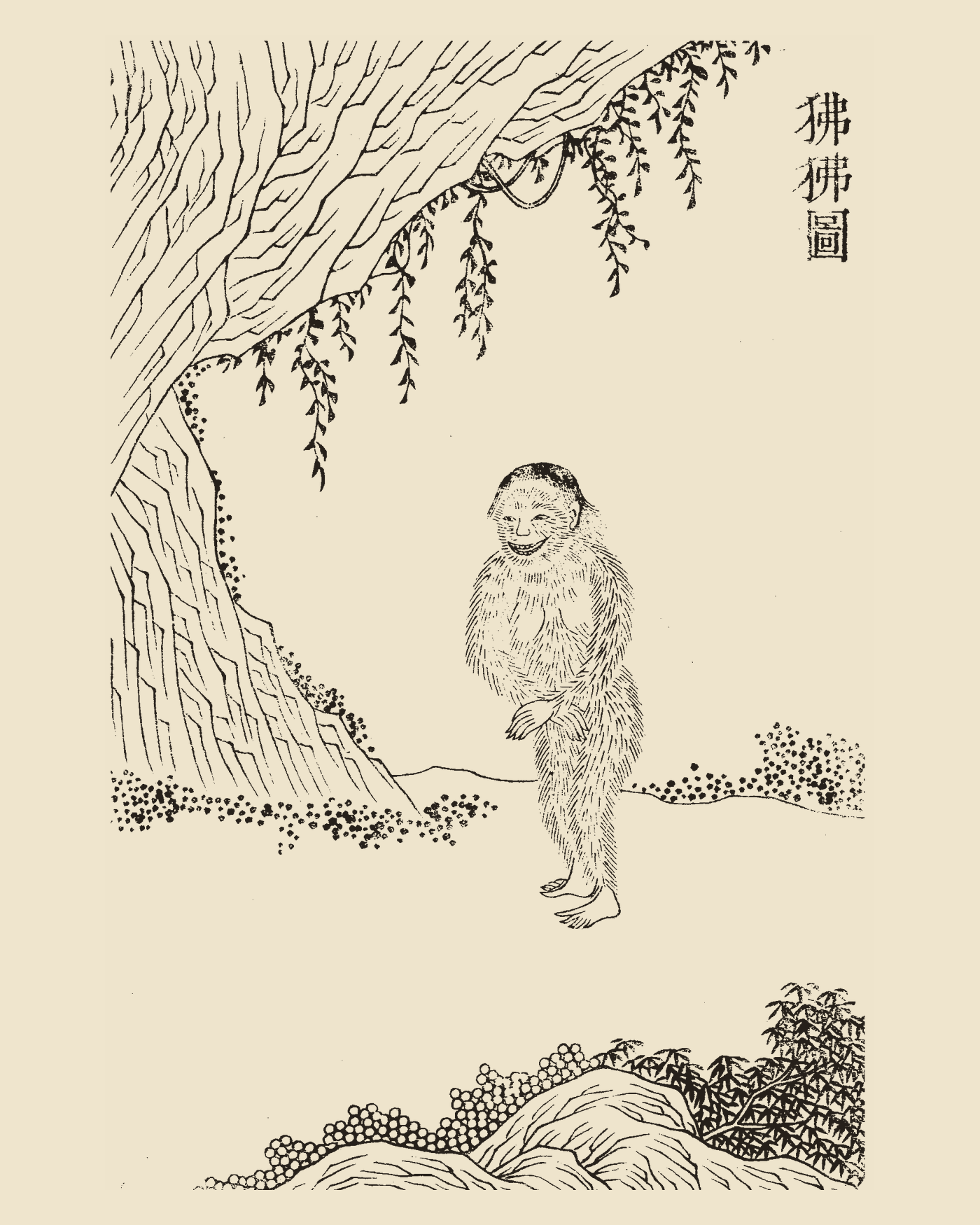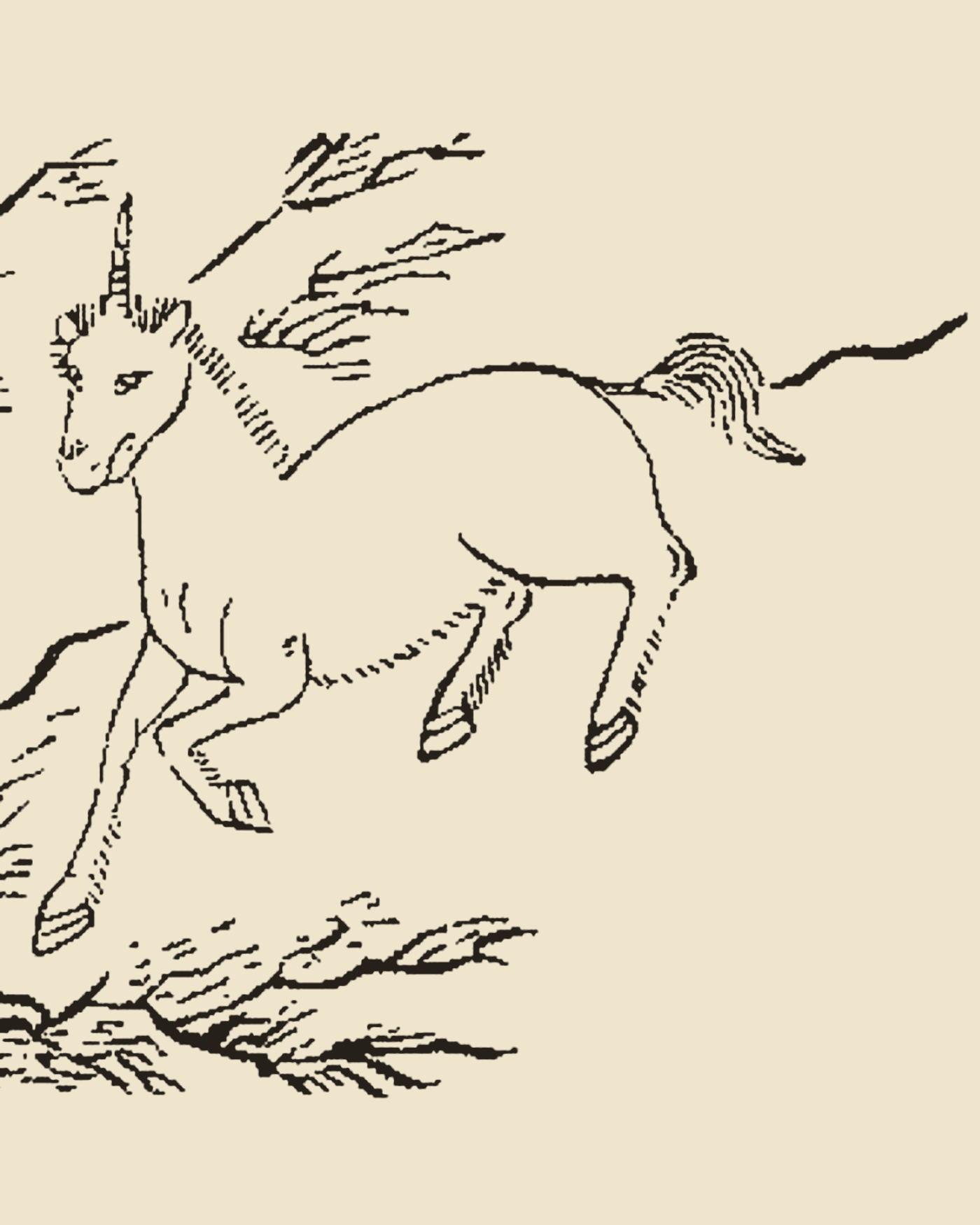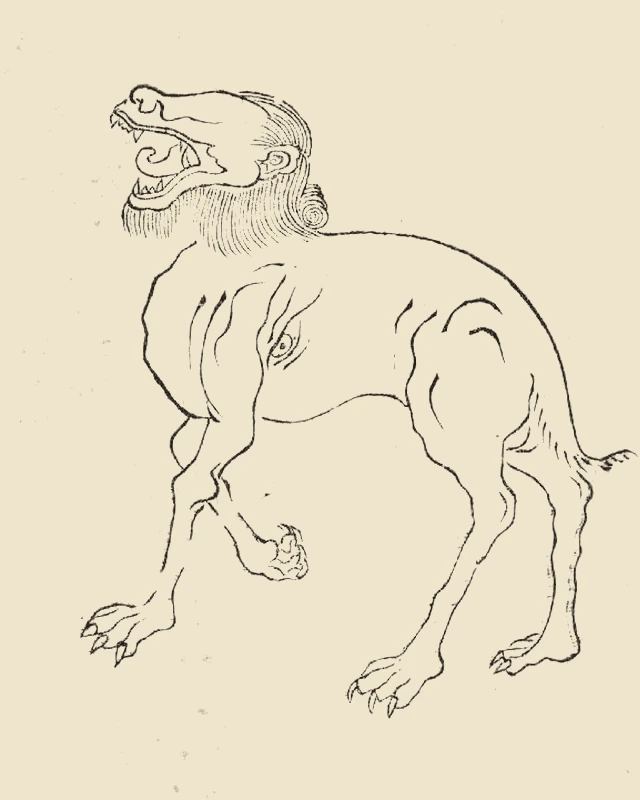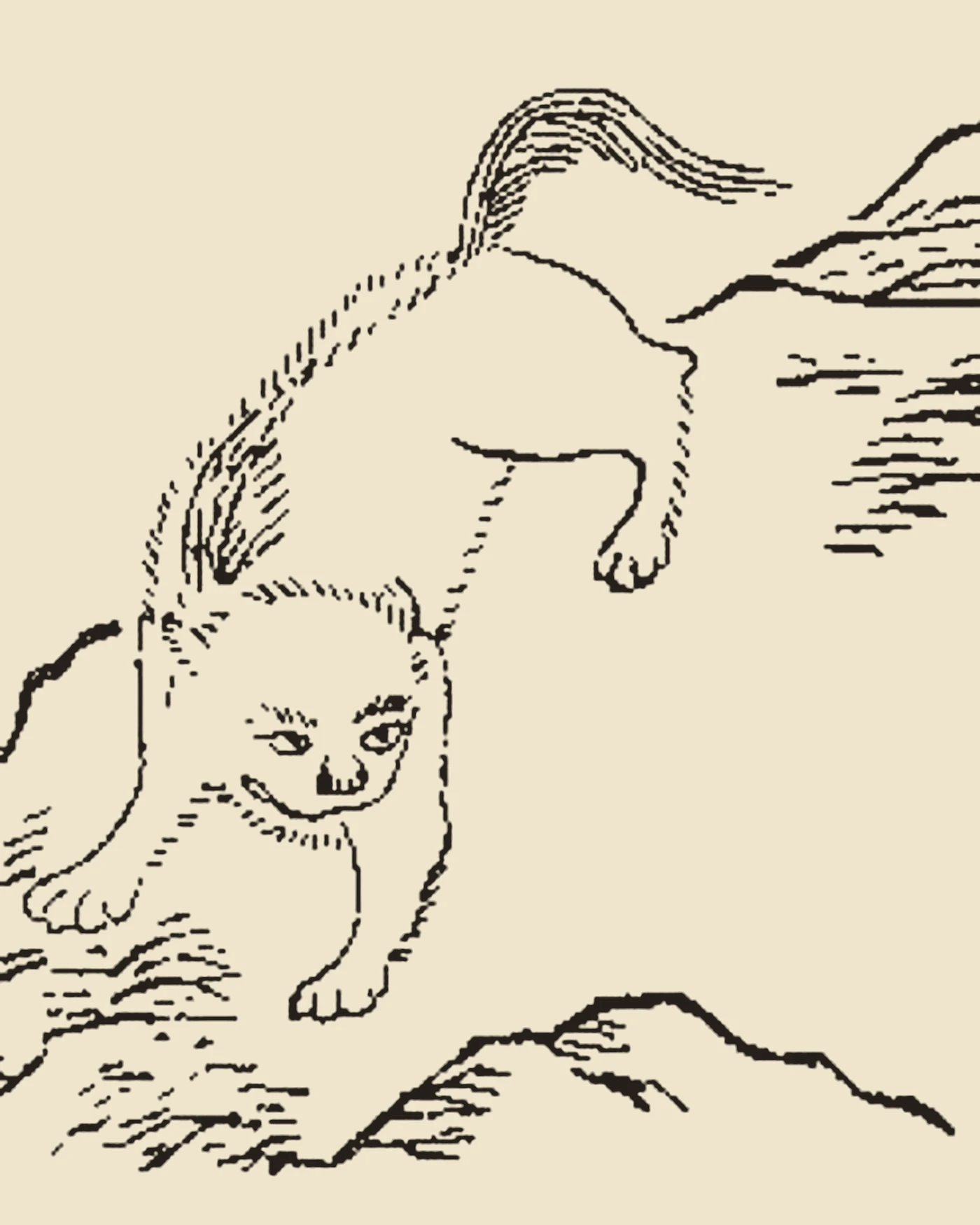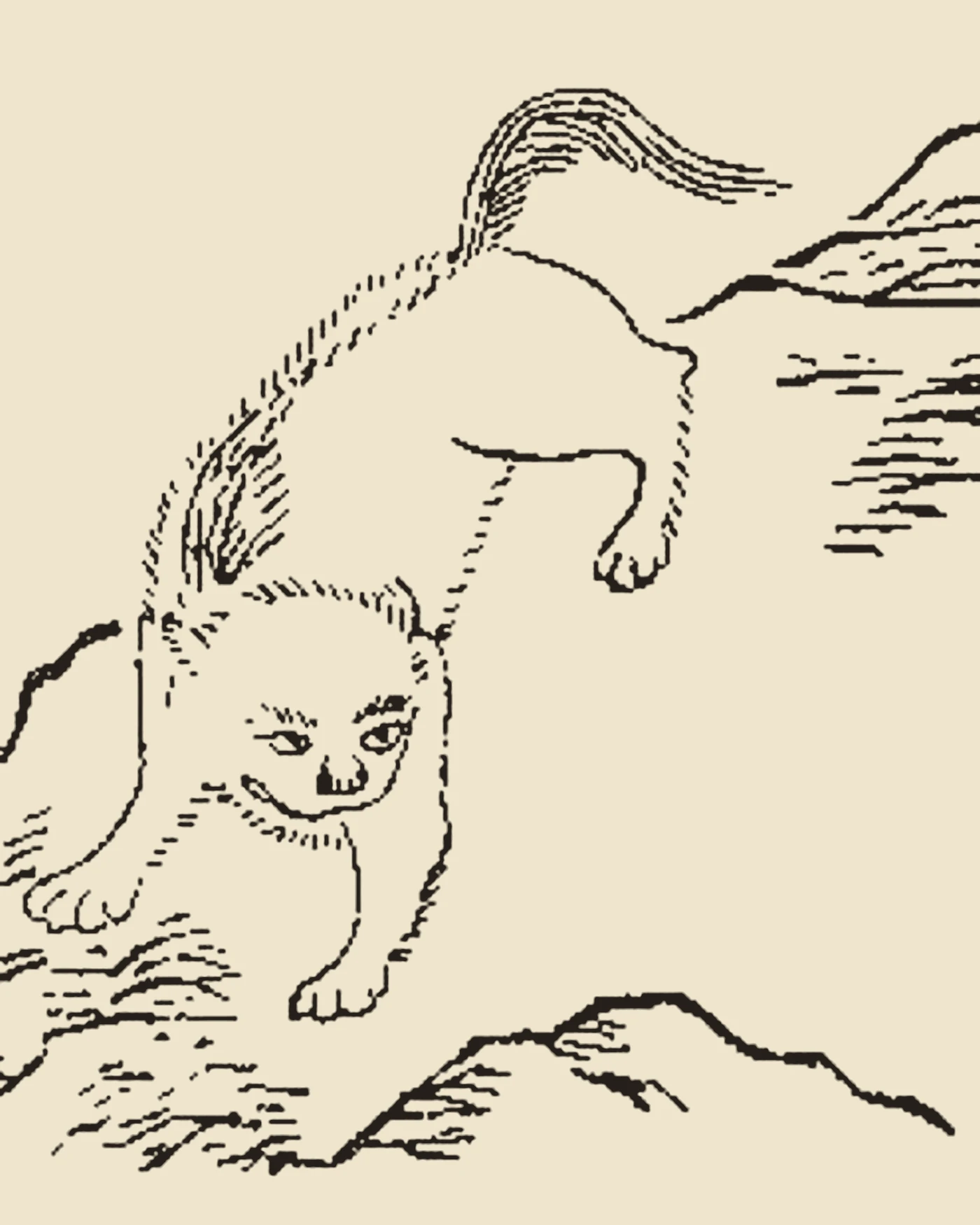
Dúxú 獨𤞞, the chimeric mountain beast with a tiger body, dog head, horse tail, and boar mane. Hu Wenhuan 胡文煥, Newly Carved Illustrated Shan Hai Jing 新刻山海經圖, woodblock print, 1593明·胡文焕刻《新刻山海经图》“独𤞞”,万历二十一年(1593)刻本 · Public domain公有领域Other editions & copies其他刊本源流Same design also in: 同一图样亦见于:Hu Wenhuan 胡文煥 (ed.)胡文焕 编, 15931593年
Highlighted words: anatomy part · feature · form type — tap to jump标色词:形态部位 · 特征 · 形态类别,点击可跳转
Three hundred li further north is Mount Beixiao, where there are no rocks; its sunny side abounds in jasper and its shady side in jade. There is a beast here shaped like a tiger, with a white body, canine head, horse tail, and boar mane; its name is Duxu.
山海經·北山經 · Shan Hai Jing · Classic of the Northern Mountains · Wikisource
Three hundred li further north is Mount Beixiao, where there are no rocks; its sunny side abounds in jasper and its shady side in jade. There is a beast here shaped like a tiger, with a white body, canine head, horse tail, and boar mane; its name is Duxu.
Comparing the Books典籍对比
Like the Zhujian and the Luowu of the Northern Mountains, Duxu blends the formidable physique of feline predators with distinct canine and porcine attributes.
The story来历与故事
The Duxu is a chimeric mountain beast of Mount Beixiao in the Shan Hai Jing, shaped like a white tiger with a canine head, equine tail, and bristling boar mane.
The Tiger-like Chimera of Mount Beixiao北嚻之山上的四相神兽
Duxu is a mountain chimera with a canine head, boar mane, and horse tail.北嚻之山无石而多玉碧,其中奇兽独𤞞兼具虎身犬首与马尾彘鬣。
Three hundred li north along the mountainous chains of the northern wilderness lies Mount Beixiao, a majestic range noted for having no rocks, with its sunlit slopes yielding fine green jasper and its shady hollows rich in pure jade.
Dwelling within these mineral-rich jade heights is a composite quadruped named Duxu. Ancient observers described it as having the form and posture of a fierce tiger, yet marked by a snowy coat, the head of a dog, a flowing horse tail, and stiff boar bristles upon its neck.
Unlike solitary predators of ordinary forests, the Duxu integrates traits from four familiar quadrupeds into a harmonious heraldic form, epitomizing the creative chimeric taxonomy of pre-Qin geography.
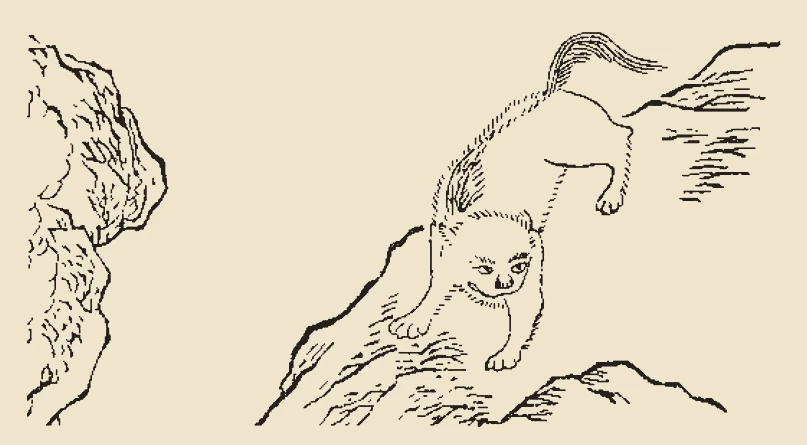
Full woodblock plate of the Duxu on Mount Beixiao. Hu Wenhuan, Newly Carved Illustrated Shan Hai Jing, 1593明万历胡文焕刻《新刻山海经图》“独𤞞”完整横幅版面(1593)
Classical Woodblock Depictions明代刻本白描神貌
Ming dynasty woodblock albums depict Duxu with bristling mane and sweeping tail.明万历胡文焕刻本生动勾勒独𤞞踏石昂首、鬃鬣如戟之英武雄姿。
Throughout later dynasties, Chinese illustrators and encyclopedists took special care in visualizing the creature's four distinct anatomical elements.
In the 1593 Illustrated Shan Hai Jing edited by Hu Wenhuan, Duxu is portrayed poised beside mountain boulders, its canine muzzle alertly turned, with bristling dorsal spines echoing the classical description of boar mane.
Woodblock prints preserve an inscription cartouche in the upper corner, confirming the canonical iconography that survived through the Qing imperial compendiums.
Legacy and Symbolism文学遗韵与神兽象征
In pre-Qin cosmological thought, mountains composed entirely of precious minerals were viewed as pristine realms untouched by mortal dust, capable of birthing creatures of extraordinary purity.
Three hundred li further north is Mount Beixiao, where there are no rocks; its sunny side abounds in jasper and its shady side in jade. There is a beast here shaped like a tiger, with a white body, canine head, horse tail, and boar mane; its name is Duxu.
— 山海經·北山經 · Shan Hai Jing
The Duxu embodies the aesthetic principle of composite balance, demonstrating how ancient observers conceptualized wilderness through familiar animal forms assembled in startling novel combinations.
Today, cultural scholars and artists celebrate Duxu as an elegant testament to classical Chinese chimeric art, preserving the enigmatic wonder of early geographical imagination.
Record档案
Record Card档案卡
Type
Chimeric Mountain Beast (tiger-bodied beast with dog head, horse tail, and boar mane)
Also known as
Dúxú 獨𤞞; Beixiao Duxu (北嚻獨𤞞)
Habitat
Mount Beixiao (北嚻之山) in the Northern Mountains
Nature
Chimeric mountain beast dwelling on rockless jade peaks (狀如虎,白身犬首,馬尾彘鬛)
What kind of beast is the Duxu in Chinese mythology?
The Duxu is a chimeric mountain beast recorded in the Classic of the Northern Mountains of the Shan Hai Jing. It possesses the physique of a white tiger, a canine head, a horse tail, and a boar mane.
Where does the Duxu live in classical mythology?
According to the Shan Hai Jing, the Duxu dwells on Mount Beixiao, a mountain located three hundred li north in the northern range, distinguished by an absence of stone and abundance of jasper and jade.
How is the Duxu depicted in historical art?
In Ming-dynasty woodblock editions such as Hu Wenhuan's 1593 Illustrated Shan Hai Jing, Duxu is depicted standing upon rocky slopes with a dog-like snout, arched back, bristling dorsal mane, and sweeping horse tail.