fēi shòu shén

飛獸神Flying Beast Gods

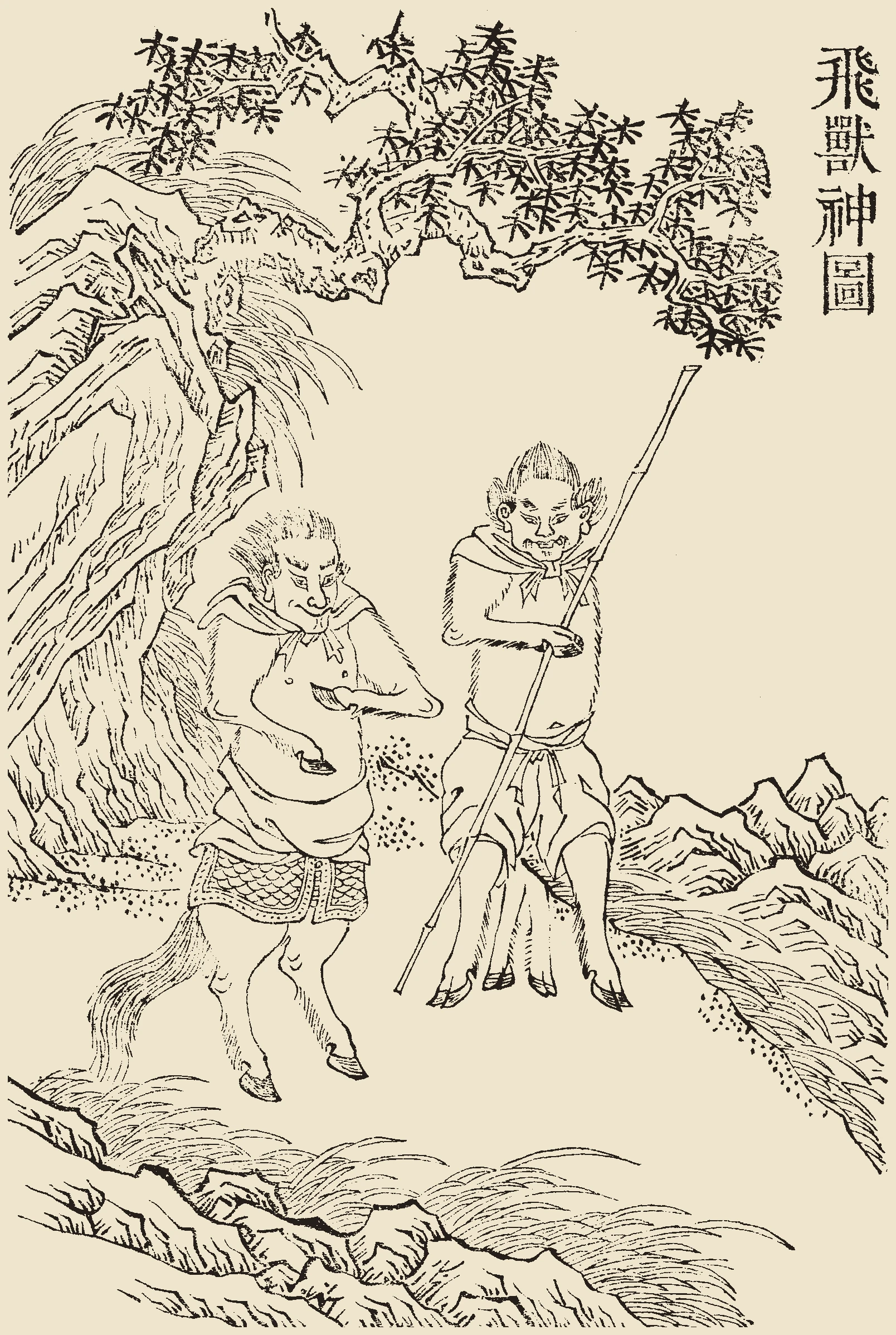
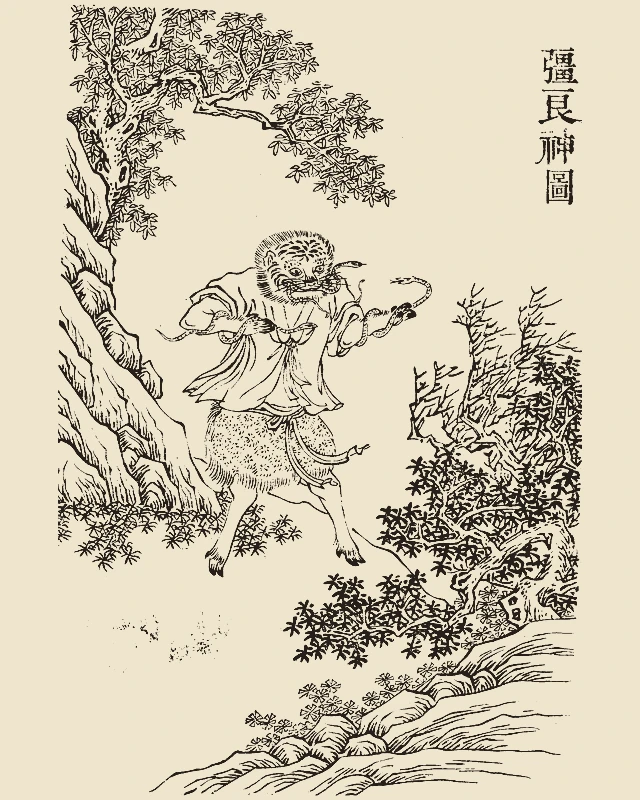
The extraordinary mountain spirits of Mount Laishan with a human face, bovine body, four legs, one arm, walking with a staff.自钤山至莱山绵延四千一百余里的西次二经崇山峻岭中,统辖七座名山的守护灵神被称为‘飞兽之神’。

Form牛身

Human face with ox body生有人面配以牛身

人面而牛身

Legs四足

Four legs with a single arm四只牛蹄独生一臂

四足而一臂

Staff操杖

Walking with a wooden staff手操木杖跨崖而行

操杖以行

Deity飛獸

Title of Flying Beast spirits尊为飞兽之神

是為飛獸之神

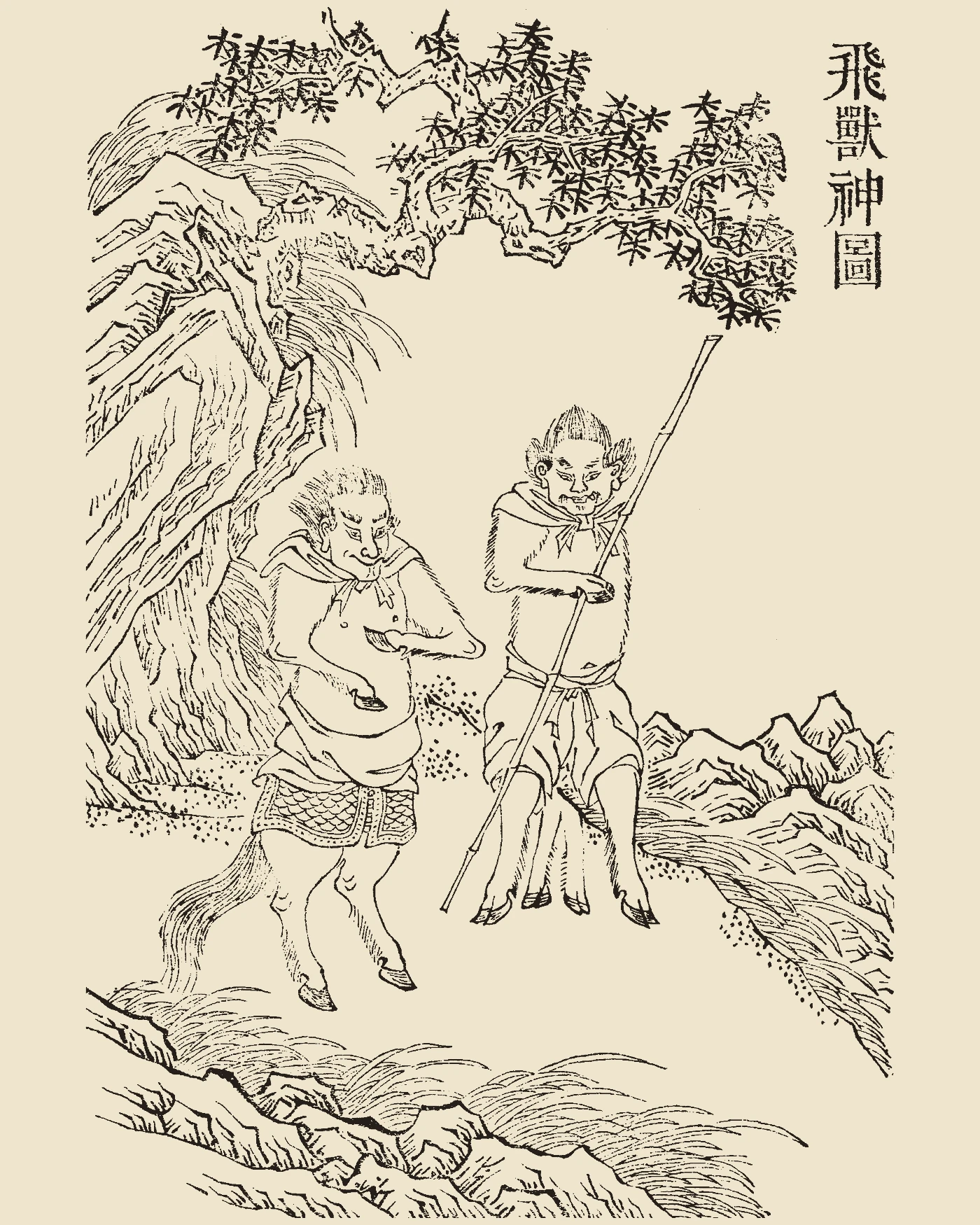
《清内府铜活字印本《古今图书集成·神异典》》版画:飛獸神人面Human Countenance清和慈祥之老者神容人面Human Countenance清和慈祥之老者神容牛身Bovine Torso沉實雄厚之神牛身軀牛身Bovine Torso沉實雄厚之神牛身軀操杖Single Arm & Staff單臂緊握之巡山神杖操杖Single Arm & Staff單臂緊握之巡山神杖四足Four Hooves健步踏越危崖之四蹄四足Four Hooves健步踏越危崖之四蹄
操杖飛獸

Staff-Wielding Flying Beast

山海經·西山經
飛獸神圖, 清内府铜活字印本《古今图书集成·神异典》, woodblock print, 1726古籍刻本《清内府铜活字印本《古今图书集成·神异典》》“飛獸神图”,公有领域版画 · Public domain公有领域

Highlighted words: anatomy part · feature · form type — tap to jump标色词:形态部位 · 特征 · 形态类别,点击可跳转

The texts原文

Original Text & Translation原文与译文

山海經·西山經 · Shan Hai Jing · Classic of the Western Mountains · Wikisource

其七神皆人面而牛身,四足而一臂,操杖以行:是為飛獸之神;其祠之,毛用少牢,白菅為席。
Seven of these mountain gods all have a human face and ox body, with four legs and a single arm, walking with a staff: these are the Flying Beast Spirits; in worshipping them, use the lesser animal offering with white reed as mats.

Comparing the Books典籍对比

Distinguished by the surreal combination of four hooves, an ox body, and a single humanoid arm grasping a walking staff, Feishoushen is one of the most uniquely specialized mountain guardians in ancient geography.
The story来历与故事

The extraordinary mountain spirits of Mount Laishan with a human face, bovine body, four legs, one arm, walking with a staff.

The Lore of Feishoushen飛獸神之古籍神异记述

Across four thousand one hundred and forty li of the Second Western Mountain Ran自钤山至莱山绵延四千一百余里的西次二经崇山峻岭中,统辖七座名山的守护灵神被称为‘

Across four thousand one hundred and forty li of the Second Western Mountain Range, spanning from Mount Qianshan to Mount Laishan, ruled the seven Flying Beast Spirits (Feishoushen

). Each of these mountain gods possessed the massive, muscular body of a wild bovine standing on four sturdy hooves, crowned with an expressive human face. From the center of their chest protruded a single powerful arm holding a heavy wooden walking staff. Leaning upon this staff as they strode over precipitous boulder fields, the Feishoushen patrolled the crags with astonishing agility. Ancient kings worshipped them by laying mats of pristine white reed and offering prime livestock sacrifices.

Mythological Legacy of Feishoushen《山海經·西山經》典籍与文化传承

Feishoushen's iconic image of an ox-bodied god with one arm walking with a staff ('cao zhang yi xing') represents one of the earliest depictions of cane-assisted divine peregrinati

其七神皆人面而牛身,四足而一臂,操杖以行:是為飛獸之神;其祠之,毛用少牢,白菅為席。

Seven of these mountain gods all have a human face and ox body, with four legs and a single arm, walking with a staff: these are the Flying Beast Spirits; in worshipping them, use the lesser animal offering with white reed as mats.

— 山海經·西山經 · Shan Hai Jing · Classic of the Western Mountains

on and sacred mountain stewardship in world literature.

Record档案

Record Card档案卡

Type神
Also known asFeishoushen 飛獸之神; Staff-Wielding Spirit of Mount Lai 萊山操杖神
HabitatMount Lai sequence in the Western Mountains (西次二經,自鈐山至於萊山)
Gait & InstrumentWalks upright across crags leaning on a staff (操杖以行)
Sacrificial RiteWorshipped with lesser animal offering upon mats of white reed (毛用少牢,白菅為席)
Earliest source山海經·西山經
Source books山海經·西山經
Image sourceChen Menglei 陳夢雷 (ed.) · Wikimedia Commons
LicensePublic domain

Frequently Asked Questions

What is Feishoushen in the Shan Hai Jing?

Feishoushen (Flying Beast Deity) refers to the seven guardian mountain spirits of the Western Mountains having a human face, ox body, four legs, one arm, and holding a walking staff.

Why is an ox-bodied god called a 'Flying Beast' (飛獸)?

Classical commentators explain that despite their bovine weight, their ability to traverse perpendicular mountain cliffs with their staff was so swift and effortless it appeared as if they were flying across the rocks.

How were these spirits worshipped in ancient rituals?

The ancient state liturgy prescribed offering the Shaolao (sheep and pig) sacrificial victims, laid out upon woven mats of sacred white reed grass (白菅為席).