Two hundred li further northeast is Mount Longhou, where no plants grow and there is much gold and jade. The Juejue River emerges here and flows east into the Yellow River. In it are many Renyu, shaped like a giant salamander, with four feet and a voice like an infant; eating it cures dementia.
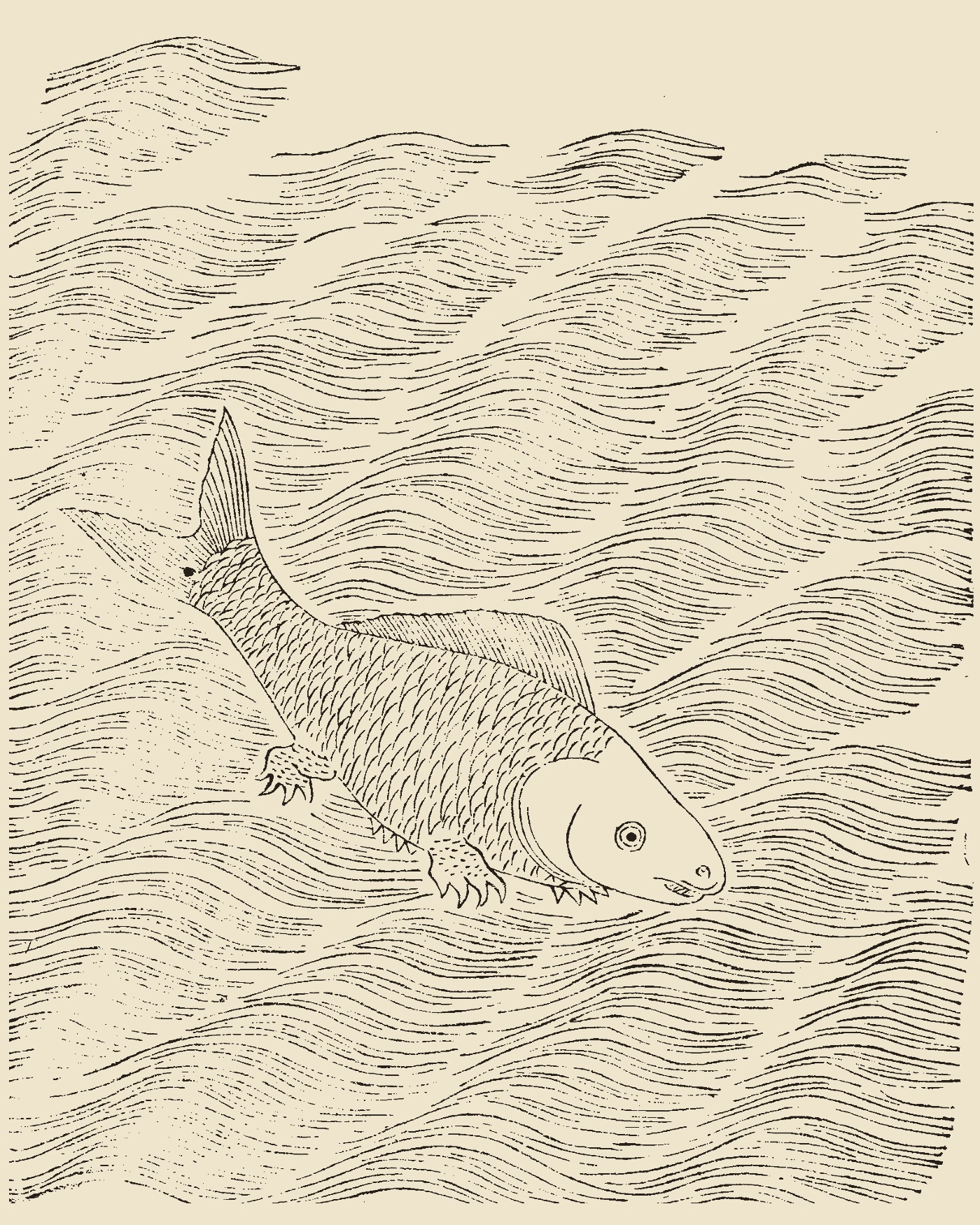
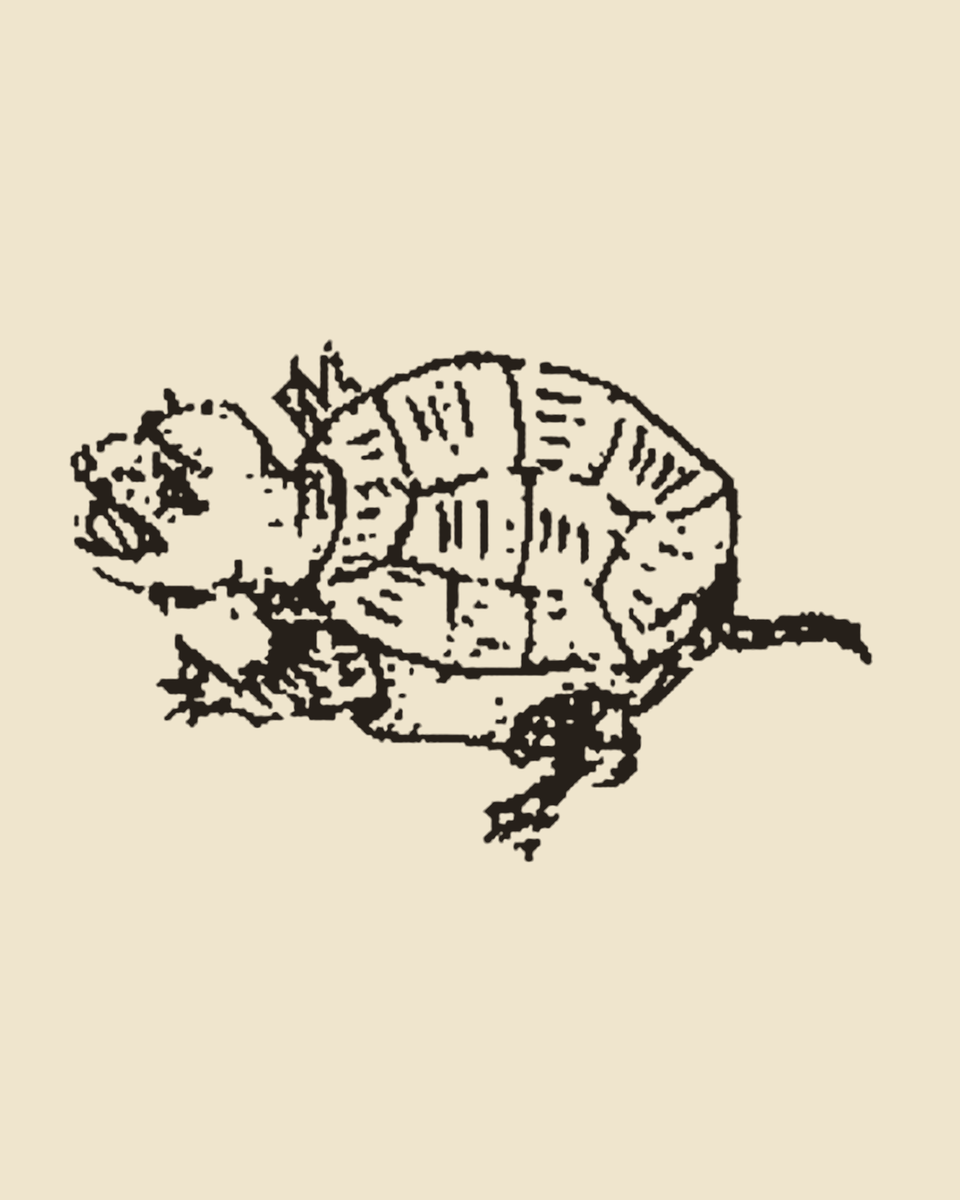
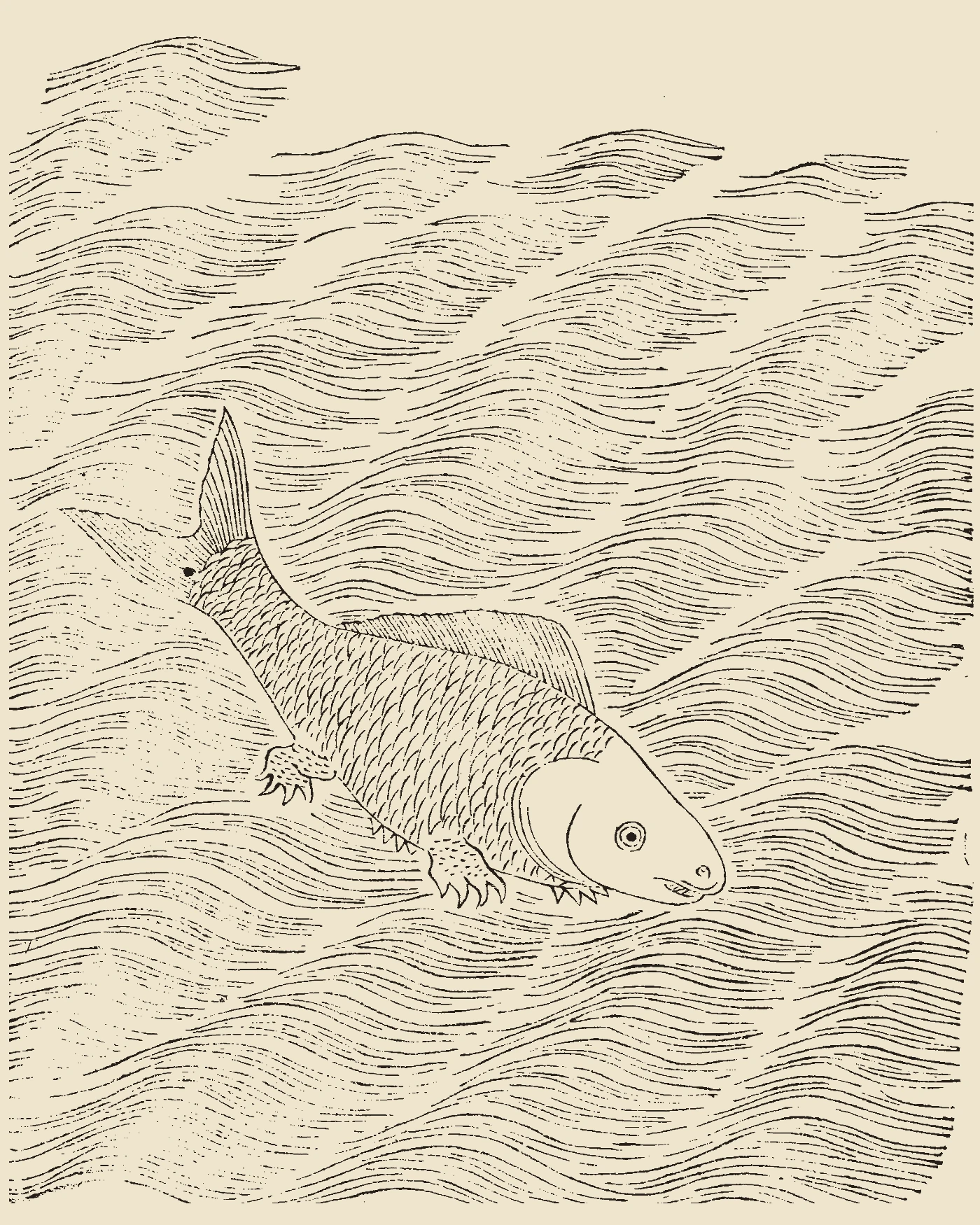
Sancai Tuhui woodcut plate: four-legged salamander diving in waves三才图会木刻版画:游弋于水浪中的四足大鲵 — Broader body swimming actively through heavy river waves; different woodcut style from 1609身形更为宽阔,在湍急水浪中伏游,为明万历三十七年(1609)木刻画风
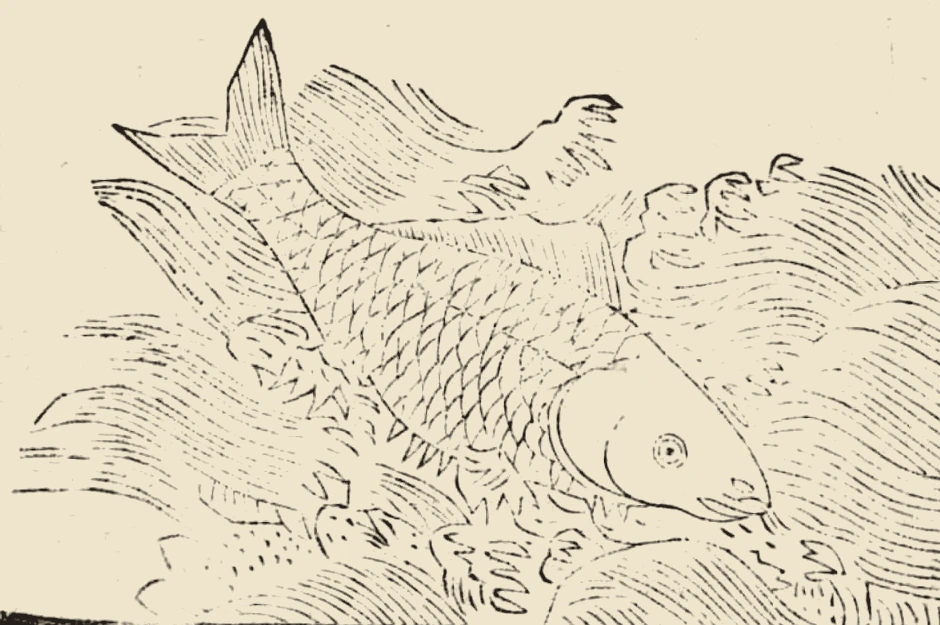
Rényú 人魚, the four-legged giant salamander fish of Mount Longhou. Wang Qi & Wang Siyi, Sancai Tuhui 三才圖會, woodblock print, 1609明萬曆王圻、王思義編《三才圖會·鳥獸六卷》“人魚”,萬曆三十七年(1609)刻本 · Public domain公有领域Rényú 人魚, full woodblock plate swimming in waves. Wang Qi & Wang Siyi, Sancai Tuhui 三才圖會, 1609明萬曆王圻、王思義編《三才圖會·鳥獸六卷》“人魚”完整橫幅版面,萬曆三十七年(1609)刻本 · Wang Qi 王圻 & Wang Siyi 王思義, 16091609年
Highlighted words: anatomy part · feature · form type — tap to jump标色词:形态部位 · 特征 · 形态类别,点击可跳转
Two hundred li further northeast is Mount Longhou, where no plants grow and there is much gold and jade. The Juejue River emerges here and flows east into the Yellow River. In it are many Renyu, shaped like a giant salamander, with four feet and a voice like an infant; eating it cures dementia.
山海經·北山經 · Shan Hai Jing · Classic of the Northern Mountains · Wikisource
Two hundred li further northeast is Mount Longhou, where no plants grow and there is much gold and jade. The Juejue River emerges here and flows east into the Yellow River. In it are many Renyu, shaped like a giant salamander, with four feet and a voice like an infant; eating it cures dementia.
Comparing the Books典籍对比
Classical commentators identify the Renyu with the giant salamander (䱱魚 / 鯢魚), an amphibious creature of northern mountain streams whose infant-like cry and dementia-curing flesh set it apart from other aquatic marvels.
The story来历与故事
The Renyu is a four-legged river dweller of Mount Longhou in the Shan Hai Jing. Shaped like a giant salamander, it cries like a human infant, and ancient texts note that eating its flesh cures dementia.
The Waters of Mount Longhou龙侯之山与决决之水
The Shan Hai Jing places the four-legged Renyu in the Juejue River flowing from Mount Longhou.《山海经》记载龙侯之山决决之水中生活着生有四足、音如婴儿的人鱼。
Mount Longhou stands in the northern ranges of the Shan Hai Jing, two hundred li northeast of Mount Manlian. The mountain is bare of trees and grass, but rich in gold and jade.
From its crags flows the Juejue River, running eastward to enter the Yellow River. The text records that Renyu dwell in these waters: shaped like a ti fish with four feet, vocalizing like a crying infant.
Rényú 人魚, full woodblock plate swimming in waves. Wang Qi & Wang Siyi, Sancai Tuhui 三才圖會, 1609明萬曆王圻、王思義編《三才圖會·鳥獸六卷》“人魚”完整橫幅版面,萬曆三十七年(1609)刻本
A Remedy for Dementia食之无痴疾
Ancient texts record that consuming Renyu flesh cures dementia, contrasting with harmful river monsters.先秦古籍记载服食人鱼之肉可愈痴疾,晋人郭璞指出此物即山溪中的大鲵。
The Shan Hai Jing attributes a single medicinal property to the creature: eating it cures dementia ('shi zhi wu chi ji'). Unlike predatory river monsters that drown travelers, the Renyu was valued for its therapeutic flesh.
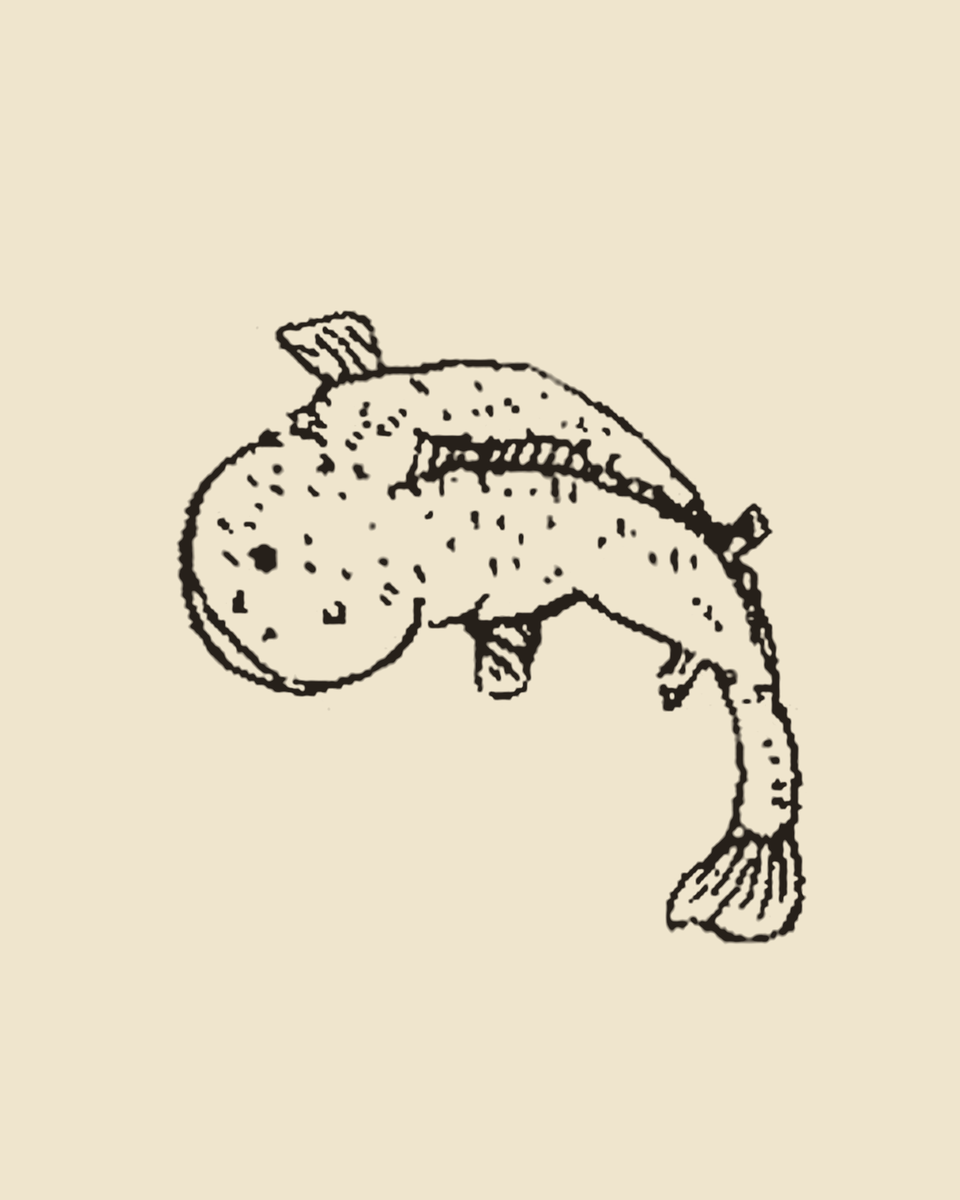
Jin dynasty commentator Guo Pu identified the ti fish with the giant salamander, noting that it has four legs, lives in mountain streams, and produces a vocalization reminiscent of a small child.
The Sancai Tuhui Woodcut三才图会所绘人鱼
The 1609 Sancai Tuhui depicts the creature with four clawed feet swimming through curling river waves.明代《三才图会》版画描绘人鱼生有四足、身披鱼鳞游弋波涛,为传世经典图样。
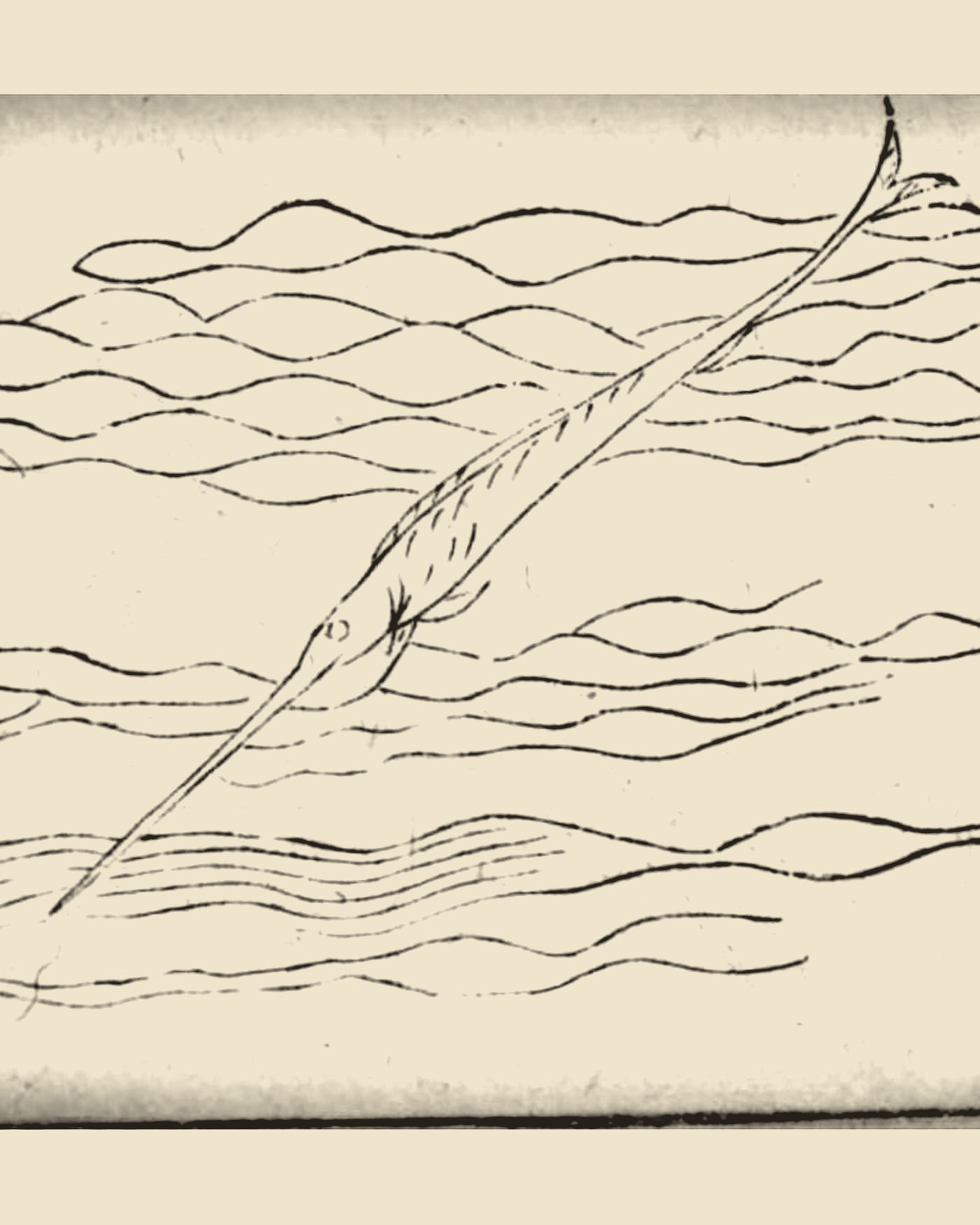
The 1726 Gujin Tushu Jicheng prints a plate titled Niyu, the giant salamander: a scaled body in curling waves with four clawed feet. This is the reading Guo Pu gives for the ti fish.
Wang Qi and Wang Siyi included the Renyu in their 1609 illustrated encyclopedia Sancai Tuhui. The woodcut captures the creature diving through curling river waves, with four clawed feet, a broad scaled body, and an open mouth.
Only one public-domain classical source describes this northern river creature; later dynastic works primarily transmit the original Han text and Guo Pu's notes without inventing new legends.
Record档案
Record Card档案卡
Type
Auspicious Amphibian (four-legged infant-crying river salamander of Mount Longhou)
Also known as
Rényú 人魚; Longhou Renyu (龍侯人魚)
Habitat
The Juejue River (决决之水) of Mount Longhou, flowing east into the River
What kind of creature is the Renyu in the Shan Hai Jing?
It is a four-legged freshwater creature of Mount Longhou resembling a giant salamander. It cries like an infant and its flesh was believed to cure dementia.
Where does the Renyu dwell according to classical geography?
According to the Shan Hai Jing, it lives in the Juejue River of Mount Longhou, which flows eastward into the Yellow River.
Is the Shan Hai Jing Renyu a mermaid?
No. Unlike Western mermaids with human torsos, the Shan Hai Jing describes an animal shaped like a four-legged salamander. Jin scholar Guo Pu identified it with the Chinese giant salamander.