Wénwén

文文Wenwen

A wasp-like patterned beast of Mount Fanggao with a forked tail and reversed tongue.放皋之山的灵兽:状如斑蜂,尾歧分叉,舌如反转,喜好呼唤。

Body身形

Wasp-shaped body身形微小似蜜蜂

其狀如蜂

Tail尾端

Branched tail尾部末端分歧叉

枝尾

Voice声音

Reversed tongue反卷其舌善呼鸣

反舌

Name名号

Named Wenwen山中古籍唤文文

其名曰文文

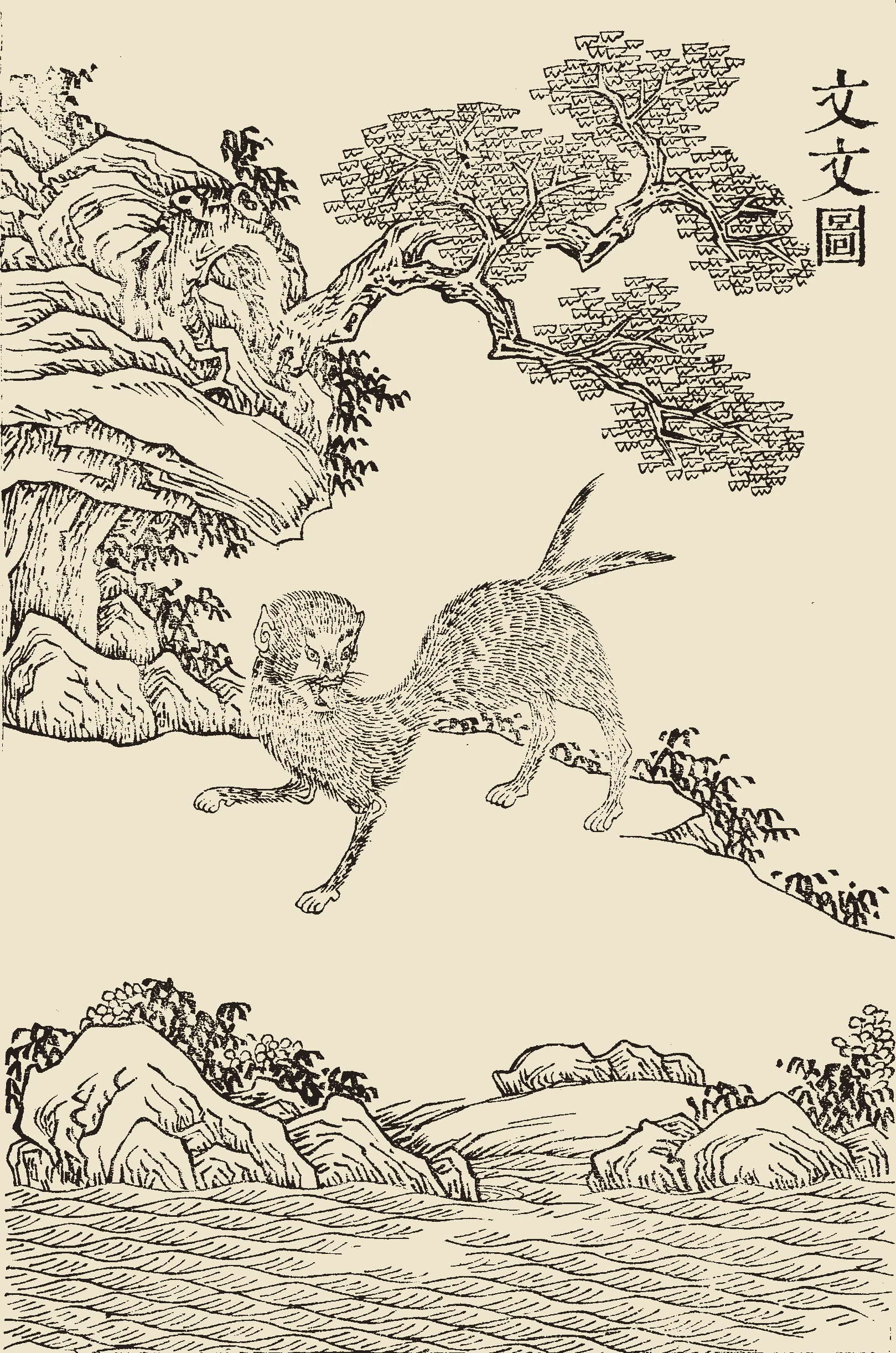
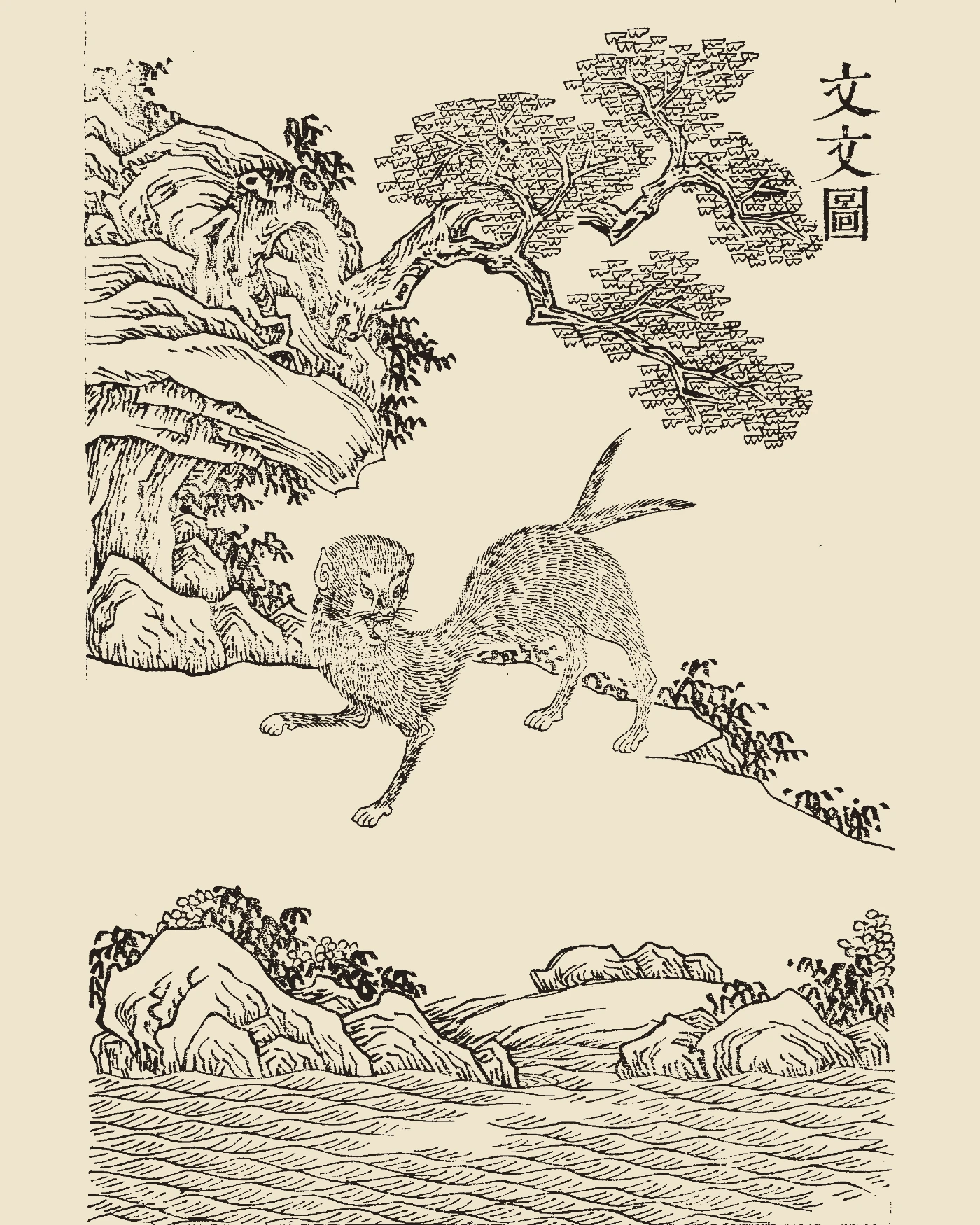
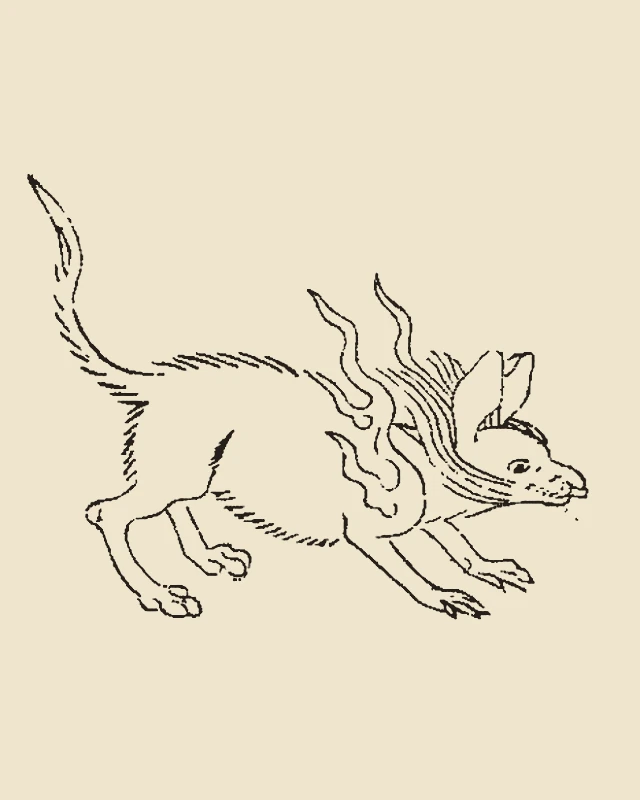
Print from the Gujin Tushu Jicheng: a spotted quadruped with a raised forked tail steps over mountain banks, with the title 'Wenwen Tu' at upper right其狀如蜂Wasp-patterned body如蜂纹身躯其狀如蜂Wasp-patterned body如蜂纹身躯枝尾Forked branched tail双歧长尾枝尾Forked branched tail双歧长尾反舌Tongue and muzzle反舌之吻反舌Tongue and muzzle反舌之吻其狀如蜂Slender limbs踏坡双足其狀如蜂Slender limbs踏坡双足
放皋之山明水出焉

The Ming River rises on Mount Fanggao.

山海經·中山經
文文圖, Gujin Tushu Jicheng 古今圖書集成, Qin Chong Dian (Section on Birds and Animals), woodblock print, 1726清·陈梦雷等编《古今图书集成·禽虫典》“文文图”,雍正四年(1726)铜活字印本 · Public domain公有领域

Highlighted words: anatomy part · feature · form type — tap to jump标色词:形态部位 · 特征 · 形态类别,点击可跳转

The texts原文

Original Text & Translation原文与译文

山海經·中山經 · 山海經·中山經 · Wikisource

又東五十二里,曰放皋之山。明水出焉。南流注于伊水,其中多蒼玉。有木焉,其葉如槐,黃華而不實,其名曰蒙木,服之不惑。有獸焉,其狀如蜂,枝尾而反舌,善呼,其名曰文文。
There is a beast here shaped like a wasp, with a branched tail and a reversed tongue, good at calling. Its name is Wenwen.

山海經·中山經 · 山海經·中山經 · Wikisource

又東五十二里,曰放皋之山。明水出焉。南流注于伊水,其中多蒼玉。有木焉,其葉如槐,黃華而不實,其名曰蒙木,服之不惑。有獸焉,其狀如蜂,枝尾而反舌,善呼,其名曰文文。
There is a beast here shaped like a wasp, with a branched tail and a reversed tongue, good at calling. Its name is Wenwen.

Comparing the Books典籍对比

The Classic of the Central Mountains describes the Wenwen as a loud-calling, wasp-patterned beast with a split tail; the Gujin Tushu Jicheng print shows it striding with an upright forked tail.
The story来历与故事

Wenwen (文文) is a curious shouting beast of Mount Fanggao with a branched tail and reversed tongue. The Shan Hai Jing relates that it is marked like a wasp, possesses a bifurcated tail and an inward tongue, and loves to cry out.

The Calling Beast of Mount Fanggao放皋之山的高呼之兽

In the Seventh Central Sequence, Mount Fanggao overlooks the Ming River flowing 《中山经》中次七经记放皋之山,明水出焉南流注于伊水。山间生活有名为文文的奇兽,身

In the Seventh Central Sequence, Mount Fanggao overlooks the Ming River flowing south into the Yi. On its slopes dwells the Wenwen, a spotted creature marked like a hornet or wasp, armed with a split tail like branching twigs and a tongue curling inversely.

The text notes that it is fond of shouting resonant cries across the wilderness without bringing harm or disaster.

The Plate in the Imperial Encyclopaedia《古今图书集成》里的文文图

The Gujin Tushu Jicheng print titled 文文圖 portrays a slender, spotted quadruped with an upright forked tail striding gracefully past pines atop a lakeshore hill. The title sits at the upper right.

The woodblock artist captured both the spotted skin and the distinctly split tail mentioned in the Shan Hai Jing.

Record档案

Record Card档案卡

TypeBeast (wasp-like, forked tail, fond of calling)
Also known asWénwén 文文
Earliest sourceShan Hai Jing 山海經, Classic of the Central Mountains (Seventh Central Sequence)
HabitatMount Fanggao
Earliest source山海經·中山經
Source books山海經·中山經
Image sourceChen Menglei 陳夢雷 (ed.) · Wikimedia Commons
LicensePublic domain

Frequently Asked Questions

What is the Wenwen?

The Wenwen is a mythical beast from the Shan Hai Jing with a wasp-like look, a branched tail, and a habit of calling out loudly.

Where can the Wenwen be found?

It lives on Mount Fanggao in the Seventh Central Sequence.

What does "枝尾而反舌" mean?

It means that its tail branches like tree twigs (枝尾) and its tongue curls back in reverse (反舌).