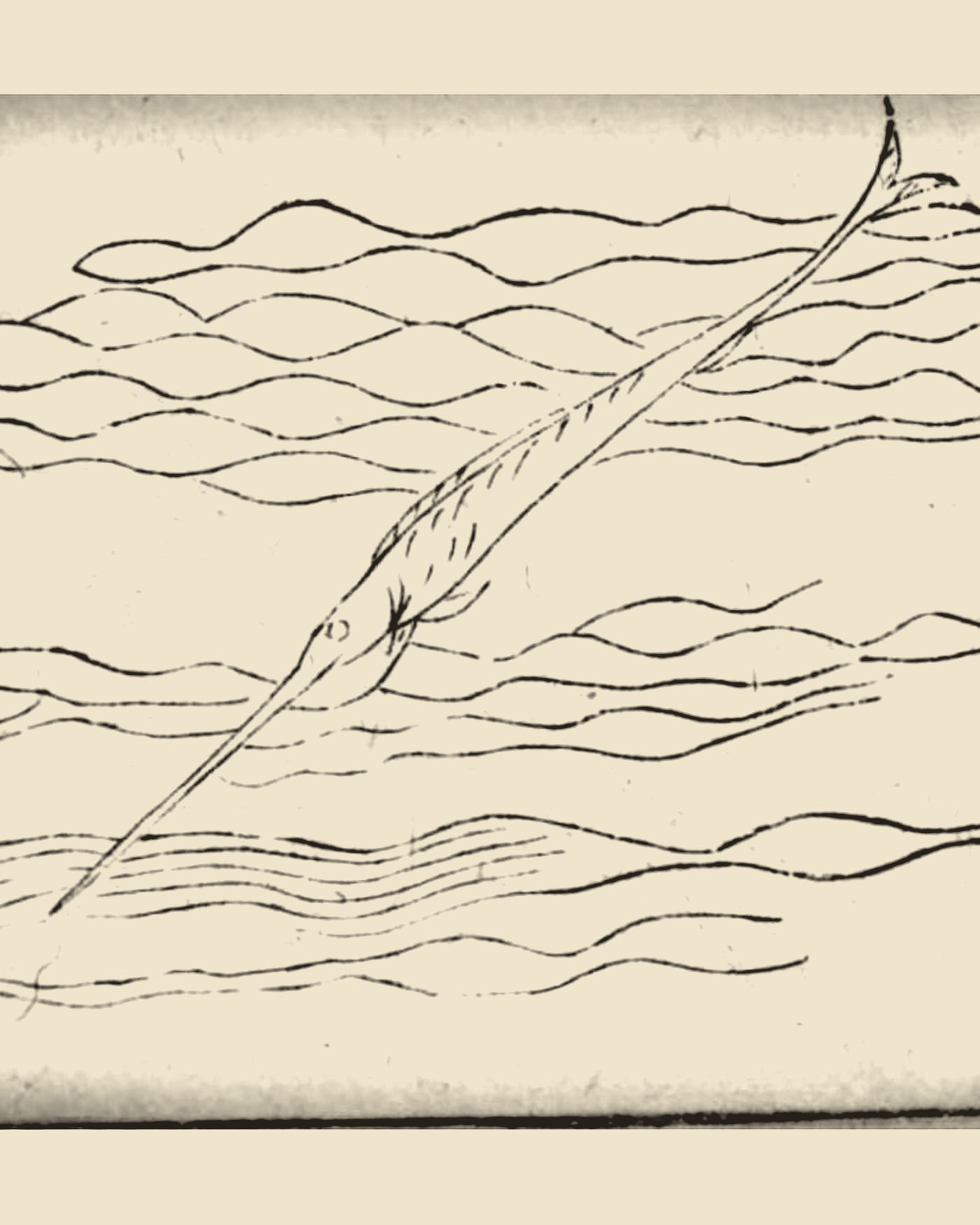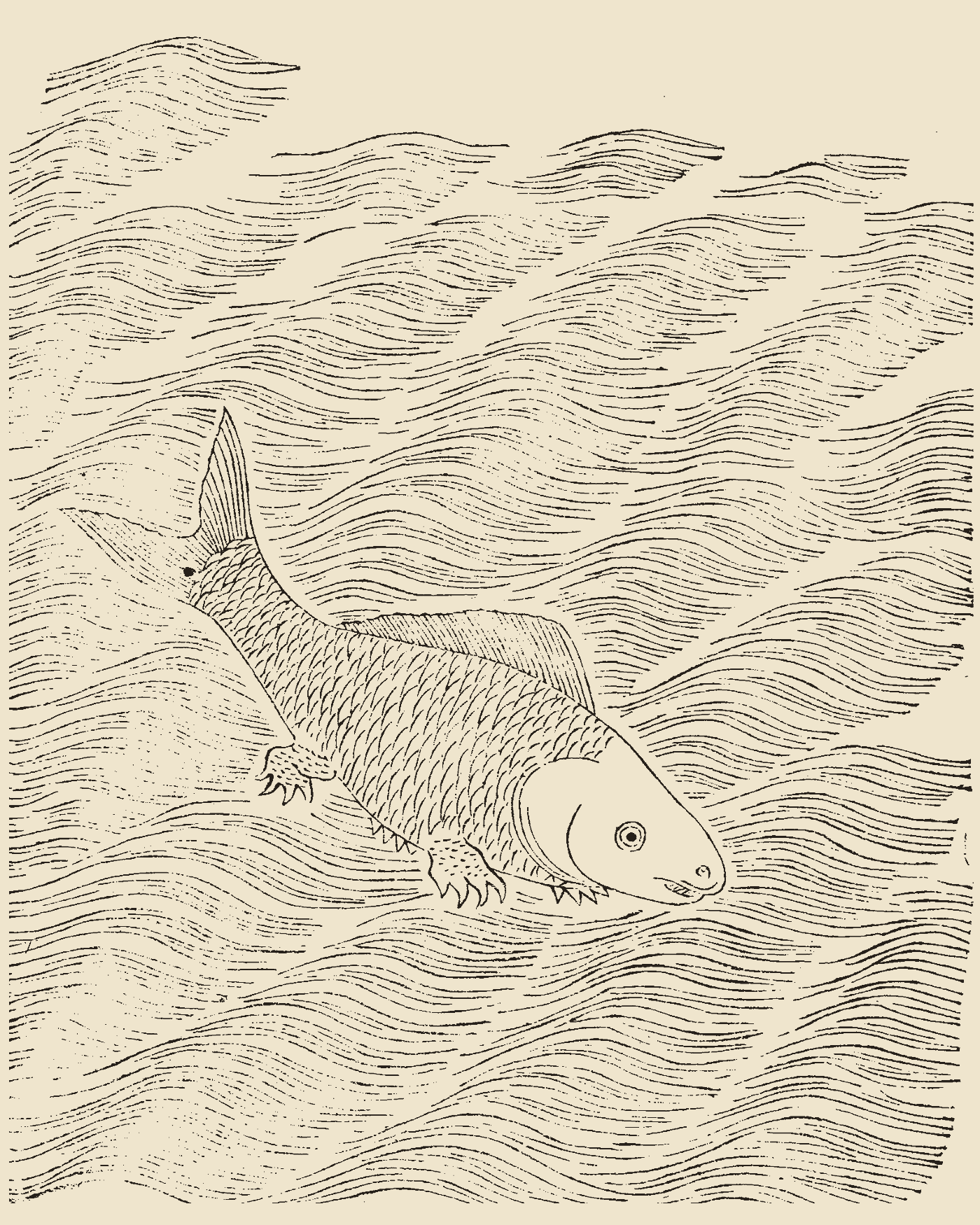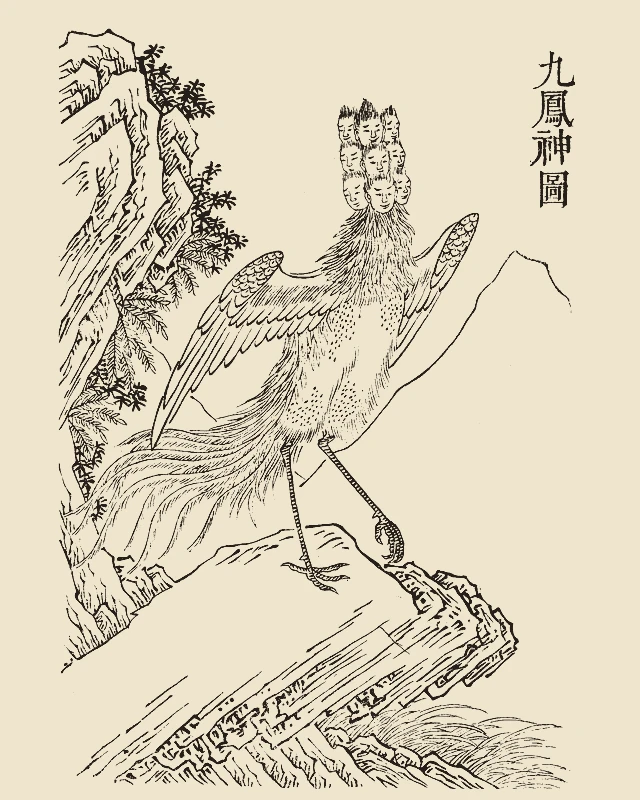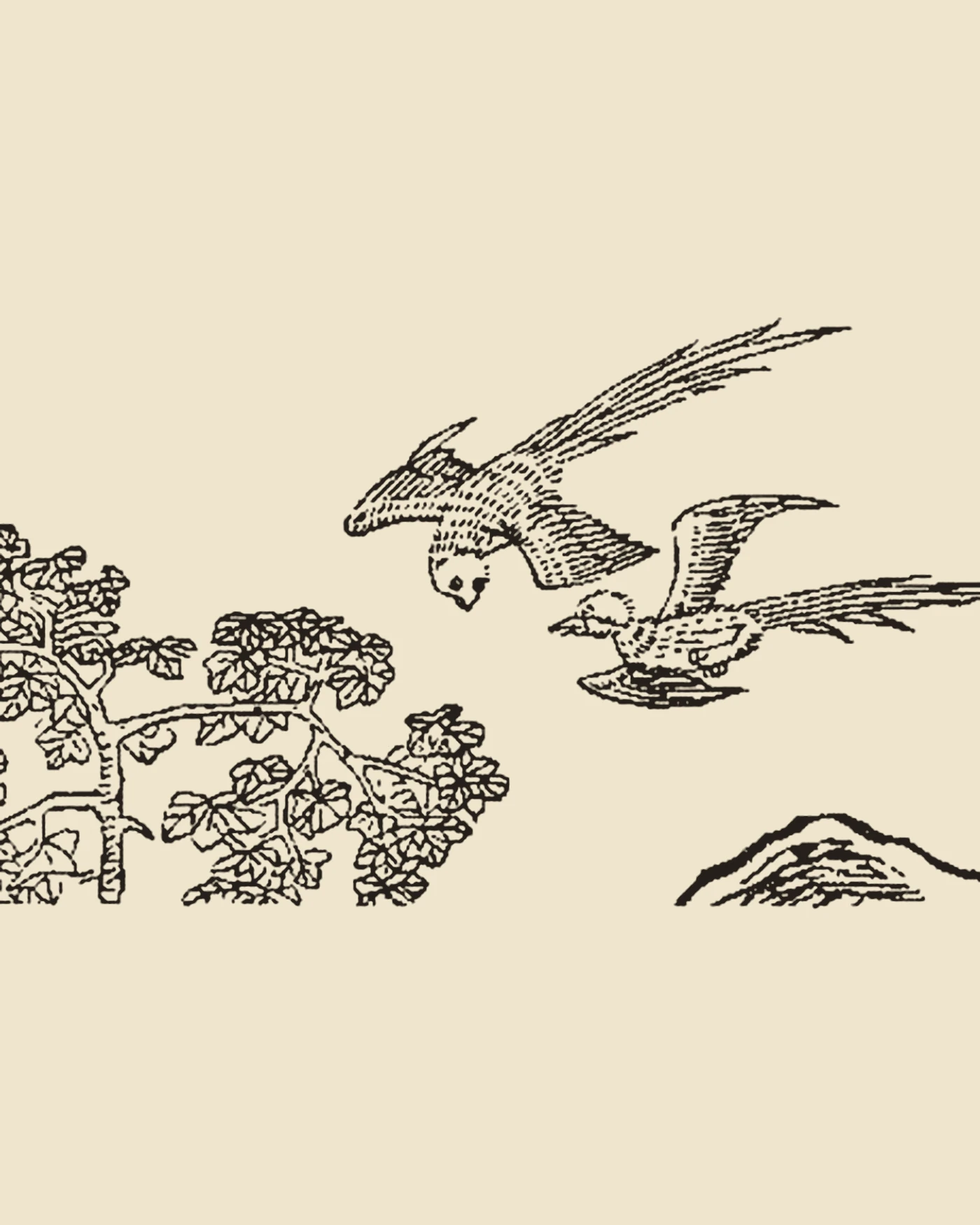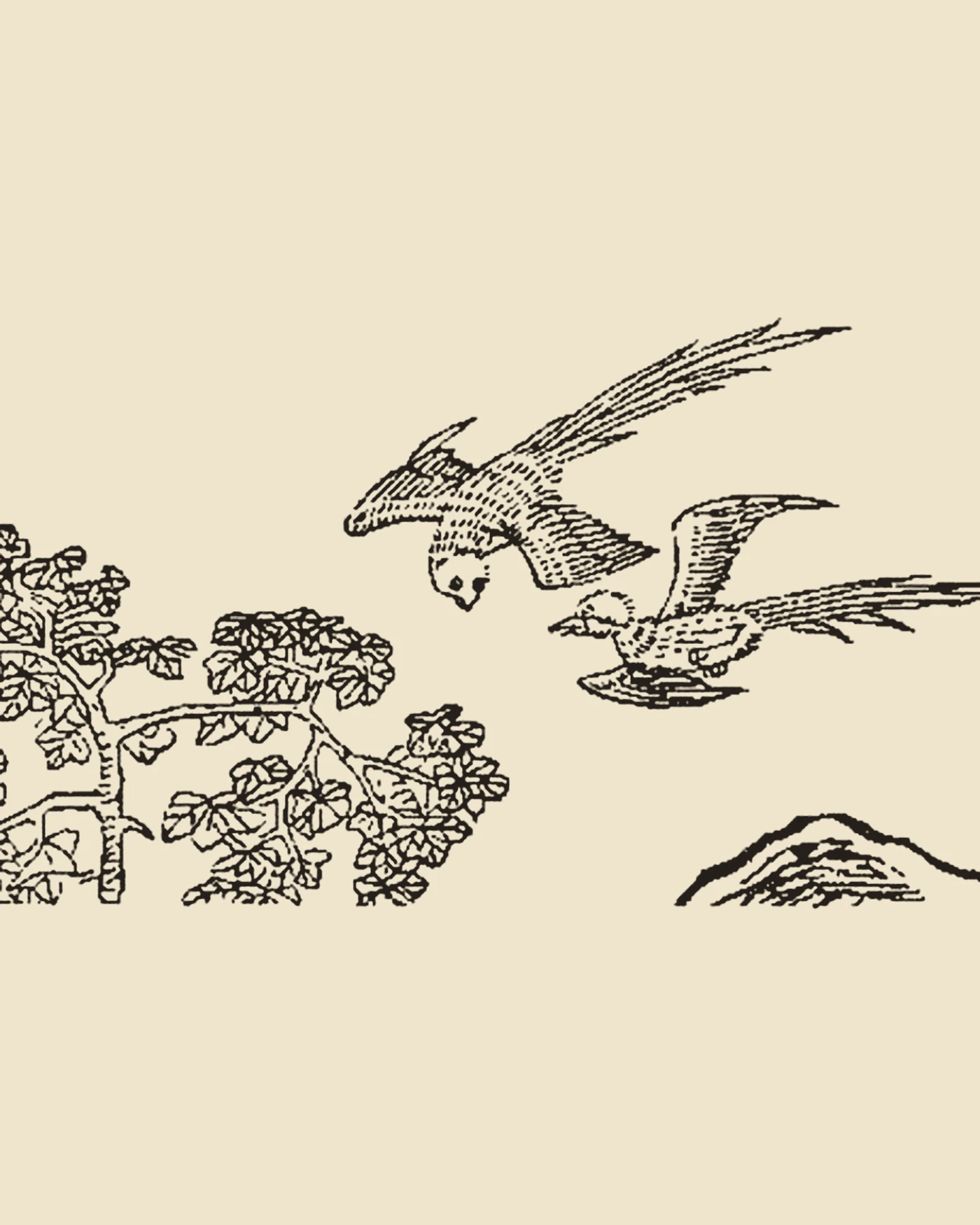
An auspicious flocking bird of Mount Manlian with mottled plumage like a female pheasant, flying in groups and curing wind ailments.《山海经》记载蔓联之山有鸟群居而朋飞,毛如雌雉,名曰鵁,其鸣自呼,食之已风。
Two hundred li further north is Mount Manlian, where no plants grow. There is a bird here that lives in flocks and flies in groups, whose plumage resembles a female pheasant, called the Jiaoniao. It cries out its own name, and eating it cures wind ailments.
山海經·北山經 · Shan Hai Jing · Classic of the Northern Mountains · Wikisource
又北二百里,曰蔓聯之山,其上無草木。有鳥焉,群居而朋飛,其毛如雌雉,名曰鵁,其鳴自呼,食之已風。
Two hundred li further north is Mount Manlian, where no plants grow. There is a bird here that lives in flocks and flies in groups, whose plumage resembles a female pheasant, called the Jiaoniao. It cries out its own name, and eating it cures wind ailments.
Comparing the Books典籍对比
Unlike the solitary singing Luan or fiery Vermilion Bird, the Jiaoniao is characterized by its communal flocking flight, pheasant-like protective plumage, and wind-curing medicinal virtues.
The story来历与故事
The Jiaoniao is an auspicious flocking bird of Mount Manlian in the Shan Hai Jing, adorned with the mottled plumage of a female pheasant, flying in synchronized clouds, and curing wind ailments.
The Flocking Fowl of Mount Manlian蔓联荒峰与朋飞鵁鸟
Jiaoniao is an auspicious flocking bird inhabiting the treeless slopes of Mount Manlian.蔓联之山草木不生,山巅群居有羽如雌雉、朋飞相逐之神鸟鵁。
Two hundred li north across the northern mountain ridge stands Mount Manlian, a barren wilderness devoid of trees or vegetation.
Inhabiting these windy crags is a miraculous bird named Jiaoniao, known for living in dense harmonious colonies and taking flight in synchronized formations.
Ancient geographers observed that its feathers closely resembled those of a female pheasant, providing earthy camouflage against bare granite cliffs.
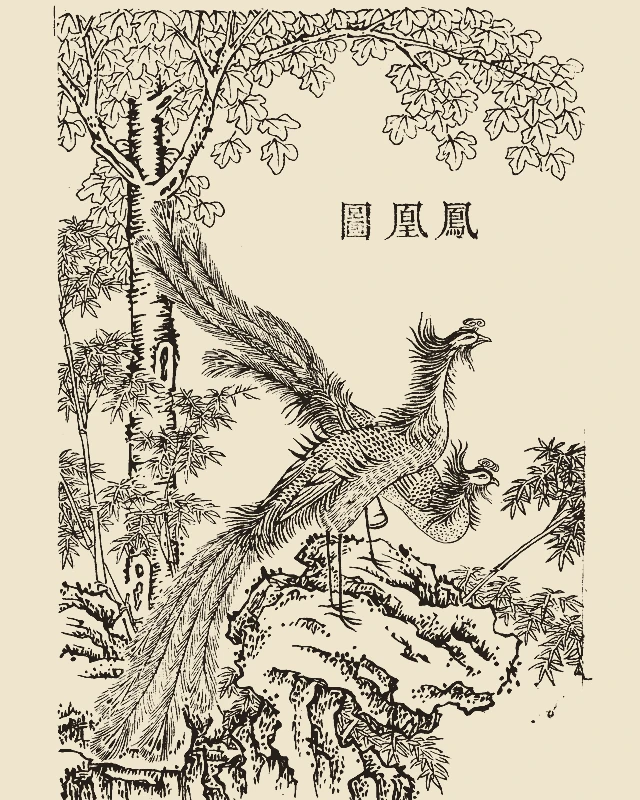
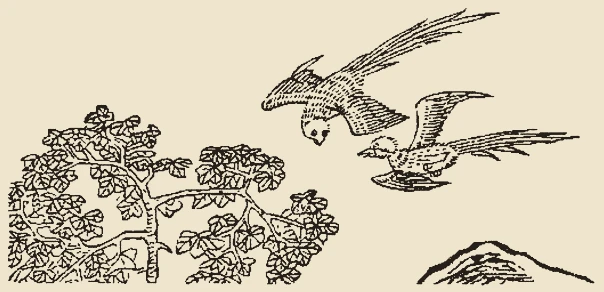
Full woodblock plate of the paired Jiaoniao birds swooping past mountain foliage. Hu Wenhuan, Newly Carved Illustrated Shan Hai Jing, 1593明万历胡文焕刻《新刻山海经图》“鵁鸟”完整横幅版面(1593)
Classical Depictions in Ming Dynasty Woodblock Prints明代刻本白描灵禽
Ming woodblock prints portray Jiaoniao soaring in collective harmony amidst rugged peaks.明万历胡文焕刻本生动刻画鵁鸟翱翔于高山云雾之间,千羽呼应、体态古雅。
In dynastic encyclopedias and avian treatises, the Jiaoniao was celebrated as an exemplar of coordinated flight and natural harmony.
The 1593 Illustrated Shan Hai Jing by Hu Wenhuan portrays the Jiaoniao soaring amidst winding mountain ridges, capturing its sharp beak and delicate tail feathers.
Woodcut compositions emphasize the dynamic sense of motion, mirroring classical accounts of its resonant self-naming cry across mountain canyons.
Medicinal Symbolism and Collective Spirit药理灵瑞与群力象征
Classical medical tradition records that consuming the flesh of the Jiaoniao dispels wind ailments, protecting travelers against paralysis and joint aches.
又北二百里,曰蔓聯之山,其上無草木。有鳥焉,群居而朋飛,其毛如雌雉,名曰鵁,其鳴自呼,食之已風。
Two hundred li further north is Mount Manlian, where no plants grow. There is a bird here that lives in flocks and flies in groups, whose plumage resembles a female pheasant, called the Jiaoniao. It cries out its own name, and eating it cures wind ailments.
— 山海經·北山經 · Shan Hai Jing
The bird's ability to thrive amidst bleak treeless peaks inspired ancient philosophers to see community solidarity as a shield against environmental hardship.
In classical Chinese heritage, the Jiaoniao stands as a fascinating convergence of early ornithological observation, folk medicine, and mythic imagination.
Record档案
Record Card档案卡
Type
Auspicious Avian (flocking pheasant-bird of Mount Manlian)
What kind of creature is the Jiaoniao in the Shan Hai Jing?
The Jiaoniao is a mythical bird of Mount Manlian described in the Classic of the Northern Mountains. It resembles a female pheasant, lives and flies in groups, cries its own name, and cures wind ailments.
Where does the Jiaoniao live according to classical records?
According to classical records, the Jiaoniao inhabits Mount Manlian, a northern mountainous peak devoid of trees and plants located two hundred li north of Mount Duntou.
What are the medicinal properties attributed to the Jiaoniao?
Classical texts state that eating its flesh cures wind ailments, which ancient medical treatises interpreted as relieving rheumatism, joint aches, and cold paralysis.