niǎo shēn lóng shǒu shén

鳥身龍首神Dragon-headed Mountain Gods

The ten avian-bodied, dragon-headed mountain gods of Mount Queshan worshipped with buried jade discs.作为整部《山海经》开篇之首脉,南山经鹊山山系自招摇之山逶迤东进,直至箕尾之山,连绵十座名山,延袤两千九百五十里。

Mountain䧿山

Queshan range, ten mountains南山鹊山十座名山

凡䧿山之首

Form龍首

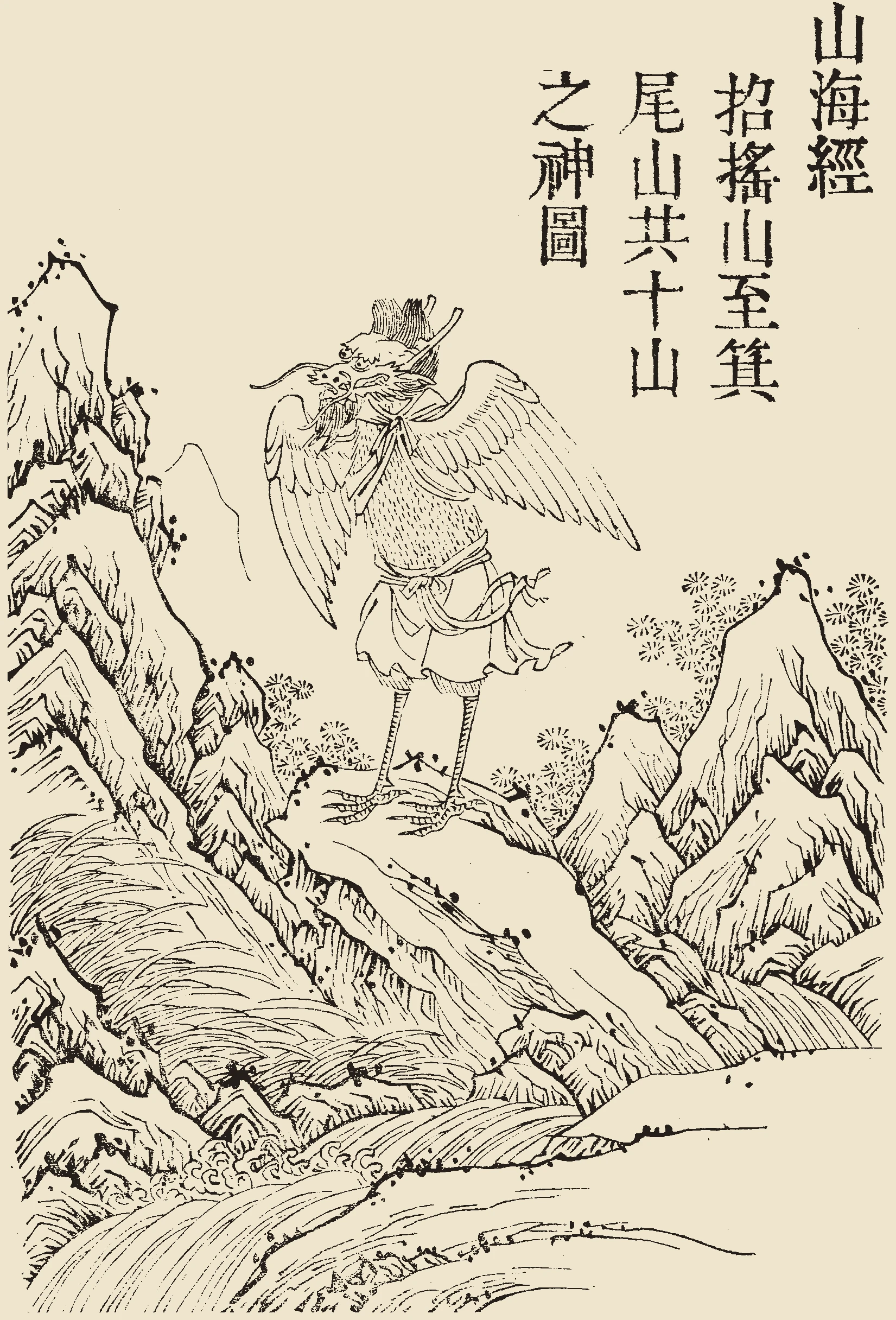
Bird body with dragon head身如飞鸟头为龙首

其神狀皆鳥身而龍首

Jade璋玉

Buried jade blade in worship祭祀时将璋玉瘗埋

用一璋玉瘞

Tribute稌米

Offered pure glutinous rice敬献香甜稻谷

糈用稌米

《清内府铜活字印本《古今图书集成·神异典》》版画:鳥身龍首神龍首Horned Dragon Head崢嶸威嚴之角龍頭顱龍首Horned Dragon Head崢嶸威嚴之角龍頭顱龍髯Dragon Whisker霜雪飛舞之飄逸龍髯龍髯Dragon Whisker霜雪飛舞之飄逸龍髯鳥羽Avian Feathered Wings排雲而起之神鳥羽翼身軀鳥羽Avian Feathered Wings排雲而起之神鳥羽翼身軀利爪Perching Talons穩踏南山之銳利禽爪利爪Perching Talons穩踏南山之銳利禽爪
鳥身龍首

Bird-Bodied Dragon-Headed Gods

山海經·南山經
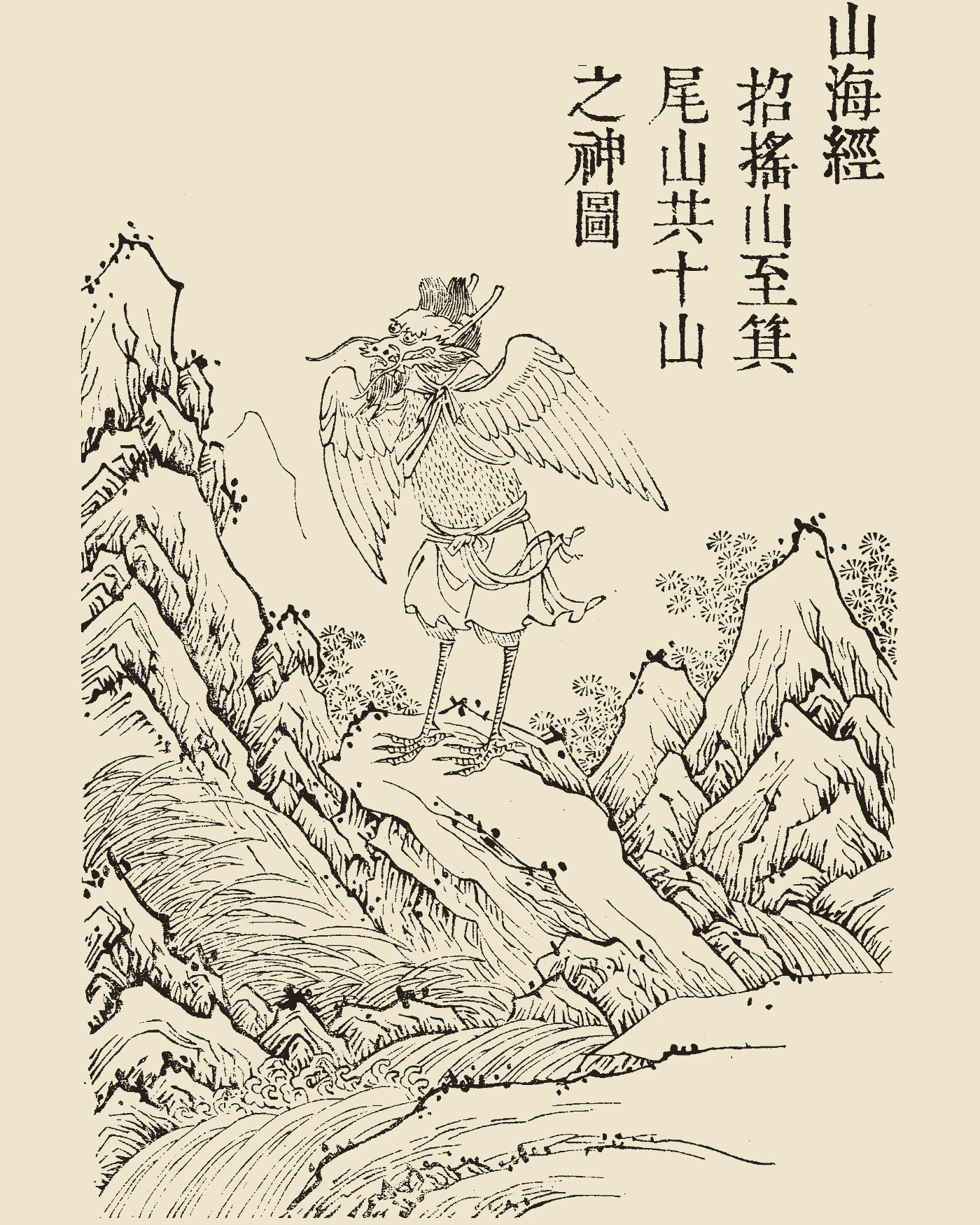
鳥身龍首神圖, 清内府铜活字印本《古今图书集成·神异典》, woodblock print, 1726古籍刻本《清内府铜活字印本《古今图书集成·神异典》》“鳥身龍首神图”,公有领域版画 · Public domain公有领域

Highlighted words: anatomy part · feature · form type — tap to jump标色词:形态部位 · 特征 · 形态类别,点击可跳转

The texts原文

Original Text & Translation原文与译文

山海經·南山經 · Shan Hai Jing · Classic of the Southern Mountains · Wikisource

凡䧿山之首,自招搖之山,以至箕尾之山,凡十山,二千九百五十里。其神狀皆鳥身而龍首,其祠之禮毛:用一璋玉瘞,糈用稌米,一璧
In all, the beginning of Mount Queshan, from Mount Zhaoyao to Mount Jiwei, comprises ten mountains and two thousand nine hundred and fifty li. The shape of their gods is in all cases a bird body with a dragon head.

Comparing the Books典籍对比

Standing as the opening deity group of the entire Classic of Mountains and Seas, the Bird-Bodied Dragon-Headed Mountain Gods initiate the canonical ritual geography of ancient China.
The story来历与故事

The ten avian-bodied, dragon-headed mountain gods of Mount Queshan worshipped with buried jade discs.

The Lore of Niaoshenlongshoushen鳥身龍首神之古籍神异记述

At the opening threshold of the Classic of Mountains and Seas, spanning nearly t作为整部《山海经》开篇之首脉,南山经鹊山山系自招摇之山逶迤东进,直至箕尾之山,连

At the opening threshold of the Classic of Mountains and Seas, spanning nearly three thousand li from Mount Zhaoyao on the western ocean shores to the eastern terminus of Mount Jiw

ei, extended the great range of Mount Queshan. Ruling these ten peaks were the ten Avian-Bodied Dragon-Headed Spirits. Each deity soared through the clouds upon the vast feathered wings and breast of a great avian, yet their noble crests bore the majestic horned, bearded head of an ancient dragon. When they descended upon forest crags, ancient priests dug sacred pits to bury polished zhang jade blades and pure white rice, invoking their protection over southern rivers.

Mythological Legacy of Niaoshenlongshoushen《山海經·南山經》典籍与文化传承

As the inaugural deities of the Five Mountain Classics (五臧山經), the Bird-Bodied Dragon-Headed Gods establish the fundamental pre-Qin paradigm of animal-composite mountain gods recei

ving territorial jade sacrifices.

Record档案

Record Card档案卡

Type神
Also known asNiaoshenlongshoushen 鳥身龍首神; Spirits of Mount Queshan 鵲山之神
HabitatMount Queshan sequence in the Southern Mountains (南山經之首,䧿山)
TerritoryGoverns ten mountain ranges spanning 2,950 li from Zhaoyao to Jiwei
Sacred LiturgyWorshipped by burying a Zhang jade blade and offering polished bi discs (用一璋玉瘞,糈用稌米,一璧)
Earliest source山海經·南山經
Source books山海經·南山經
Image sourceChen Menglei 陳夢雷 (ed.) · Wikimedia Commons
LicensePublic domain

Frequently Asked Questions

What are the Bird-Bodied Dragon-Headed Gods in the Shan Hai Jing?

They are the ten mountain gods of the Queshan range in the Southern Mountains, opening the entire Shanhaijing text, featuring a bird body and dragon head.

What ritual offerings were made to them?

Ancient rubrics specified burying one pointed jade blade (璋玉), offering fine glutinous rice, and sacrificing a round jade disc (璧) alongside prime livestock.

Why combine a bird body with a dragon head?

The dragon head embodies subterranean and river water power, while the bird body embodies celestial flight, uniting the two supreme sacred symbols of early Chinese civilization.