jiāo chóng

驕蟲Jiaochong

The two-headed patron deity of stinging insects who rules the sanctuary of wild honey bees.平逢之山南面眺望伊水洛水,山间干燥少水而多砂石。

Heads二首

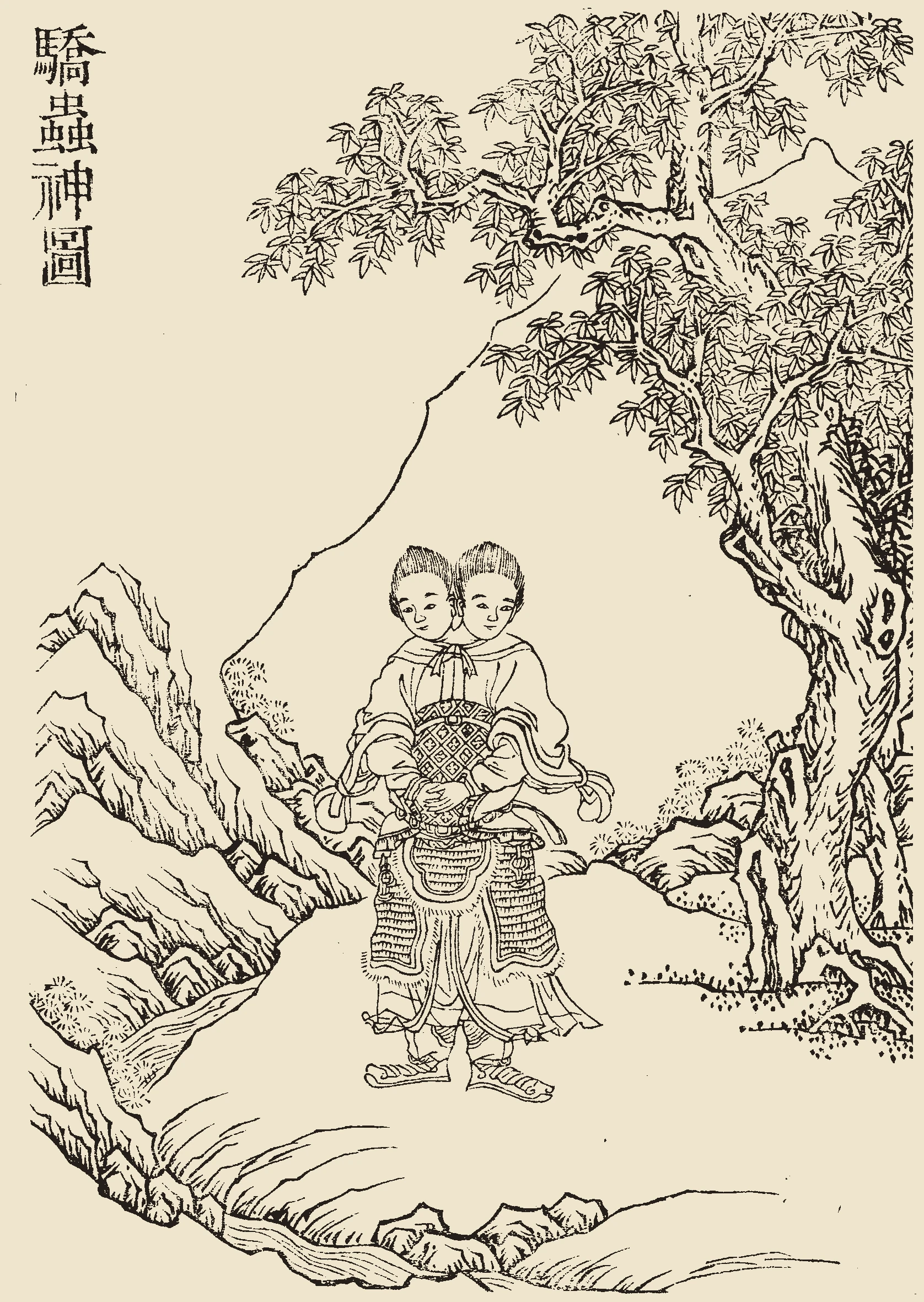
Human form with twin heads身形类人生二首

其狀如人而二首

Name神諱

Spirit named Jiaochong其名唤作骄虫

名曰驕蟲

Home蜂廬

Dwelling place of honey bees实为蜜蜂之巢庐

實惟蜂蜜之廬

Use祭禮

Propitiate without slaughter祭祀祷而勿杀

穰而勿殺

《清内府铜活字印本《古今图书集成·神异典》》版画:驕蟲左首Left Head明察西方之頭顱左首Left Head明察西方之頭顱右首Right Head顧盼東方之頭顱右首Right Head顧盼東方之頭顱神軀Sacred Torso威嚴立于石林之人軀神軀Sacred Torso威嚴立于石林之人軀蜂岩Honey Rock蜂蜜流淌之平逢石崖蜂岩Honey Rock蜂蜜流淌之平逢石崖
二首蜂神

Twin-Headed Hive Lord

山海經·中山經
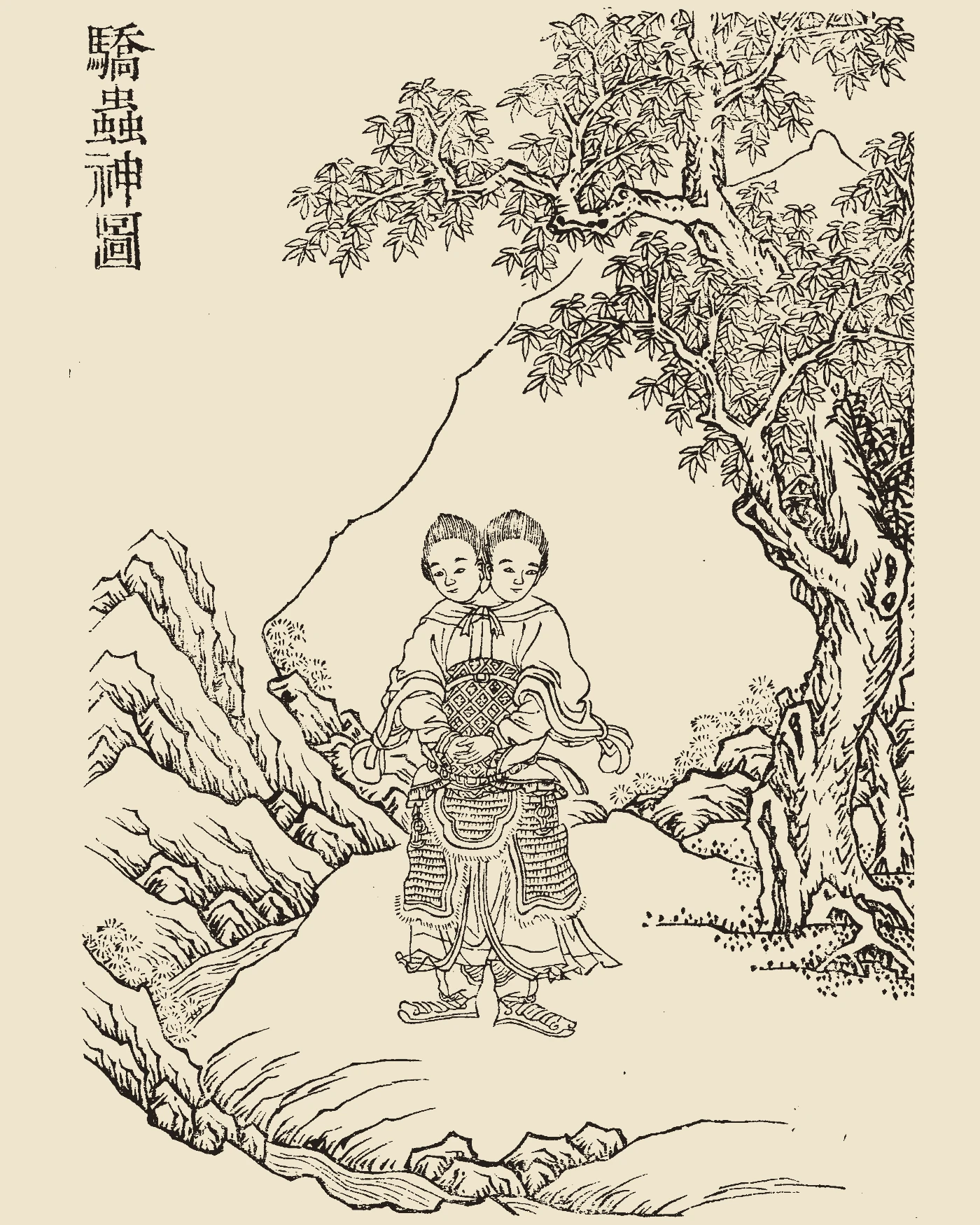
驕蟲圖, 清内府铜活字印本《古今图书集成·神异典》, woodblock print, 1726古籍刻本《清内府铜活字印本《古今图书集成·神异典》》“驕蟲图”,公有领域版画 · Public domain公有领域

Highlighted words: anatomy part · feature · form type — tap to jump标色词:形态部位 · 特征 · 形态类别,点击可跳转

The texts原文

Original Text & Translation原文与译文

山海經·中山經 · Shan Hai Jing · Classic of the Central Mountains · Wikisource

有神焉,其狀如人而二首,名曰驕蟲,是為螫蟲,實惟蜂蜜之廬,其祠之:用一雄雞,穰而勿殺。
There is a god here shaped like a human with two heads, named Jiaochong; he is the sovereign of stinging insects and in truth the dwelling-place of honey bees; in sacrificing to him: use one rooster, propitiating without slaughter.

Comparing the Books典籍对比

Unlike malevolent insect demons that blight crops, Jiaochong is a venerable mountain deity receiving formal bloodless sacrifices to ensure safe beekeeping and forest harmony.
The story来历与故事

The two-headed patron deity of stinging insects who rules the sanctuary of wild honey bees.

The Lore of Jiaochong驕蟲之古籍神异记述

Mount Pingfeng rose steeply above the stony confluence of the Yi and Luo rivers,平逢之山南面眺望伊水洛水,山间干燥少水而多砂石。然而就在这片峭壁断崖之间,却隐聚

Mount Pingfeng rose steeply above the stony confluence of the Yi and Luo rivers, its dry, sun-scorched screes barren of timber and springs. High along its sunlit sandstone crags cl

ung colonies of golden wild bees whose sweet combs dripped liquid amber down the crevices. Guarding this vast natural apiary stood Jiaochong. Possessing a human form crowned with two stern heads gazing in opposite directions, he commanded every venomous insect and bee in the wilderness. Ancient mountain folk made peaceful pilgrimages to his shrine with a live rooster, praying for protection from fatal stings.

Mythological Legacy of Jiaochong《山海經·中山經》典籍与文化传承

As the supreme deity of wild bees and stinging insects in early China, Jiaochong embodies the ancient domestication and sacred ritual respect surrounding apiculture and natural ven

有神焉,其狀如人而二首,名曰驕蟲,是為螫蟲,實惟蜂蜜之廬,其祠之:用一雄雞,穰而勿殺。

There is a god here shaped like a human with two heads, named Jiaochong; he is the sovereign of stinging insects and in truth the dwelling-place of honey bees; in sacrificing to him: use one rooster, propitiating without slaughter.

— 山海經·中山經 · Shan Hai Jing · Classic of the Central Mountains

om protection.

Record档案

Record Card档案卡

Type神
Also known asJiaochong 驕蟲; Sovereign of Stinging Insects 螫蟲之宗
HabitatMount Pingfeng in the Central Mountains (平逢之山)
Sacred OfficeSovereign master of all venomous stinging insects and wild bees
SacrificeOffered a cockerel and propitiated without slaughter (用一雄雞,穰而勿殺)
Earliest source山海經·中山經
Source books山海經·中山經
Image sourceChen Menglei 陳夢雷 (ed.) · Wikimedia Commons
LicensePublic domain

Frequently Asked Questions

Who is Jiaochong in the Shan Hai Jing?

Jiaochong is the two-headed deity of Mount Pingfeng who presides over all stinging insects and wild honey bee colonies.

Why is Mount Pingfeng called the home of wild honey?

The text explicitly designates Mount Pingfeng as 'the dwelling of honey' (蜂蜜之廬), indicating a natural mountain sanctuary teeming with wild bees.

How was Jiaochong worshipped by ancient travelers?

Worshippers offered a single rooster in ritual prayer without slaughtering the bird (用一雄雞,穰而勿殺), an unusually compassionate bloodless sacrifice.