gǔ

鼓Gu

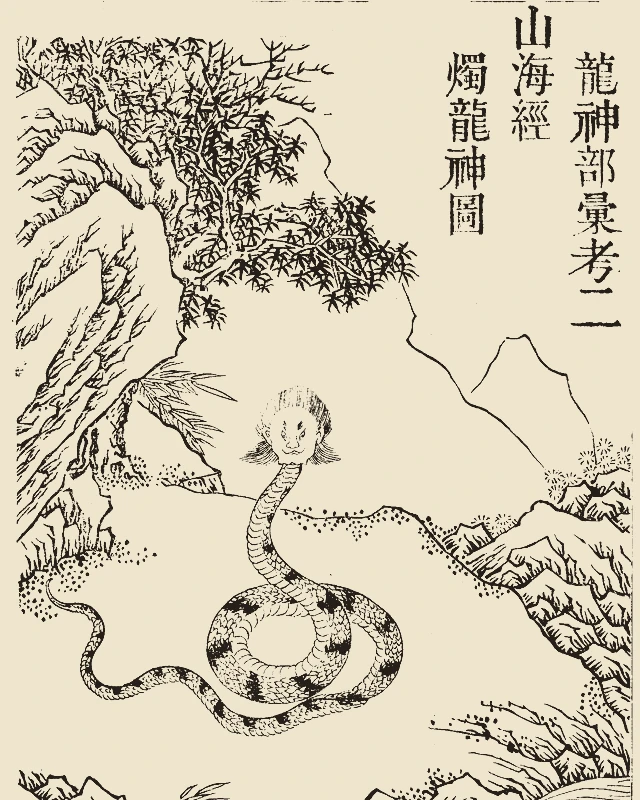
The human-faced dragon-bodied son of Mount Zhong who was slain by the Emperor and transformed into an owl-like drought bird.钟山崔嵬绝胜,乃上古烛龙神镇守之极境。

Lineage神嗣

Divine son of Mount Zhong钟山烛龙之神嗣

其子曰皷

Form龍身

Human face with dragon body人面而覆长龙躯

其狀如人面而龍身

Justice逆亂

Joined Qinpi to slay Baojiang与钦䲹共谋逆乱

殺葆江于昆侖之陽

Peril帝戮

Executed at Mount Yaoya受天帝严惩处决

帝乃戮之鍾山之東

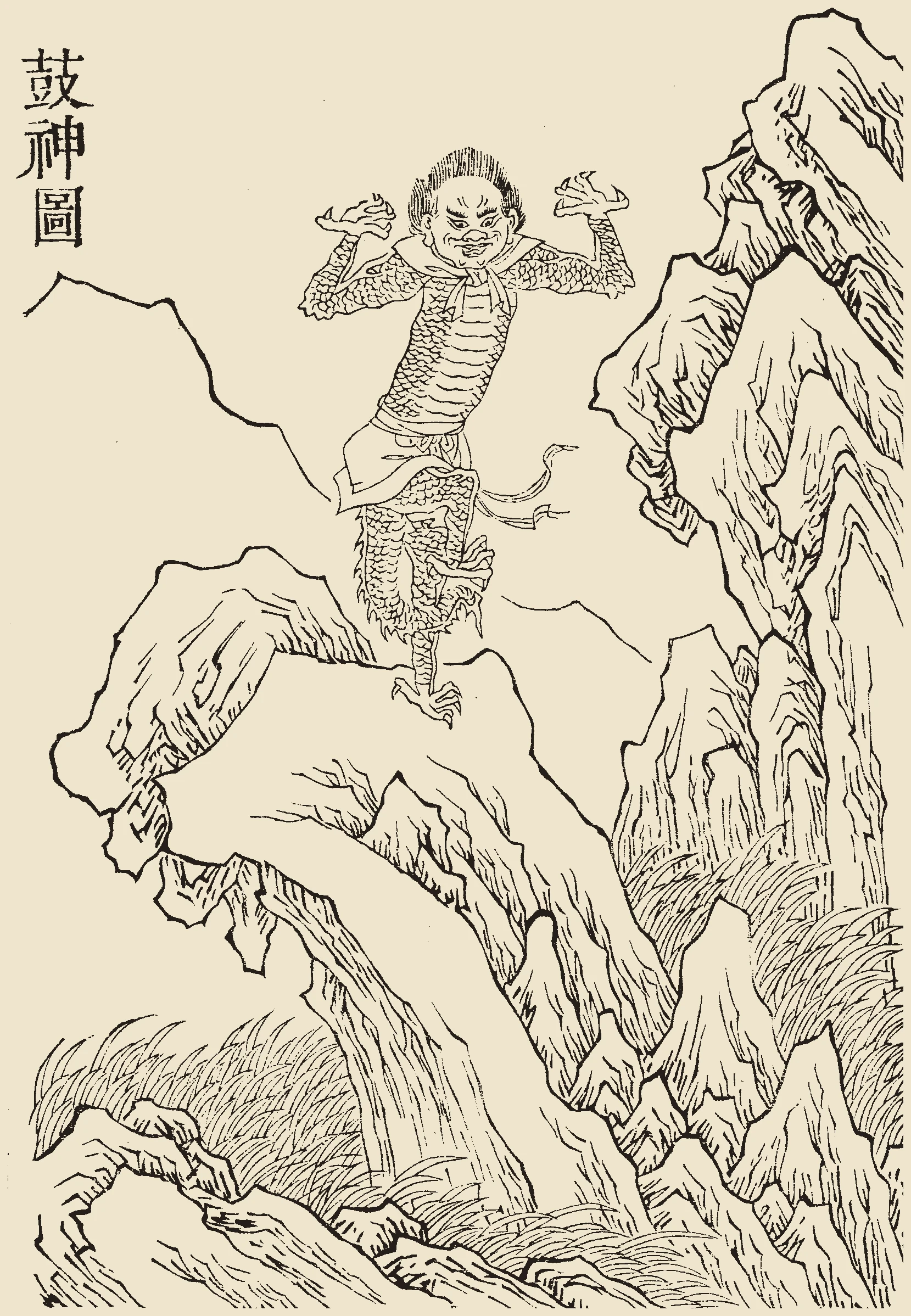
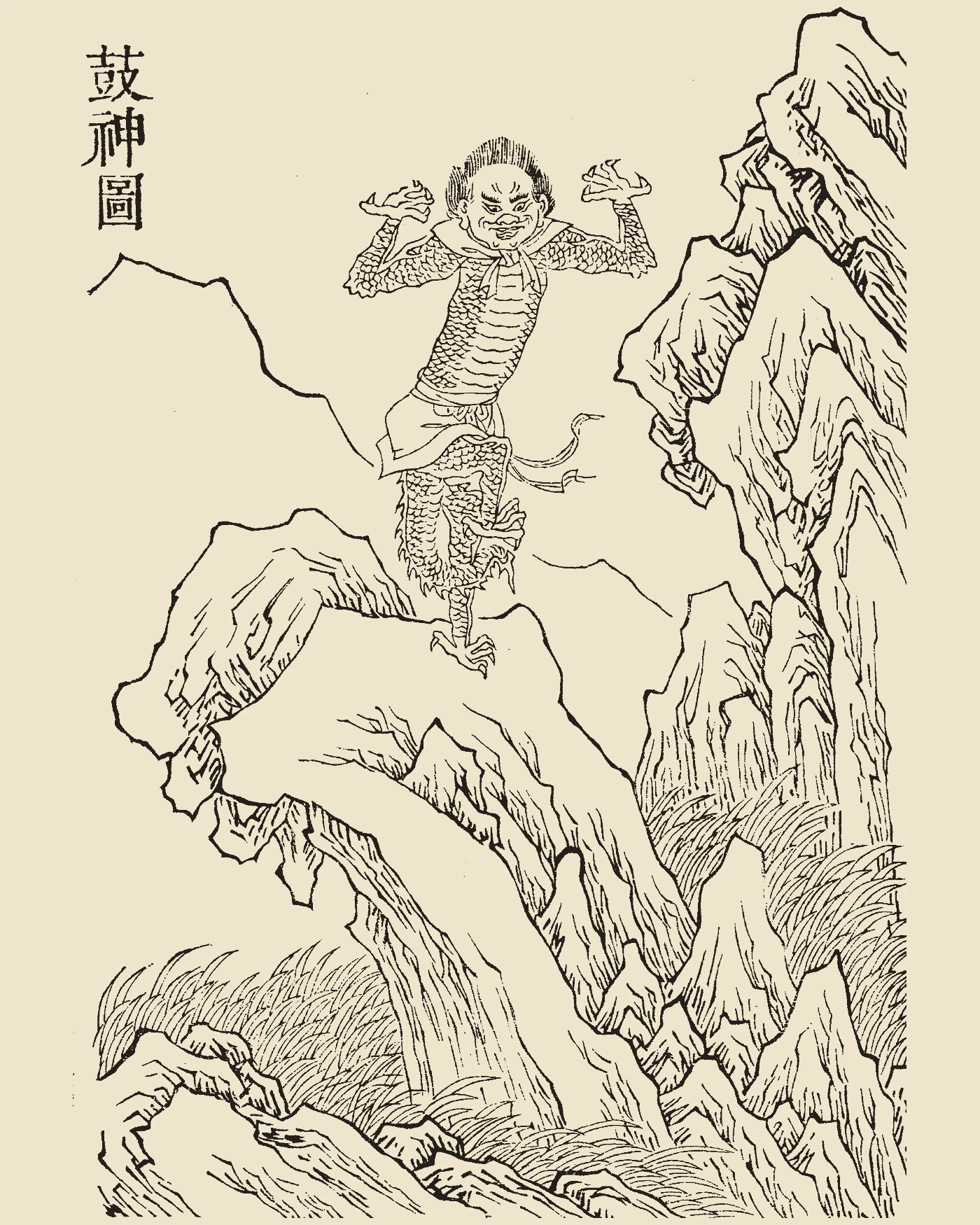
《清内府铜活字印本《古今图书集成·神异典》》版画:鼓人面Human Face鍾山神裔之端穆人首人面Human Face鍾山神裔之端穆人首龍鱗Dragon Scales周身覆蓋之寒霜龍鱗龍鱗Dragon Scales周身覆蓋之寒霜龍鱗龍身Dragon Body蜿蜒盤旋之長軀龍身Dragon Body蜿蜒盤旋之長軀𡺯崖Cliff of Doom天帝降旨誅戮之鍾山絕壁𡺯崖Cliff of Doom天帝降旨誅戮之鍾山絕壁
人面龍神

Dragon Son of Mount Zhong

山海經·西山經
鼓圖, 清内府铜活字印本《古今图书集成·神异典》, woodblock print, 1726古籍刻本《清内府铜活字印本《古今图书集成·神异典》》“鼓图”,公有领域版画 · Public domain公有领域

Highlighted words: anatomy part · feature · form type — tap to jump标色词:形态部位 · 特征 · 形态类别,点击可跳转

The texts原文

Original Text & Translation原文与译文

山海經·西山經 · Shan Hai Jing · Classic of the Western Mountains · Wikisource

其子曰皷,其狀如人面而龍身,是與欽䲹殺葆江于昆侖之陽,帝乃戮之鍾山之東曰𡺯崖。
His son was named Gu; his shape was like a human face with a dragon body; he and Qinpi slew Baojiang on the sunny side of Mount Kunlun, so the Emperor executed him east of Mount Zhong at Yaoya Cliff.

Comparing the Books典籍对比

Son of the great primeval torch-dragon Zhulong, Gu's mythological execution and rebirth into a drought bird parallels divine punishment legends such as Gun and Chiyou.
The story来历与故事

The human-faced dragon-bodied son of Mount Zhong who was slain by the Emperor and transformed into an owl-like drought bird.

The Lore of Gu鼓之古籍神异记述

Northwest of the jade-strewn vales of Mount Mishan stood Mount Zhong, realm of t钟山崔嵬绝胜,乃上古烛龙神镇守之极境。烛龙之子名唤鼓,生得人面龙身,威风凛凛,鳞

Northwest of the jade-strewn vales of Mount Mishan stood Mount Zhong, realm of the primeval torch-dragon. Here dwelt his divine son, Gu. Possessing a majestic human face set atop a

winding scaled dragon body, Gu held formidable celestial power. Yet pride led him and his confederate Qinpi to slay the spirit Baojiang on the southern slopes of Mount Kunlun. Outraged by this transgression, the Celestial Sovereign executed Gu on the precipitous eastern crags of Mount Zhong. Upon his death, Gu's vengeful spirit transformed into the Jun bird, whose screech brings devastating droughts wherever it flies.

Mythological Legacy of Gu《山海經·西山經》典籍与文化传承

The tragic execution and aviary transformation of Gu on Mount Zhong is one of the most poignant primeval judgment myths in Chinese antiquity, exploring guilt, divine punishment, an

其子曰皷,其狀如人面而龍身,是與欽䲹殺葆江于昆侖之陽,帝乃戮之鍾山之東曰𡺯崖。

His son was named Gu; his shape was like a human face with a dragon body; he and Qinpi slew Baojiang on the sunny side of Mount Kunlun, so the Emperor executed him east of Mount Zhong at Yaoya Cliff.

— 山海經·西山經 · Shan Hai Jing · Classic of the Western Mountains

d spectral metamorphosis.

Record档案

Record Card档案卡

Type神
Also known asGu 鼓; Son of Mount Zhong 鍾山之子
LineageSon of the supreme solar dragon deity Zhulong (鍾山之子)
ExecutionSlain on Mount Yaoya for the murder of Baojiang (帝乃戮之鍾山之東)
TransformationTransformed into the Jun bird whose sighting brings great drought (化為鵕鳥,見則其邑大旱)
Earliest source山海經·西山經
Source books山海經·西山經
Image sourceChen Menglei 陳夢雷 (ed.) · Wikimedia Commons
LicensePublic domain

Frequently Asked Questions

Who was Gu in the Shan Hai Jing?

Gu was the divine son of the supreme mountain spirit of Mount Zhong (Zhulong), described with a human face and a dragon body.

Why was Gu executed by the Celestial Emperor?

Gu joined forces with Qinpi to murder the deity Baojiang on the slopes of Mount Kunlun; in retribution, the Celestial Emperor executed him at Yaoya Cliff.

What creature did Gu transform into after his death?

After his execution, Gu transformed into the Jun bird (鵕鳥), shaped like a kite with red feet and straight beak, whose appearance brings widespread drought.