Lù Yú

鯥魚Luyu, the Reversible Ox-Fish

An amphibious ox-bodied fish with winged flanks and snake tail that dies in winter and revives in summer.鯥魚蹲伏于氐阳山水陆交界处,牛头角昂扬,两肋生有宽长飞羽,身后长拖灵蛇之尾,冬眠如僵死,夏暖即苏生。

Body身形

Like an ox, land-dwelling似大牛而行陆地

狀如牛

Tail蛇尾

Serpent tail拖曳柔软细长尾

蛇尾

Wings生羽

Wings under flanks双翼生于侧肋旁

有翼

Cure疗疾

Cures swelling diseases能除尽周身痈疽

食之無腫疾

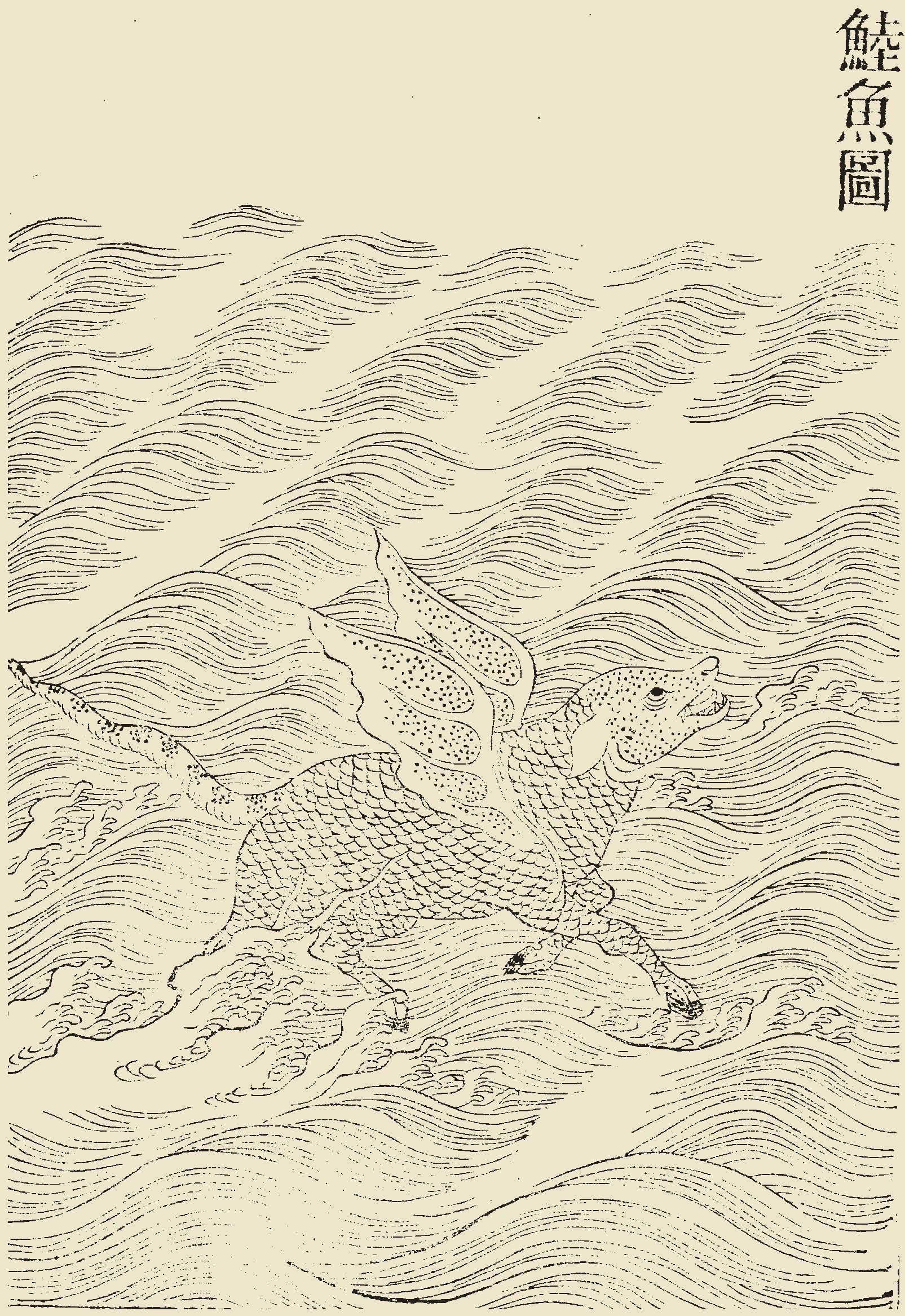
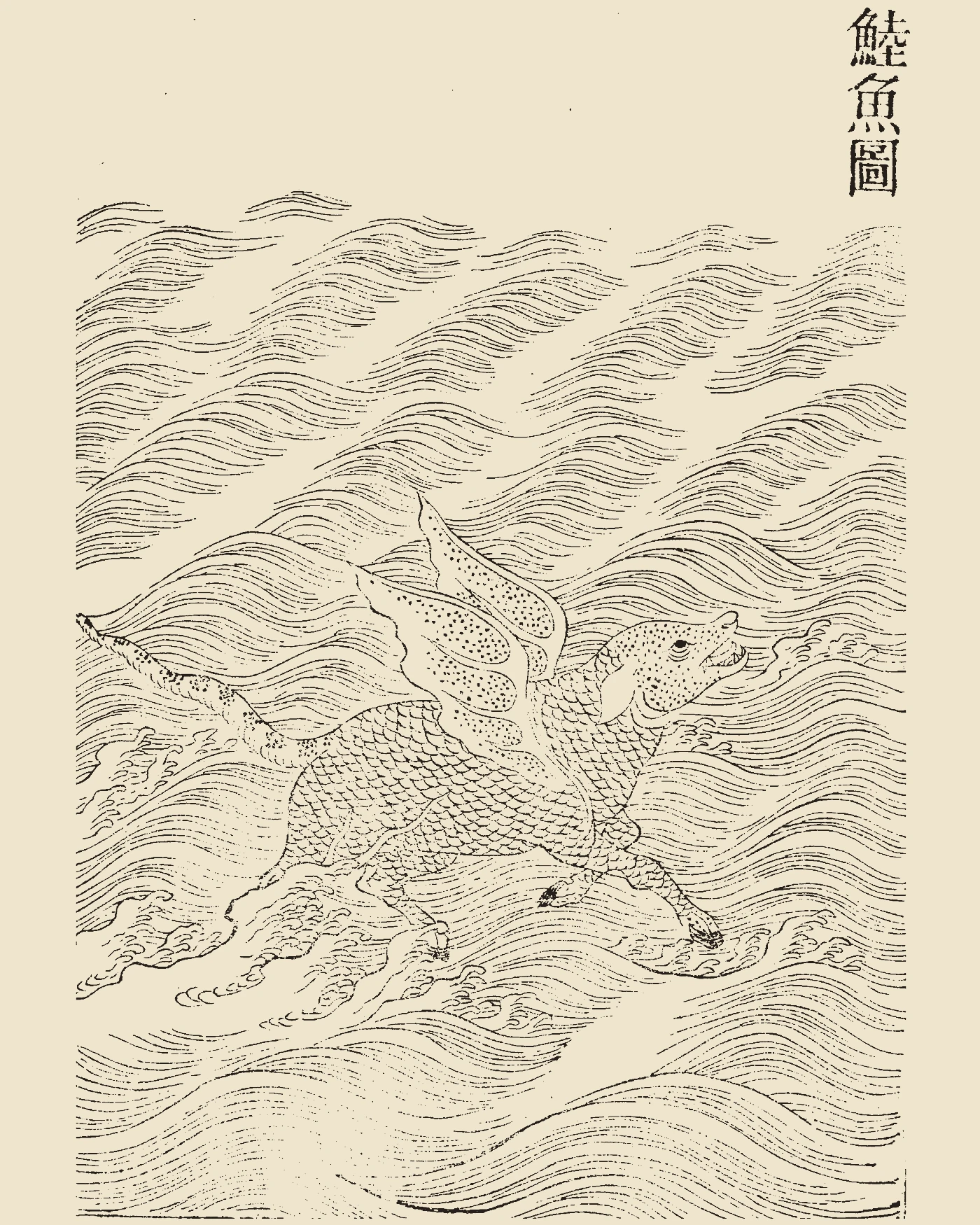
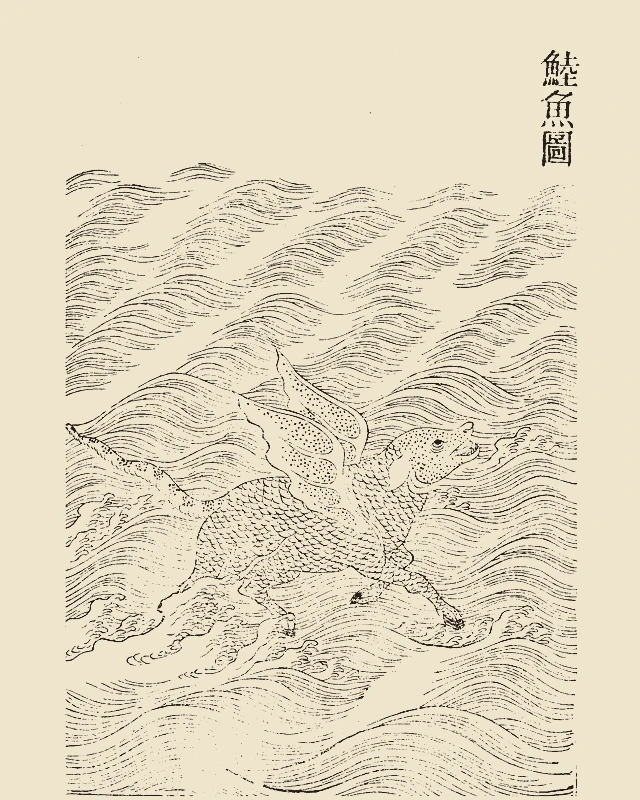
《古今图书集成》版画:鯥魚牛角首颅Horned bovine head头部如健壮野牛,双角峥嵘面容沉毅。牛角首颅Horned bovine head头部如健壮野牛,双角峥嵘面容沉毅。胁下羽翅Flank-sprouting wings两肋肉褶下伸展出飞鸟一般的羽翼。胁下羽翅Flank-sprouting wings两肋肉褶下伸展出飞鸟一般的羽翼。蛇腹蜿蜒Winding serpentine belly躯干中段兼具走兽肌理与水族鳞甲。蛇腹蜿蜒Winding serpentine belly躯干中段兼具走兽肌理与水族鳞甲。长卷蛇尾Long coiled snake tail身后拖曳细长灵动的长蛇尾巴。长卷蛇尾Long coiled snake tail身后拖曳细长灵动的长蛇尾巴。
氐陽之山,有草焉,其狀如薑而黃華,名曰茈草,可以染黃。

An amphibious ox-bodied fish with winged flanks and snake tail that dies in winter and revives in summer.

山海經·南山經
鯥魚圖, Gujin Tushu Jicheng 古今圖書集成, Qin Chong Dian (Section on Birds and Animals), woodblock print, 1726清·陈梦雷等编《古今图书集成·禽虫典》“鯥魚图”,雍正四年(1726)铜活字印本 · Public domain公有领域

Highlighted words: anatomy part · feature · form type — tap to jump标色词:形态部位 · 特征 · 形态类别,点击可跳转

The texts原文

Original Text & Translation原文与译文

山海經·南山經 · Shan Hai Jing · Classic of the Southern Mountains · Wikisource

有魚焉,其狀如牛,陵居,蛇尾有翼,其羽在魼下,其音如留牛,其名曰鯥,冬死而夏生,食之無腫疾。
There is a fish here shaped like an ox, dwelling on land, with a serpent tail and wings beneath its ribs. Its voice sounds like a lowing ox, named Lu; dormant in winter and reviving in summer. Eating it cures swelling illnesses.

Comparing the Books典籍对比

Classified paradoxically as a fish despite having an ox body and dwelling on dry land, the Luyu embodies the ancient concept of seasonal rebirth through its winter torpor and summer revival.
The story来历与故事

An amphibious ox-bodied fish with winged flanks and snake tail that dies in winter and revives in summer.

Origins & Classical Lore古籍记述与神异源流

An amphibious marvel from Mount Diyang, Luyu has an ox's physique, snake's tail, and feathered bird wings.氐阳山下的鯥鱼牛形蛇尾而肋下生翼,冬日假死夏日复苏,食之可愈一切恶痈肿疾。

Origins in antiquity

Physical features

Geographic territory

Abilities and habits

Depiction & Cultural Legacy《古今图书集成》画意与文化流传

Historical reception

有魚焉,其狀如牛,陵居,蛇尾有翼,其羽在魼下,其音如留牛,其名曰鯥,冬死而夏生,食之無腫疾。

There is a fish here shaped like an ox, dwelling on land, with a serpent tail and wings beneath its ribs. Its voice sounds like a lowing ox, named Lu; dormant in winter and reviving in summer. Eating it cures swelling illnesses.

— 山海經·南山經 · Shan Hai Jing · Classic of the Southern Mountains

Contemporary resonance

Record档案

Record Card档案卡

TypeAmphibious beast (ox-like, snake-tailed, winged, cures swellings)
Also known asLu fish (鯥 / 鯥魚), Ox-fish of Mount Diyang (氐陽牛魚)
HabitatRivers of Mount Diyang (Southern Mountains); lives predominantly on land
PowerPossesses cyclical death and resurrection (dies in winter and revives in summer)
UseMedicinal fish (eating its flesh cures tumors, swellings, and carbuncles)
Earliest source山海經·南山經
Source books山海經·南山經
Image sourceChen Menglei 陳夢雷 (ed.) · Wikimedia Commons
LicensePublic domain

Frequently Asked Questions

既然形如牛、在陆地生活,为何会被称为“鱼”?

先秦先民的“鱼”字泛指诸多水生或两栖动物。鯥鱼出没于氐阳之水,肋下有鳍状羽翼,善于在沼泽穿梭,且拥有类似水族的滑润肌理,故古籍将其系于鱼类部属。

“其羽在魼下”的“魼”是什么部位?

“魼”(音去)指鱼类的侧腹或胁下肋骨处。此句意指其鸟羽并非长在脊背,而是如鳍一般生于两胁下方,构型奇诡独特。

“冬死夏生”在现实动物界是否存在对应?

非常吻合高寒两栖爬行动物或某些肺鱼的“极端冬眠/夏眠”状态。其体温降至极低、生理代谢几乎停止,古人未明其冬眠机理,直观视之为神奇的死而复生。