Liǎngtóushé

兩頭蛇Liangtoushe

The ominous two-headed serpent of ancient Chu; slaying and burying it to protect future travelers made Sun Shu'ao a legend.先秦楚地原野苍茫,民间深信见双头怪蛇者难逃天寿之灾。

Size粗细

Finger size体量纤细仅如指头

大如指

Gait行进

Both ends move双端互引自如摆动

兩頭俱能行

Head端部

No eyes or mouth末端无耳目唇齿

一頭無目無口

Name名号

Yue King Snake越地先民呼作越王神蛇

一名越王蛇

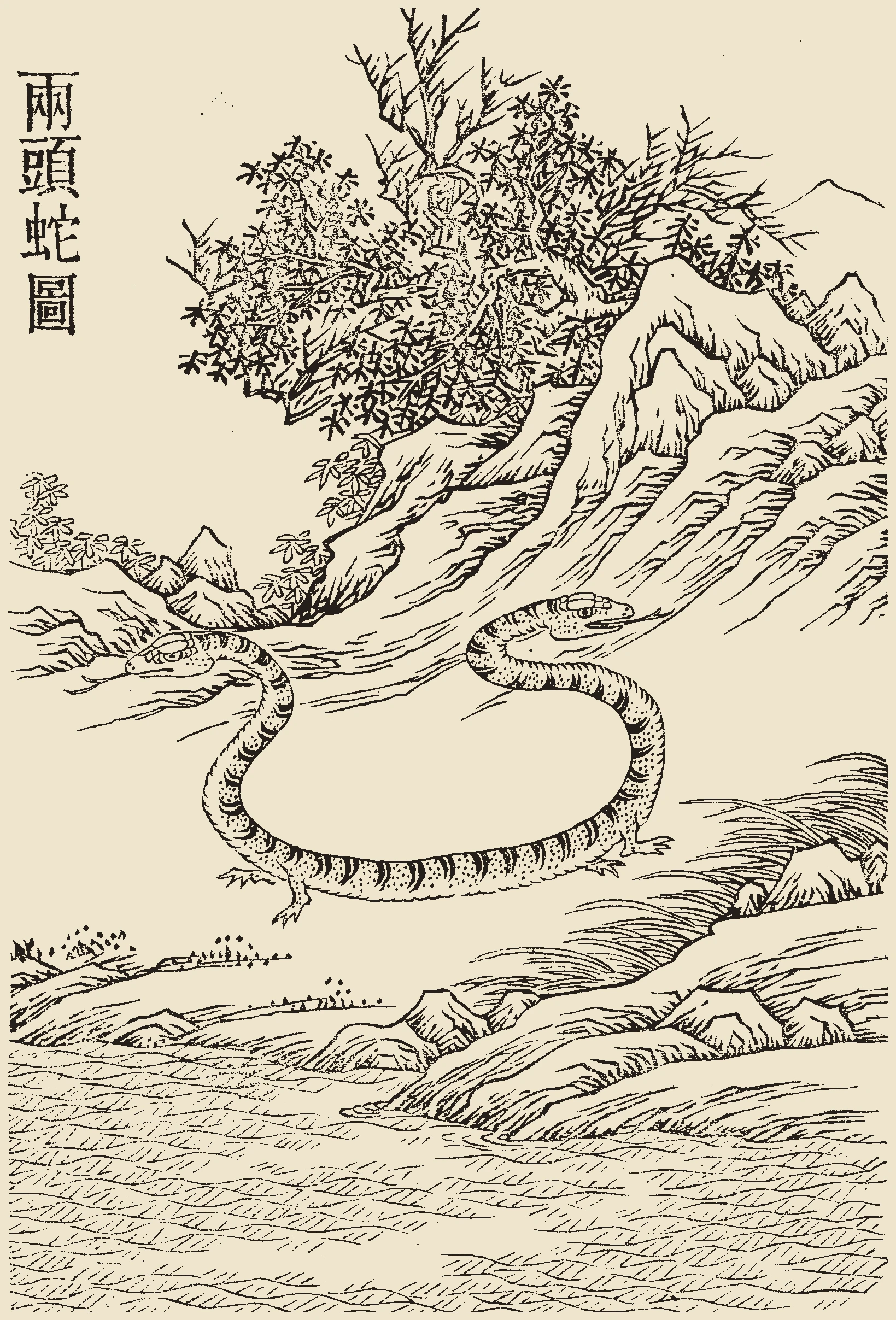
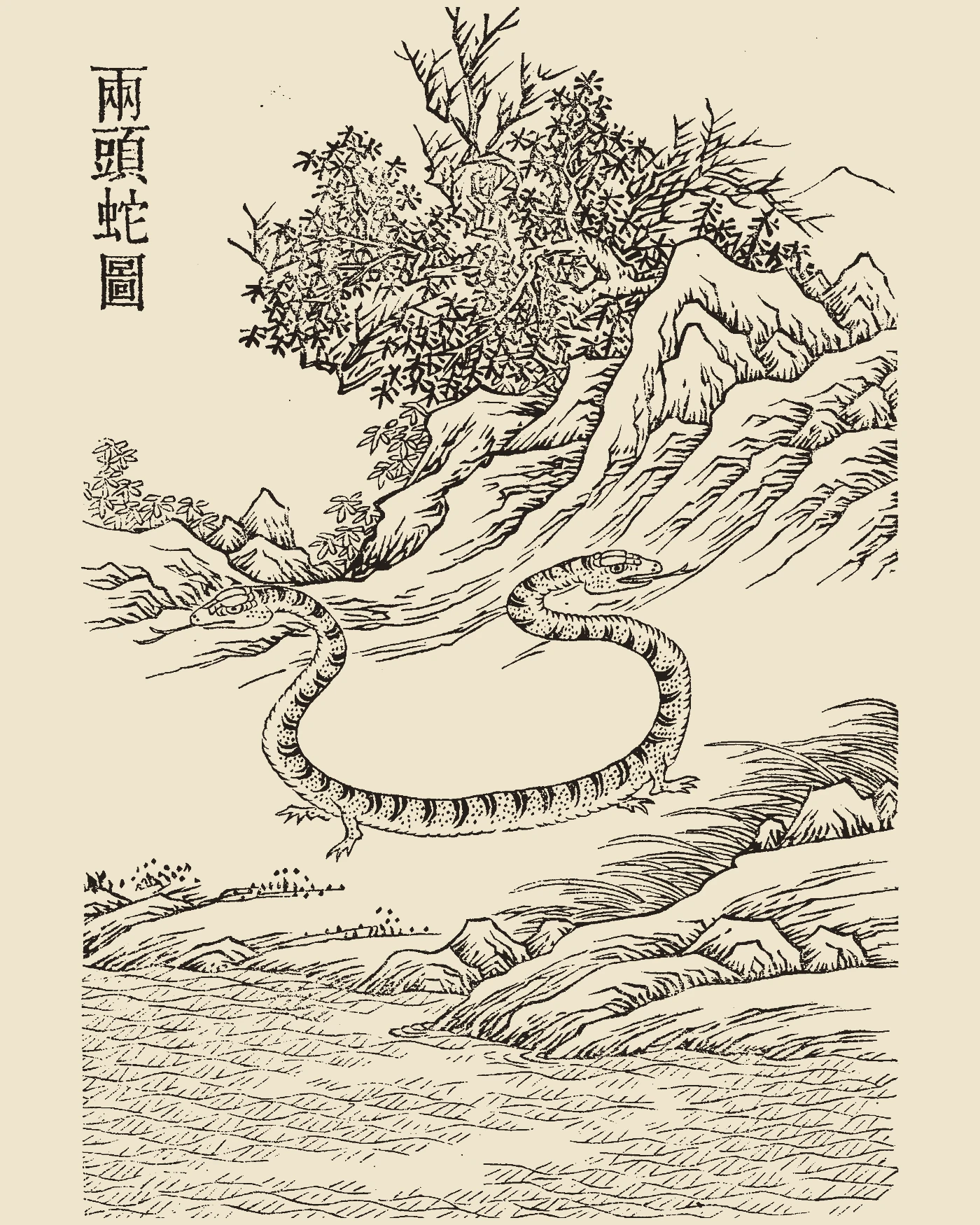
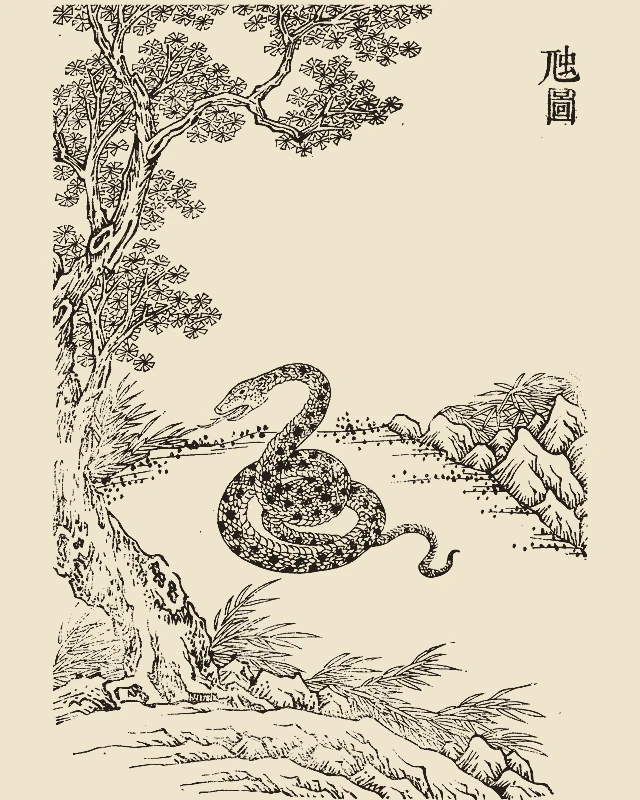
《古今图书集成》版画:兩頭蛇雙頭dual heads兩頭俱能行雙頭dual heads兩頭俱能行蛇鱗serpent scales大如指蛇鱗serpent scales大如指蛇身slender body兩頭俱能行蛇身slender body兩頭俱能行兩端two extremes兩頭俱能行兩端two extremes兩頭俱能行
中央有枳首蛇,枳首者,岐頭蓋兩頭也。

In the center is the Zhishou snake; 'Zhishou' means forked-headed, having two heads.

爾雅翼·卷32
In the center is the Zhishou snake; 'Zhishou' means forked-headed, having two heads.中央有枳首蛇,枳首者,岐頭蓋兩頭也。 · Public domain公有领域

Highlighted words: anatomy part · feature · form type — tap to jump标色词:形态部位 · 特征 · 形态类别,点击可跳转

The texts原文

Original Text & Translation原文与译文

爾雅翼·卷32 · Erya Yi · Volume 32 · Wikisource

中央有枳首蛇枳首者岐頭盖兩頭也大如指一頭無目無口然兩頭俱能行一名越王蛇
In the central lands is the Zhishou snake. Zhishou means a bifurcated head—that is, two heads. It is as thick as a finger; one head lacks eyes and mouth, yet both heads are capable of moving forward. It is also called the King of Yue snake.

蛇譜 · She Pu · Treatise on Serpents · Wikisource

非孫叔敖所斬之兩頭蛇
This is not the two-headed serpent slain by Sun Shu'ao.
Show all sources (4)展开全部出处(4)

爾雅翼·卷32 · Erya Yi · Volume 32 · Wikisource

中央有枳首蛇枳首者岐頭盖兩頭也大如指一頭無目無口然兩頭俱能行一名越王蛇
In the central lands is the Zhishou snake. Zhishou means a bifurcated head—that is, two heads. It is as thick as a finger; one head lacks eyes and mouth, yet both heads are capable of moving forward. It is also called the King of Yue snake.

蛇譜 · She Pu · Treatise on Serpents · Wikisource

非孫叔敖所斬之兩頭蛇
This is not the two-headed serpent slain by Sun Shu'ao.

Comparing the Books典籍对比

The Erya Yi records the physical morphology of the two-headed serpent as the Zhishou snake, while historical chronicles commemorate prime minister Sun Shu'ao's childhood act of slaying and burying it to spare others.
The story来历与故事

The ominous two-headed serpent of ancient Chu; slaying and burying it to protect future travelers made Sun Shu'ao a legend.

The Lore of Liangtoushe兩頭蛇之古籍神异记述

Across the rolling plains of ancient Chu, old lore held that anyone crossing pat先秦楚地原野苍茫,民间深信见双头怪蛇者难逃天寿之灾。幼年孙叔敖行经道旁,忽遇两头

Across the rolling plains of ancient Chu, old lore held that anyone crossing paths with a two-headed snake was marked for untimely doom. When young Sun Shu'ao encountered the bizar

re creature slithering across the dusty trail, he wept for his mother—yet rather than fleeing, he immediately drew his blade, severed the serpent, and buried it beneath deep loam so no future passerby would suffer its fatal sight.

Depiction in the Imperial Encyclopaedia《古今图书集成》图解与文化传承

In the copper-type editions of the Gujin Tushu Jicheng, the Liangtoushe is drawn with symmetrical heads coiled defensively upon a dirt mound, standing in cultural memory as the ult

非孫叔敖所斬之兩頭蛇

This is not the two-headed serpent slain by Sun Shu'ao.

— 蛇譜 · She Pu · Treatise on Serpents

imate test of childhood virtue.

Record档案

Record Card档案卡

Typeserpent
Also known asTwo-Headed Serpent 兩頭蛇; Zhishou Snake 枳首蛇
HabitatAncient State of Chu (楚地)
PowerOmen of mortality; dual-directional crawl
UseSubject of the famous Sun Shu'ao moral legend of selfless compassion
Earliest source爾雅翼·卷32
Source books爾雅翼·卷32
蛇譜
Image sourceChen Menglei 陳夢雷 (ed.) · Wikimedia Commons
LicensePublic domain

Frequently Asked Questions

What is the Liangtoushe in Chinese tradition?

The Liangtoushe (兩頭蛇 / 枳首蛇) is the legendary two-headed serpent of southern China, long regarded in ancient superstition as a lethal omen to anyone who laid eyes upon it.

What is the famous story of Sun Shu'ao and the Two-Headed Serpent?

As a boy, future Chu prime minister Sun Shu'ao saw a two-headed snake. Fearing the fatal omen would harm subsequent travelers, he killed the snake and buried it secretly, demonstrating sublime moral selflessness.

Does the two-headed snake exist in biology?

In modern biology, two-headed snakes occasionally appear as rare polycephalic mutations, but the classical Liangtoushe was traditionally linked to blind burrowing snakes (Typhlopidae).