dòu niú

斗牛Douniu

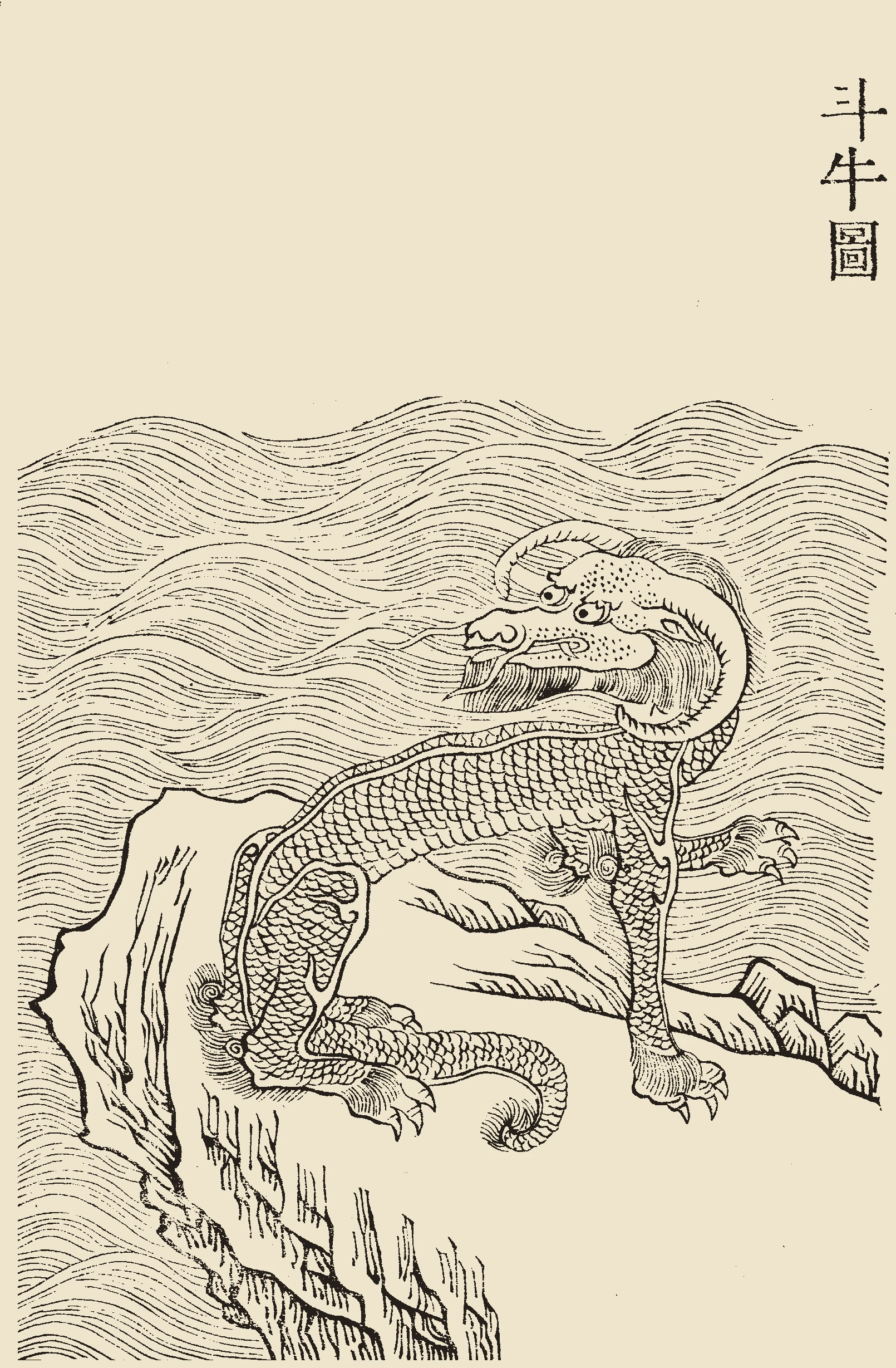
An imperial dragon-like beast with downward-curving ox horns and fish tail, emblazoned on first-rank Ming robes.紫禁城皇极大殿晨曦初照,景阳钟声回荡于重檐之下。

Rank品級

First-rank court regalia尊贵显赫位列一品

一品斗牛

Dragon蟒龍

Resembles python dragon华美锦袍近于龙衮

不得用蟒龍

Flight飛魚

Ranks above flying fish位格尊于二品飞鱼

二品飛魚

Status禁服

Imperial forbidden dress庶民不准僭越私织

不得用

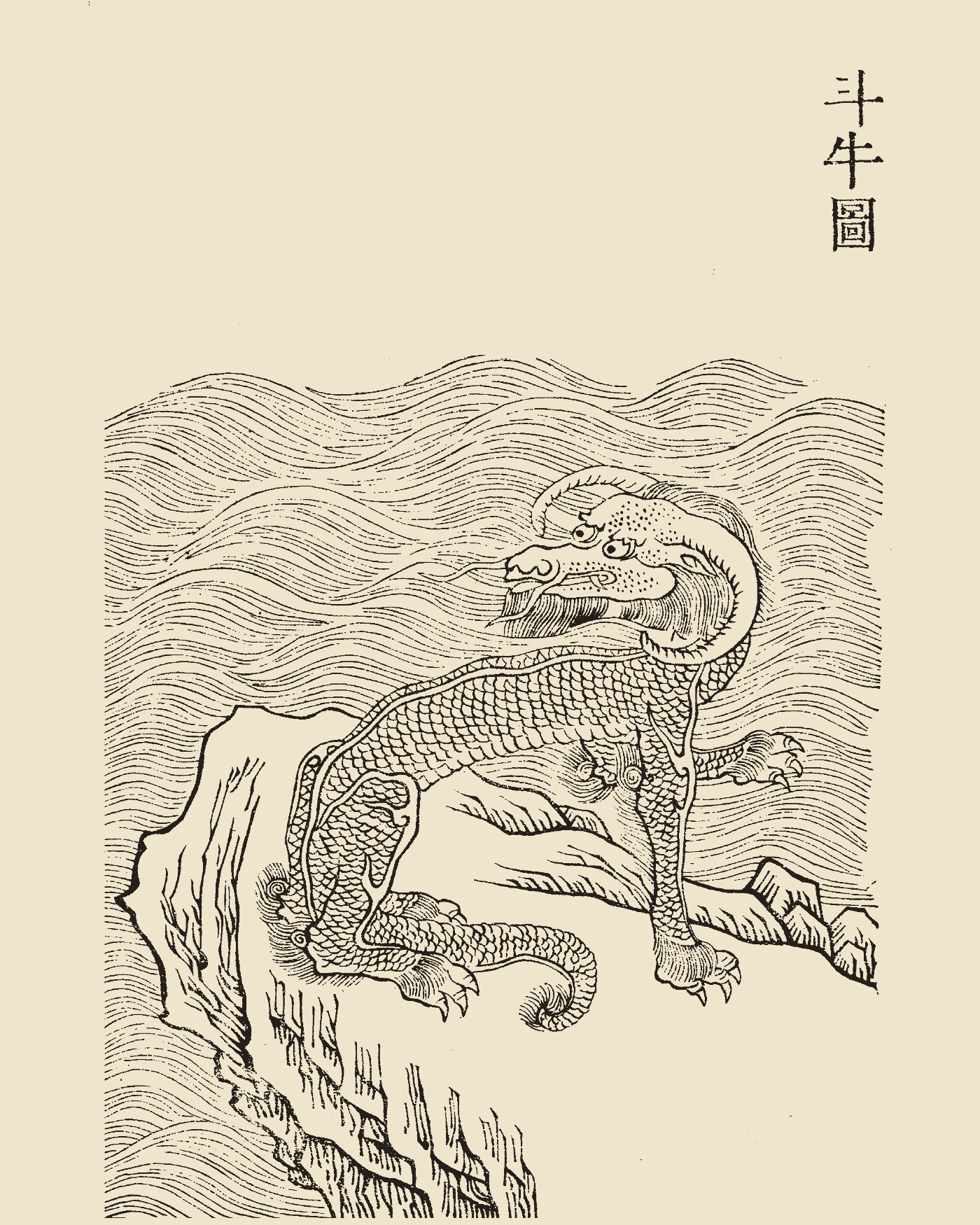
《清内府铜活字印本《古今图书集成·禽虫典》》版画:斗牛牛角ox horns雙角下曲如牛牛角ox horns雙角下曲如牛龍軀dragon body周身覆滿龍鱗龍軀dragon body周身覆滿龍鱗雲紋cloud scrolls騰雲駕霧雲紋cloud scrolls騰雲駕霧魚尾fish tail尾有魚鬐魚尾fish tail尾有魚鬐
尋賜羣臣大紅紵絲羅紗各一

Soon after, ministers were each bestowed scarlet silk robes.

明史·卷67
斗牛圖, 清内府铜活字印本《古今图书集成·禽虫典》, woodblock print, 1726古籍刻本《清内府铜活字印本《古今图书集成·禽虫典》》“斗牛图”,公有领域版画 · Public domain公有领域

Highlighted words: anatomy part · feature · form type — tap to jump标色词:形态部位 · 特征 · 形态类别,点击可跳转

The texts原文

Original Text & Translation原文与译文

明史·卷67 · History of Ming · Chapter 67 (Carriages and Apparel) · Wikisource

定官民衣服不得用蟒龍、飛魚、斗牛、大鵬。尋賜羣臣大紅紵絲羅紗各一。其服色,一品斗牛,二品飛魚,三品蟒,四、五品麒麟。
It was decreed that commoners and officials may not wear apparel with python-dragons, flying fish, douniu, or colossal peng. Soon after, ministers were each bestowed robes of scarlet silk and gauze. In their robes, the first rank wore Douniu, the second rank Flying Fish, the third rank Python, and fourth and fifth ranks Qilin.

Comparing the Books典籍对比

Distinguished from the imperial dragon by having downward-pointing bovine horns and fish fins, the Douniu was among the most prestigious bestowed robes in the Ming Dynasty.
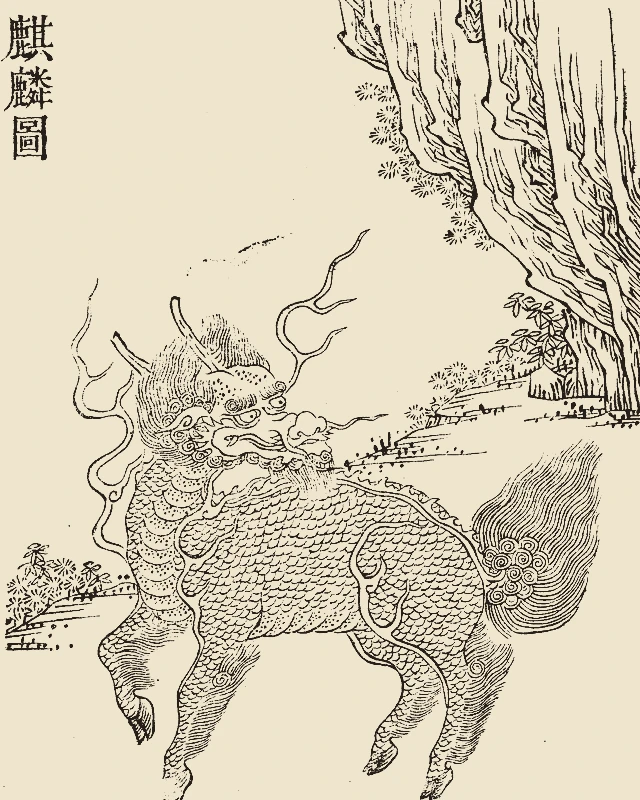
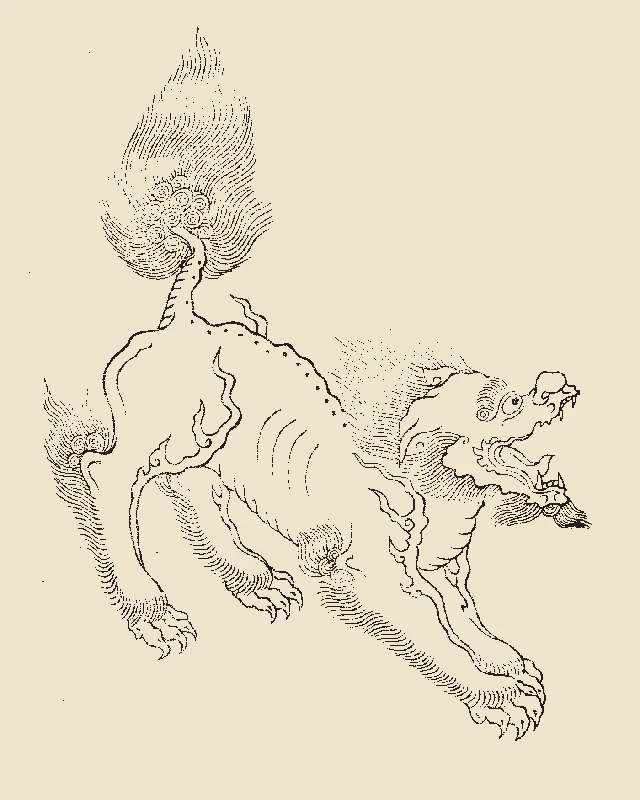
The story来历与故事

An imperial dragon-like beast with downward-curving ox horns and fish tail, emblazoned on first-rank Ming robes.

The Lore of Douniu斗牛之古籍神异记述

In the grand audience halls of the Forbidden City during the Jiajing and Wanli e紫禁城皇极大殿晨曦初照,景阳钟声回荡于重檐之下。领衔首辅与执节大将步入御阶,所着

In the grand audience halls of the Forbidden City during the Jiajing and Wanli eras, crimson tapestries rustled in the morning breeze. Advancing up the marble steps, high grand secretaries wore robes woven of gold wire and deep scarlet satin, glittering with the coiled form of the Douniu amidst rolling storm clouds.

Mythological Legacy of Douniu《明史·卷67》典籍与文化传承

As an apex creation of Ming court heraldry, the Douniu represents the pinnacle of Chinese textile art and mythological statecraft.

Record档案

Record Card档案卡

Typedragon
Also known asDouniu 斗牛; Dipper-Ox Dragon 斗牛龍獸
SignificanceImperial insignia granted to highest-ranking dignitaries (一品斗牛)
KinshipAllied with the Python Dragon (Manglong) and Flying Fish (Feiyu)
Astrological RootNamed for the conjunction of the Northern Dipper and Ox constellations
Earliest source明史·卷67
Source books明史·卷67
Image sourceChen Menglei 陳夢雷 (ed.) · Wikimedia Commons
LicensePublic domain

Frequently Asked Questions

What is the Douniu in Ming dynasty court regalia?

The Douniu was a celestial dragon-beast with curving ox-like horns, used as the supreme conferred insignia for first-rank officials.

How does the Douniu differ from the imperial dragon?

Unlike the five-clawed imperial dragon with stag antlers, the Douniu has curved ox-like horns and usually four claws or a finned tail.

Where does the name Douniu originate?

The name stems from two classical asterisms in Chinese astronomy: the Southern Dipper (Dou) and the Ox (Niu) celestial lodges.