Zúzī

足訾Zuzi

An ape-like beast of Mount Manlian with a mane, ox tail, patterned arms and horse hooves.蔓聯之山的类猿之兽:有鬃毛、牛尾、文臂、马蹄。

Body体躯

Yu monkey with mane猿身生颈鬃

其狀如禺而有鬛

Tail尾部

Ox tail拖覆长牛尾

牛尾

Body臂蹄

Patterned arms, horse hooves文臂踏马蹄

文臂、馬蹏

Voice叫声

Calls own name呼叫自报号

見人則呼,名曰足訾

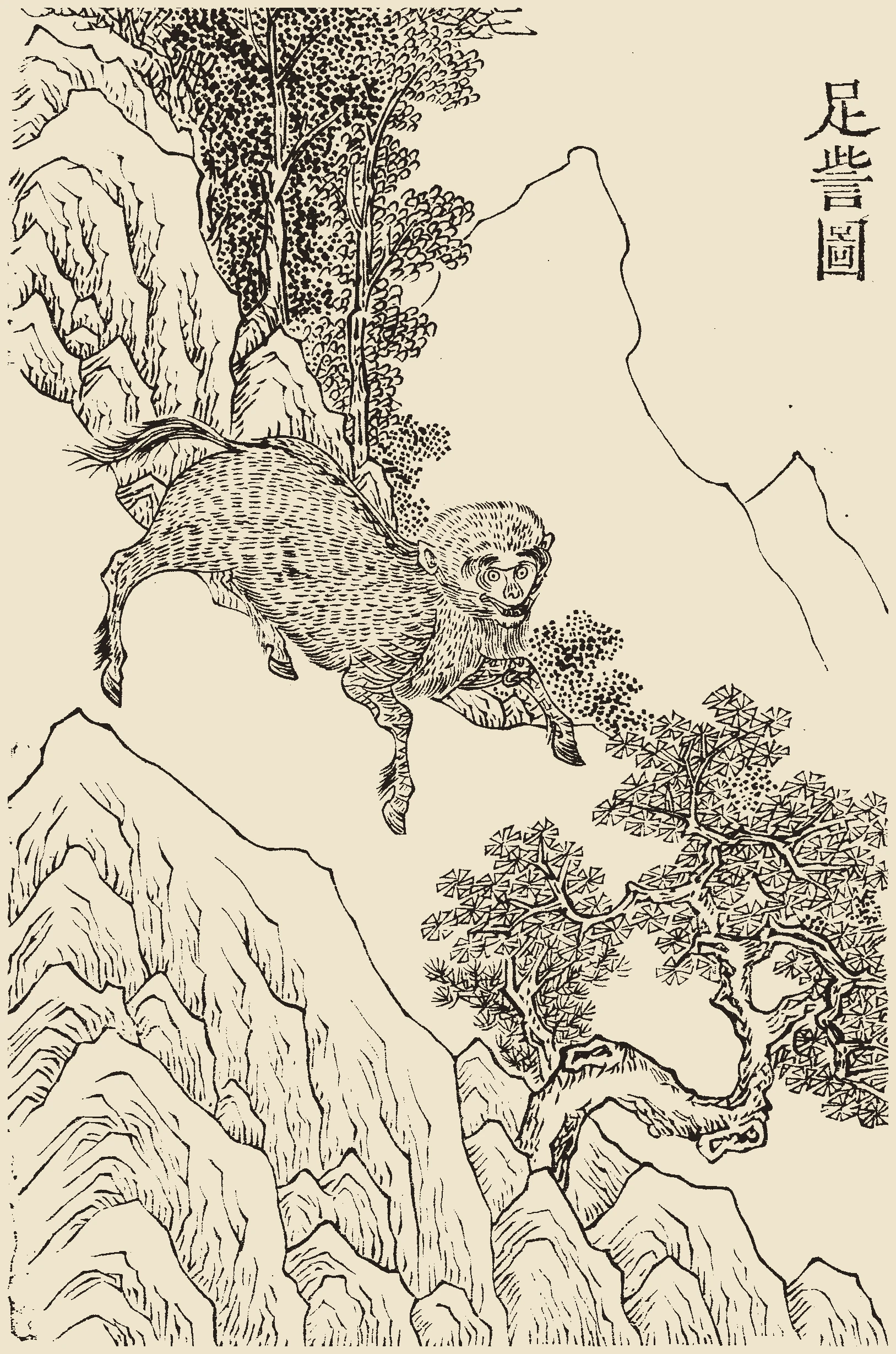
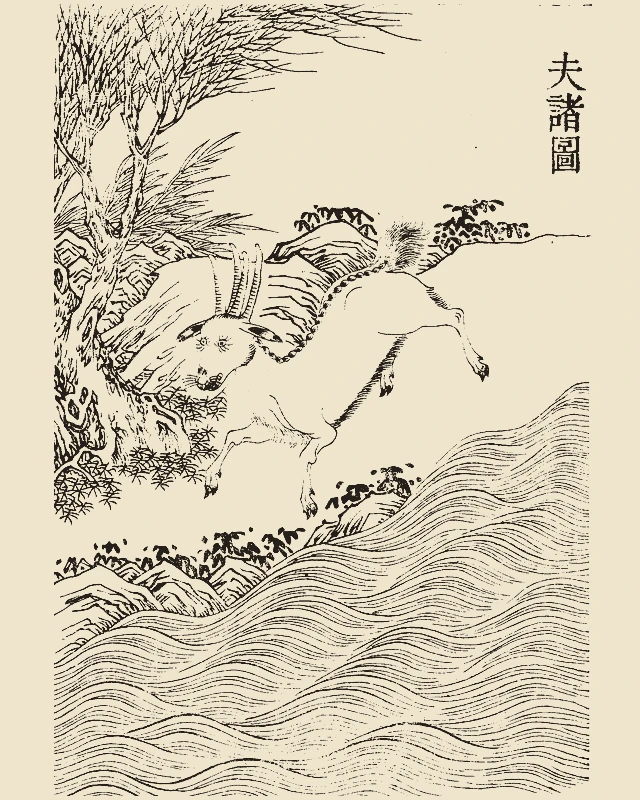
Print from the Gujin Tushu Jicheng: a hoofed, ape-faced beast with a mane and a long tail leaps across a hillside, with the title 'Zuzi Tu' at upper right其狀如禺Ape-like head像猿的头其狀如禺Ape-like head像猿的头牛尾Tail长尾牛尾Tail长尾馬蹏Hooves蹄馬蹏Hooves蹄有鬛Mane and body鬃毛和身子有鬛Mane and body鬃毛和身子
又北二百里曰蔓聯之山

Two hundred li further north is Mount Manlian.

山海經·北山經
足訾圖, Gujin Tushu Jicheng 古今圖書集成, Qin Chong Dian (Section on Birds and Animals), woodblock print, 1726清·陈梦雷等编《古今图书集成·禽虫典》“足訾图”,雍正四年(1726)铜活字印本 · Public domain公有领域

Highlighted words: anatomy part · feature · form type — tap to jump标色词:形态部位 · 特征 · 形态类别,点击可跳转

The texts原文

Original Text & Translation原文与译文

山海經·北山經 · 山海經·北山經 · Wikisource

又北二百里,曰蔓聯之山,其上無草木,有獸焉,其狀如禺而有鬛,牛尾、文臂、馬蹏,見人則呼,名曰足訾,其鳴自呼。有鳥焉,群居而朋飛,其毛如雌雉,名曰鵁,其鳴自呼,食之已風。
There is a beast here shaped like a yu with a mane, an ox’s tail, patterned arms and horse hooves. It calls out when it sees people. Its name is Zuzi, and its cry calls out its own name.

Comparing the Books典籍对比

The Classic of the Northern Mountains describes the Zuzi as a yu-shaped beast with a mane, ox tail and horse hooves; the Gujin Tushu Jicheng plate shows a hooved, maned beast leaping across a hillside.
The story来历与故事

Zuzi (足訾) is an ape-like beast of Mount Manlian. The Shan Hai Jing says it has a mane, an ox’s tail, patterned arms and horse hooves, and that it calls out when it sees people.

The Beast of Mount Manlian蔓聯之山的兽

The Classic of the Northern Mountains describes Mount Manlian as a mountain with《山海经·北山经》写蔓聯之山,山上没有草木。山中有一种兽,形状像禺,有鬃毛、牛尾

The Classic of the Northern Mountains describes Mount Manlian as a mountain with no grass or trees. On it lives a beast shaped like a yu, with a mane, an ox’s tail, patterned arms and horse hooves. It calls out when it sees people, and the text names it Zuzi.

The text adds that its cry calls out its own name. The next lines list a bird named Jiao that lives in flocks and flies in groups, and eating it cures wind illness.

The Plate in the Imperial Encyclopaedia《古今图书集成》里的足訾图

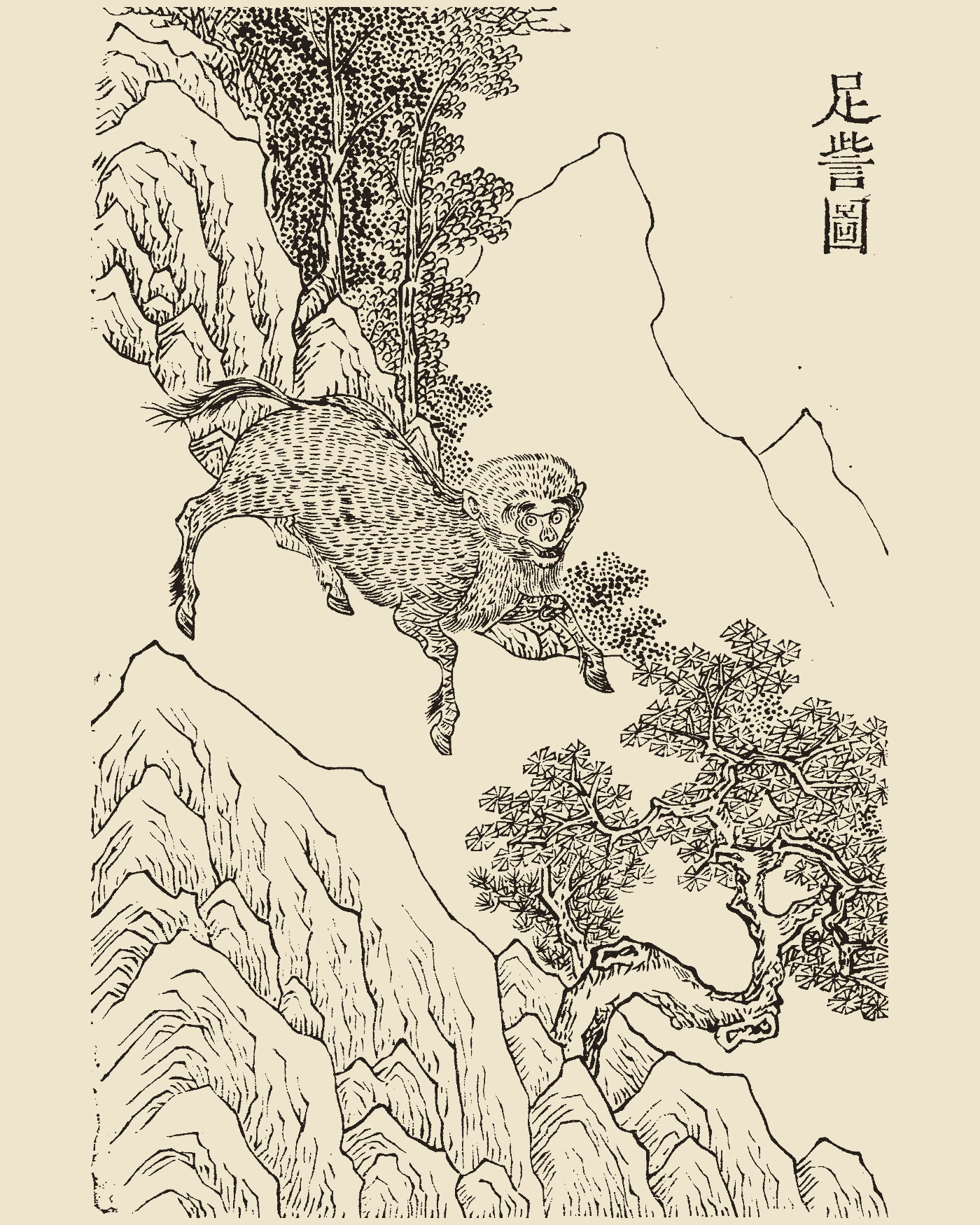
The Gujin Tushu Jicheng plate titled 足訾圖 shows a beast with an ape-like face, a mane along its back, a long tail and hooved legs, caught in mid-leap across a hillside with trees and a mountain ridge behind. The title stands at the upper right.

The text says the Zuzi calls out when it sees people; the plate shows no people and no sound, only the leaping beast.

Record档案

Record Card档案卡

TypeBeast (ape-shaped, mane, ox tail, horse hooves)
Also known asZúzī 足訾
Earliest sourceShan Hai Jing 山海經, Classic of the Northern Mountains (opening sequence)
HabitCalls out when it sees people
HabitatMount Manlian, which has no grass or trees
Earliest source山海經·北山經
Source books山海經·北山經
Image sourceChen Menglei 陳夢雷 (ed.) · Wikimedia Commons
LicensePublic domain

Frequently Asked Questions

What is the Zuzi in Chinese mythology?

The Zuzi is a beast from the Shan Hai Jing, shaped like a yu, with a mane, an ox tail, patterned arms and horse hooves.

Where does the Zuzi live?

The text places it on Mount Manlian, a mountain with no grass or trees.

What does the Zuzi do when it sees people?

The text says it calls out when it sees people, and that its cry calls out its own name.