Qiúyú

犰狳Qiuyu

A hare-shaped, snake-tailed beast of Mount Yu’e that feigns sleep and brings locust plagues.餘峩之山如兔蛇尾的异兽:见人假寐,现身则发生螽蝗之灾。

Body外貌

Hare body, bird beak兔身生鸟喙

其狀如菟而鳥喙

Eyes目尾

Owl eyes, snake tail生鸱目蛇尾

鴟目蛇尾

Nature习性

Feigns sleep见人则装睡

見人則眠

Omen凶兆

Locust disaster蝗灾降世间

見則螽蝗為敗

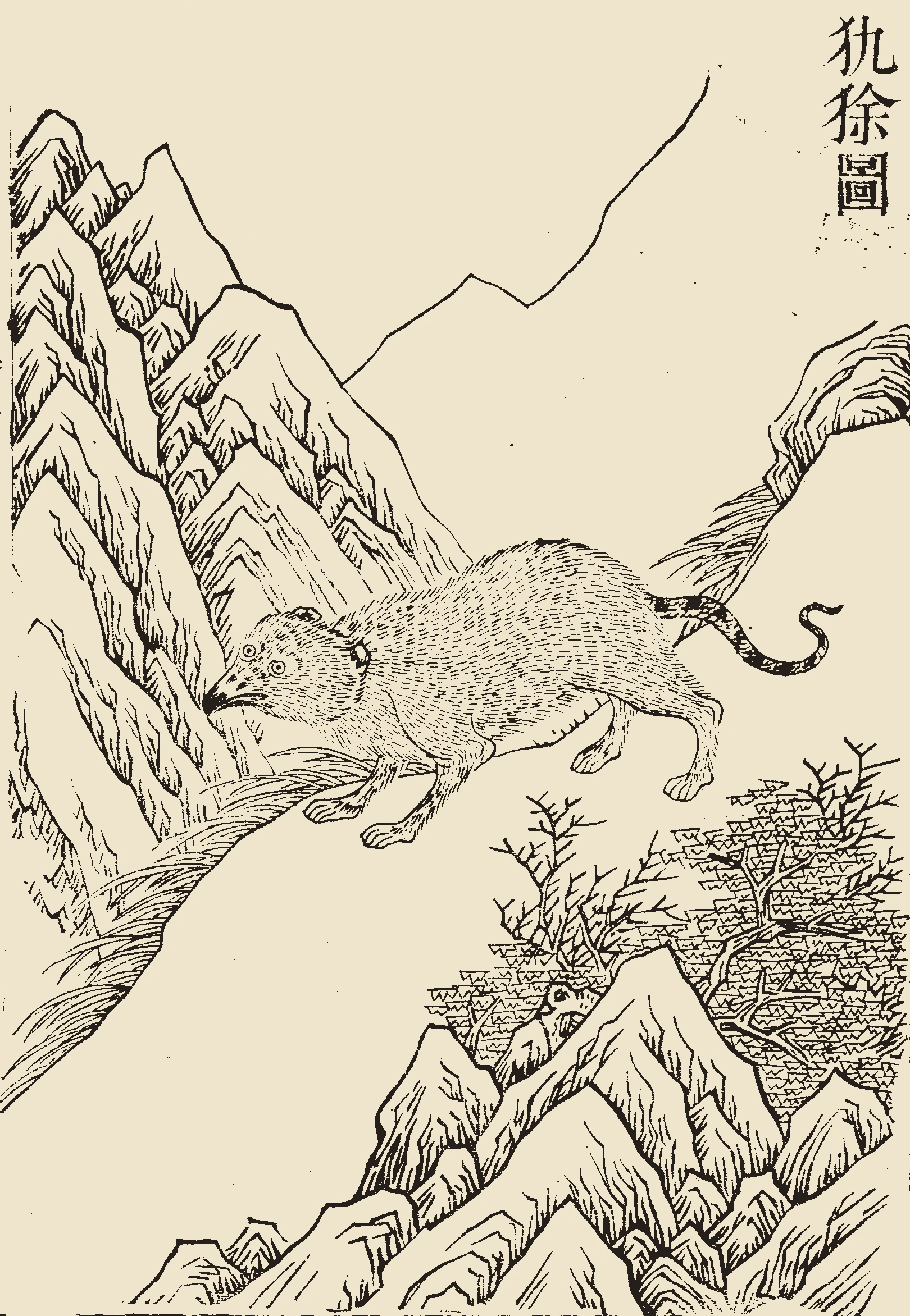
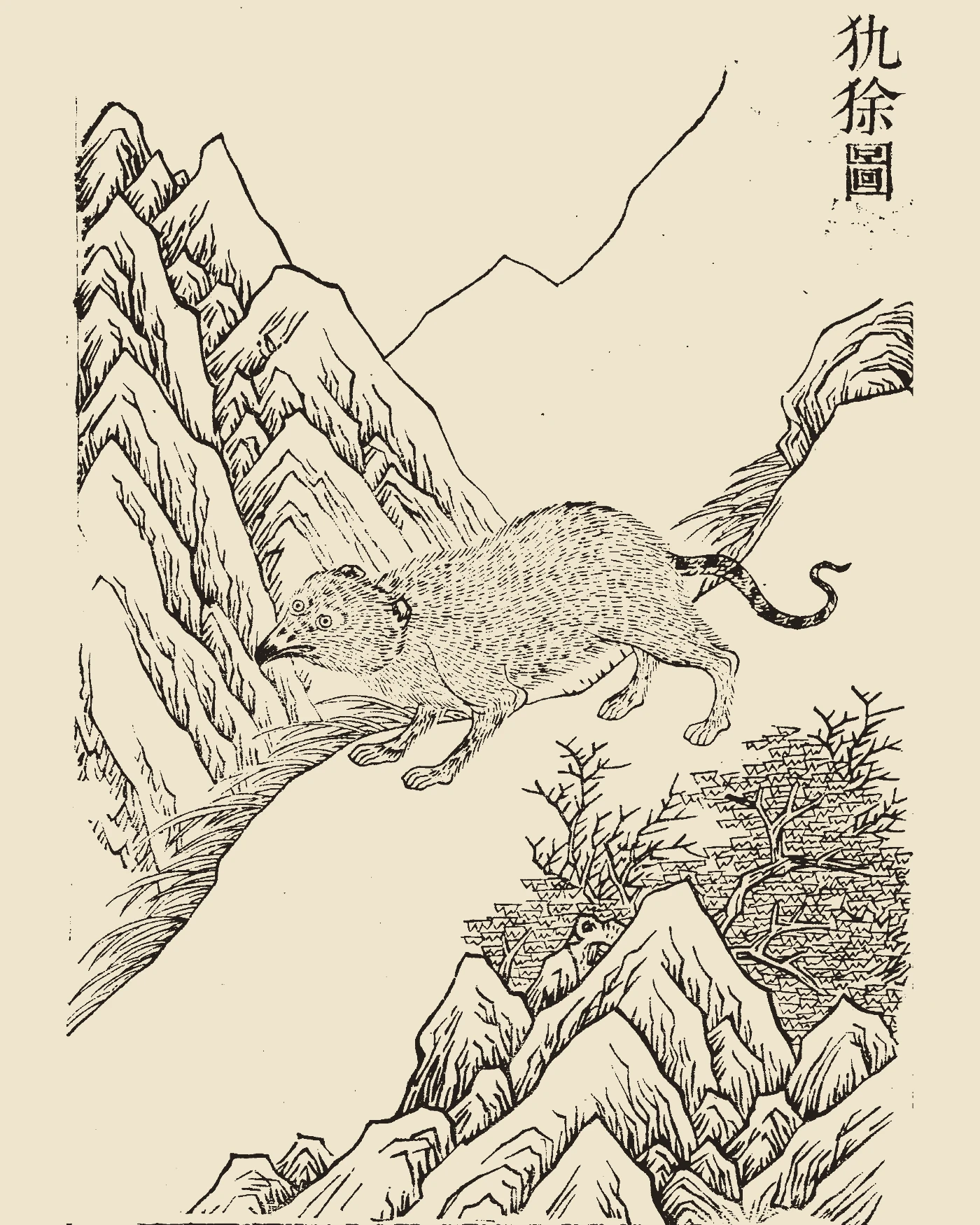
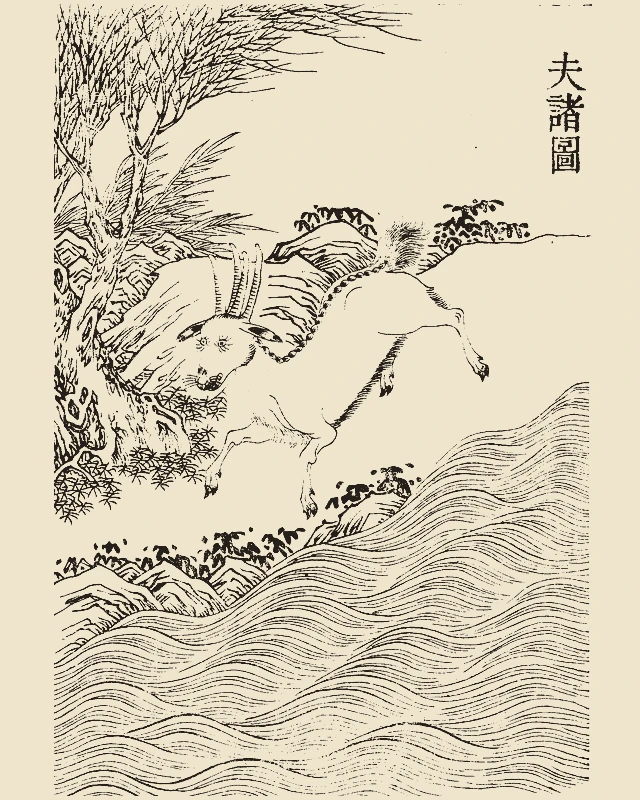
Print from the Gujin Tushu Jicheng: a hare-like beast with a long curving snake tail creeps over a rocky ledge, with the title 'Qiuyu Tu' at upper right鳥喙Bird beak像鸟一样的喙鳥喙Bird beak像鸟一样的喙鴟目Owl eyes鸱鸮般的眼睛鴟目Owl eyes鸱鸮般的眼睛蛇尾Snake tail细长的蛇尾蛇尾Snake tail细长的蛇尾
餘峩之山其上多梓枏

Mount Yu'e has many cedar and nanmu trees.

山海經·東山經
犰狳圖, Gujin Tushu Jicheng 古今圖書集成, Qin Chong Dian (Section on Birds and Animals), woodblock print, 1726清·陈梦雷等编《古今图书集成·禽虫典》“犰狳图”,雍正四年(1726)铜活字印本 · Public domain公有领域

Highlighted words: anatomy part · feature · form type — tap to jump标色词:形态部位 · 特征 · 形态类别,点击可跳转

The texts原文

Original Text & Translation原文与译文

山海經·東山經 · 山海經·東山經 · Wikisource

又南三百八十里,曰餘峩之山。其上多梓枏,其下多荊𦬊。雜余之水出焉,東流注于黃水。有獸焉,其狀如菟而鳥喙,鴟目蛇尾,見人則眠,名曰犰狳,其鳴自訆,見則螽蝗為敗。
There is a beast here shaped like a hare with a bird’s beak, owl’s eyes and a snake’s tail. It feigns sleep when it sees humans. Its name is Qiuyu; its cry calls out its own name, and its appearance brings plagues of locusts.

Comparing the Books典籍对比

The Classic of the Eastern Mountains describes the Qiuyu as a sleeping, locust-portending hare-snake hybrid; the Imperial Encyclopaedia print captures its pointed beak and serpent tail.
The story来历与故事

Qiuyu (犰狳) is a hare-shaped, snake-tailed beast of Mount Yu’e. The Shan Hai Jing notes that it has a bird beak and owl eyes, plays dead when spotted by humans, and signals destructive swarms of locusts.

The Sleeping Locust Beast of Mount Yu’e餘峩之山的假寐蝗兽

Mount Yu’e is thick with catalpa and nanmu trees. On its terrain lives the Qiuyu餘峩之山上多梓树楠木。山中生息着犰狳,兼具兔的身躯、鸟的硬喙、鸱鹰的双眼与长蛇的

Mount Yu’e is thick with catalpa and nanmu trees. On its terrain lives the Qiuyu, a hybrid creature combining a hare’s trunk with an avian bill, owl-like round eyes, and a winding reptilian tail.

Curiously, the classic notes that when it meets humans it immediately feigns sleep, but its appearance brings devastation from locust swarms to agricultural harvests.

The Plate in the Imperial Encyclopaedia《古今图书集成》里的犰狳图

The Gujin Tushu Jicheng print titled 犰狳圖 features a furry quadrupeds with a pointed face and a distinctive serpentine tail curving gracefully upward beside high crags. The title occupies the upper right.

The print details the creature’s distinct tail and avian muzzle in harmony with the ancient record.

Record档案

Record Card档案卡

TypeBeast (hare-like, snake tail, locust omen)
Also known asQiúyú 犰狳
Earliest sourceShan Hai Jing 山海經, Classic of the Eastern Mountains (Second Eastern Sequence)
HabitFeigns sleep upon seeing people
OmenDestructive plagues of locusts
HabitatMount Yu’e
Earliest source山海經·東山經
Source books山海經·東山經
Image sourceChen Menglei 陳夢雷 (ed.) · Wikimedia Commons
LicensePublic domain

Frequently Asked Questions

What is the Qiuyu in Chinese mythology?

The Qiuyu is a hare-like, snake-tailed beast from the Shan Hai Jing that brings plagues of locusts and feigns sleep.

Is it related to modern armadillos?

No; modern Chinese adopted the ancient name 犰狳 for South American armadillos, but the classical mythological creature is a hare-like hybrid from Mount Yu’e.

What omen is associated with the Qiuyu?

Its sighting warns of agricultural ruin through massive swarms of locusts (見則螽蝗為敗).