Pénghóu

彭侯Penghou, the Camphor Tree Spirit

The spirit of a thousand-year-old camphor tree shaped like a tailless black hound.彭侯自千年古樟裂躯中跃出,毛黑如漆,圆首短颈,身后毫无尾羽,目露幽光嗅探草木之气。

Body形貌

Like a black dog外观宛若黑皮狗

狀如黑狗

Tail无尾

Tailless body尾骨短缩无长梢

無尾

Origin木精

Wood spirit千载老樟树精魂

木之精

Nature烹食

Edible flesh下锅煮熟滋味美

可烹食之

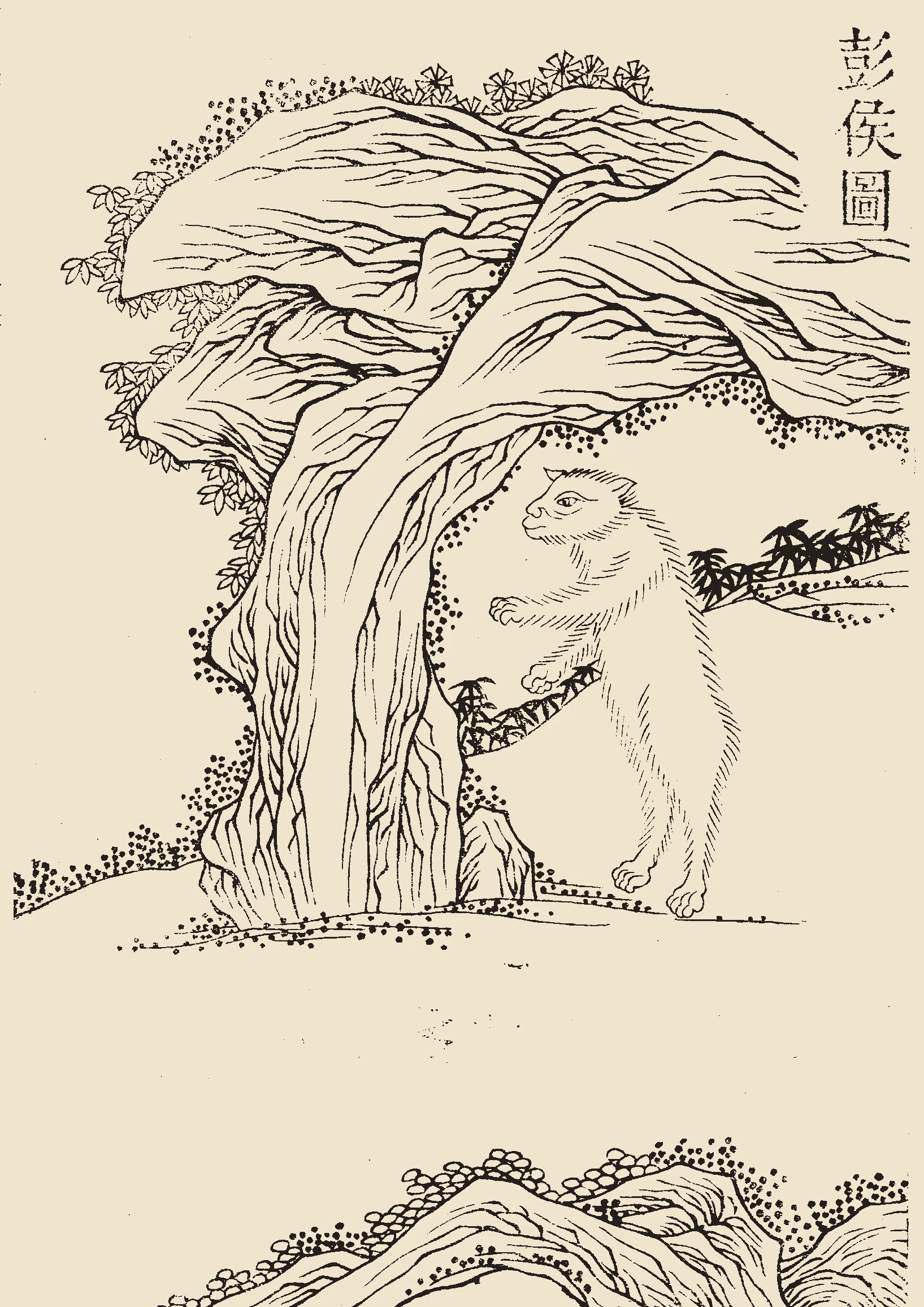
《古今图书集成》版画:彭侯机巧犬首Alert black hound head头部轮廓如狸犬,双耳挺立警惕。机巧犬首Alert black hound head头部轮廓如狸犬,双耳挺立警惕。油亮黑毛Glossy ink-black fur周身毛色乌黑如墨玉,附着草木清香。油亮黑毛Glossy ink-black fur周身毛色乌黑如墨玉,附着草木清香。绝尾臀脊Smooth tailless rump臀部圆浑光秃,天生毫无犬尾痕迹。绝尾臀脊Smooth tailless rump臀部圆浑光秃,天生毫无犬尾痕迹。轻健四足Trunk-gripping paws四足生有肉垫坚爪,能在林木树干如履平地。轻健四足Trunk-gripping paws四足生有肉垫坚爪,能在林木树干如履平地。
建安太守陸敬叔使人伐大樟樹,下數斧,忽有血出,樹斷有物。

The spirit of a thousand-year-old camphor tree shaped like a tailless black hound.

搜神記·第18卷
彭侯圖, Gujin Tushu Jicheng 古今圖書集成, Qin Chong Dian (Section on Birds and Animals), woodblock print, 1726清·陈梦雷等编《古今图书集成·禽虫典》“彭侯图”,雍正四年(1726)铜活字印本 · Public domain公有领域

Highlighted words: anatomy part · feature · form type — tap to jump标色词:形态部位 · 特征 · 形态类别,点击可跳转

The texts原文

Original Text & Translation原文与译文

搜神記·第18卷 · Soushenji · Volume 18 · Wikisource

木之精名彭侯,狀如黑狗,無尾,可烹食之。乃烹食之,其味如狗。
The spirit of wood is called Penghou; shaped like a black dog without a tail, edible when cooked, tasting like dog meat.

搜神記·第18卷 · Soushenji · Volume 18 · Wikisource

木之精名彭侯,狀如黑狗,無尾,可烹食之。乃烹食之,其味如狗。
The spirit of wood is called Penghou; shaped like a black dog without a tail, edible when cooked, tasting like dog meat.

Comparing the Books典籍对比

Recorded in both Gan Bao’s Soushenji and the ancient Baize Tu (Book of White Marsh), Penghou represents the localized botanical spirit formed when trees achieve millennial age.
The story来历与故事

The spirit of a thousand-year-old camphor tree shaped like a tailless black hound.

Origins & Classical Lore古籍记述与神异源流

Found within ancient thousand-year-old camphor trees, Penghou resembles a tailless black hound of delicious flesh.潜藏于千年古樟之中的木精彭侯状如黑犬无尾,烹熟而食其味宛若珍馐。

Origins in antiquity

Physical features

Geographic territory

Abilities and habits

Depiction & Cultural Legacy《古今图书集成》画意与文化流传

Historical reception

木之精名彭侯,狀如黑狗,無尾,可烹食之。乃烹食之,其味如狗。

The spirit of wood is called Penghou; shaped like a black dog without a tail, edible when cooked, tasting like dog meat.

— 搜神記·第18卷 · Soushenji · Volume 18

Contemporary resonance

Record档案

Record Card档案卡

TypeTree spirit (tailless black dog, edible camphor spirit)
Also known asSpirit of Wood (木精), Camphor dog (樟木怪), Penghou (彭侯)
HabitatInterior trunk of ancient camphor trees aged over a thousand years
PowerEmbodies centuries of arboreal essence; boiling and eating it grants robust longevity
UseEdible tree spirit (flesh tastes like wild dog meat and confers deep vitality)
Earliest source搜神記·第18卷
Source books搜神記·第18卷
Image sourceChen Menglei 陳夢雷 (ed.) · Wikimedia Commons
LicensePublic domain

Frequently Asked Questions

彭侯为何会被称为“木精”?

中国古籍认为“物老成精”,千年生灵皆有神识寄寓。樟树存活千载后吸纳大地山川灵气,其木质精华凝聚为活物形态,古人便将这种具象化的生灵称为“木精”。

陆敬叔伐樟树为何会有血流出?

古代大树受伤流红多为红色真菌感染或天然树胶氧化所致,古人见其色赤如血,又自木腹中发现彭侯,遂将其神化为大树伤痛滴血的神秘显象。

彭侯天生无尾有何生理或象征意味?

无尾是木精区别于凡间野犬的本质神异标记,象征其截然不同于胎生哺乳兽类,乃天地草木自然化生而成的奇妙异灵。