yín shuǐ tiān shén

淫水天神Yin River God

The eight-legged, two-headed bovine deity of Mount Huaijiang whose bellow resounds like Bo-huang, portending warfare.《山海经·西山经》槐江山阴滛水清洛洛,其中天神状如牛,八足二首马尾,音如勃皇,见则其邑有兵。

Water滛水

Clear limpid Yao River waters发源清澈澄澈滛水

爰有滛水

Deity天神

Celestial deity shaped like ox神如雄牛天神驻此

有天神焉

Legs八足

Eight legs, two heads, equine生八蹄双头骏马尾

其狀如牛

Omen有兵

Sighting portends war in city现身城邑必有兵乱

見則其邑有兵

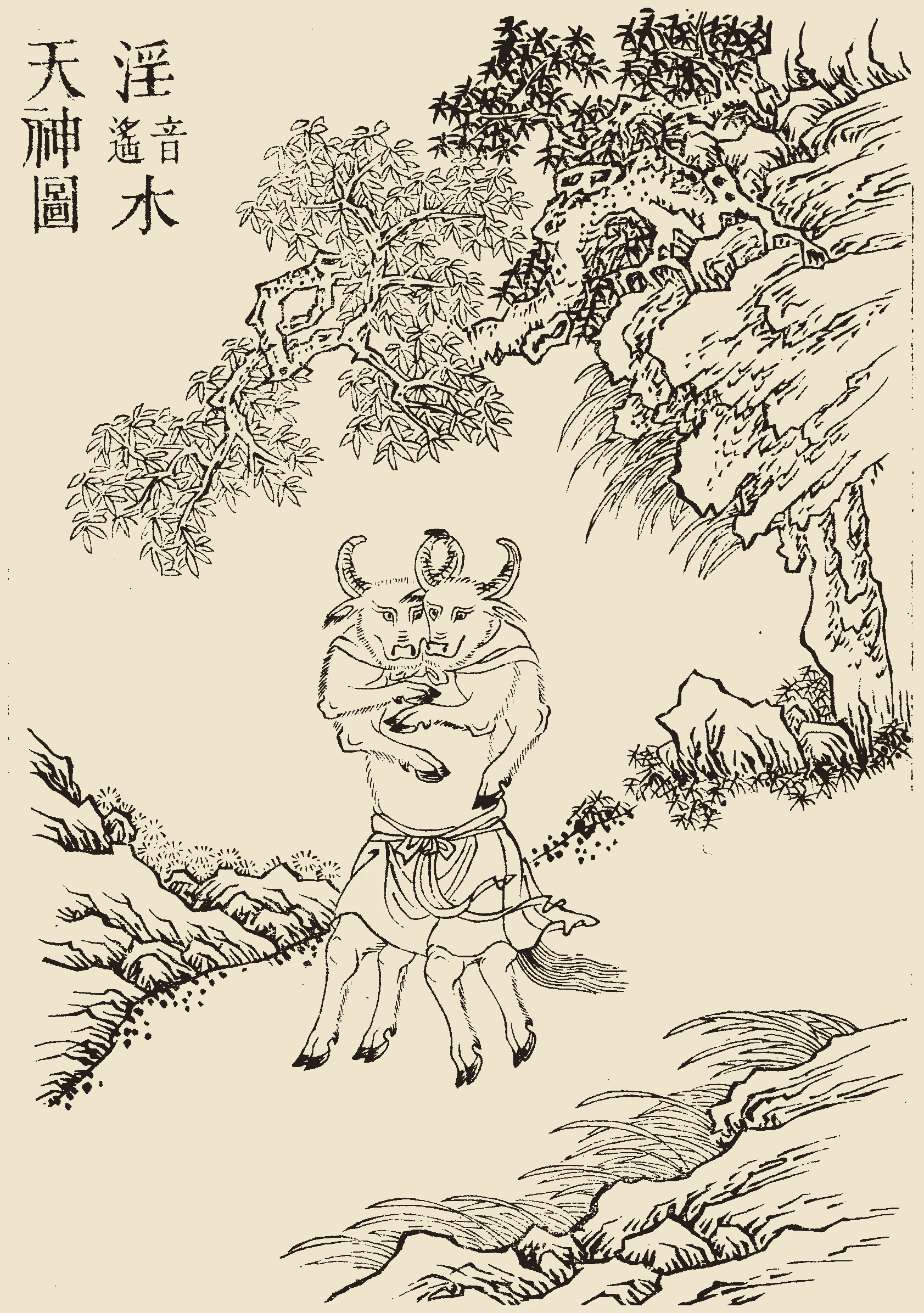
《清内府铜活字印本《古今图书集成·神异典》》版画:淫水天神二首Twin Heads並立威嚴之雙角牛首頭顱二首Twin Heads並立威嚴之雙角牛首頭顱牛身Bovine Body沉穩雄碩之神牛身軀牛身Bovine Body沉穩雄碩之神牛身軀八足Eight Hooves踏水如飛之八隻健碩牛蹄八足Eight Hooves踏水如飛之八隻健碩牛蹄馬尾Horse Tail靈動飛揚之修長駿馬之尾馬尾Horse Tail靈動飛揚之修長駿馬之尾
八足天神

Eight-Legged Celestial God

山海經·西山經
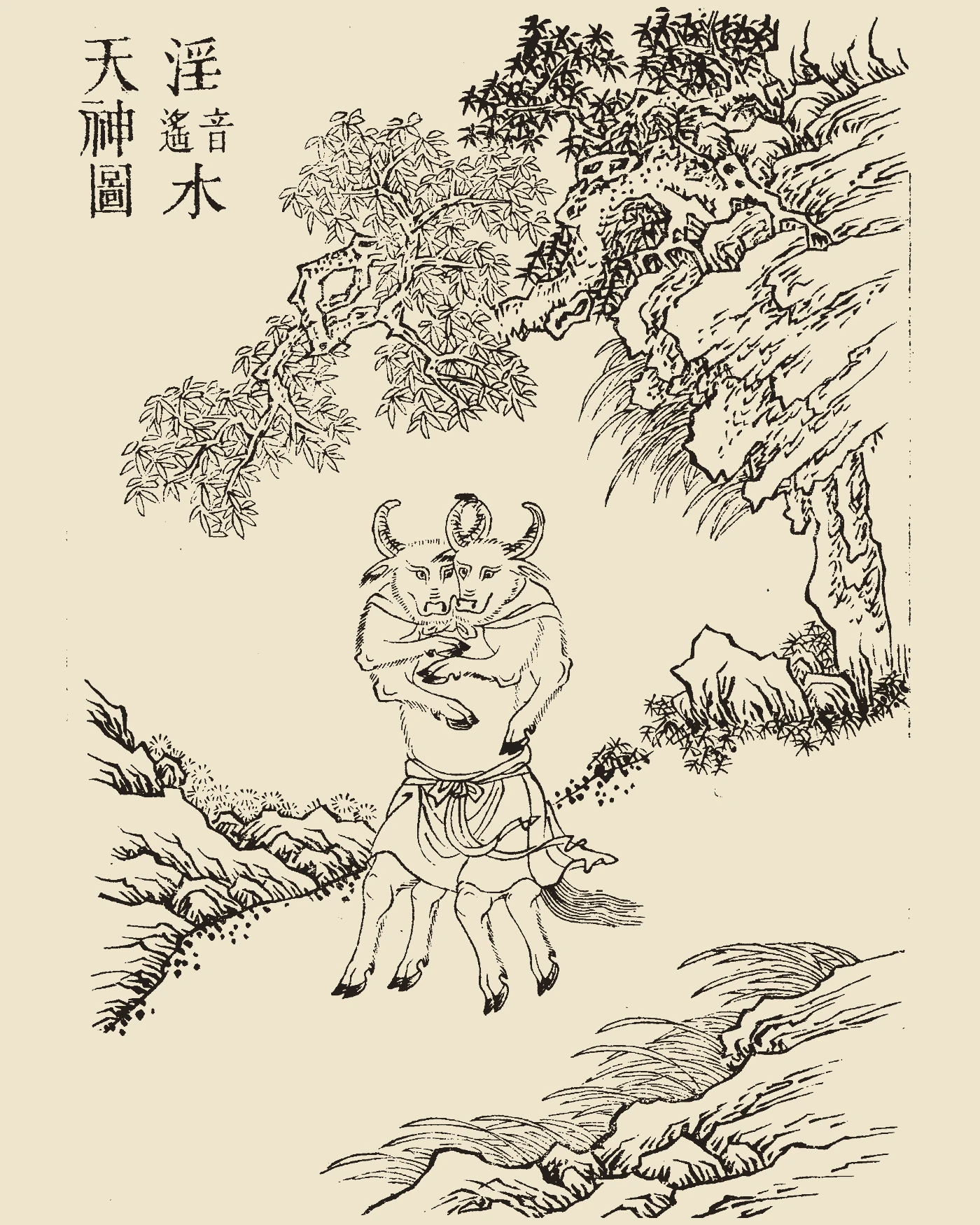
淫水天神圖, 清内府铜活字印本《古今图书集成·神异典》, woodblock print, 1726古籍刻本《清内府铜活字印本《古今图书集成·神异典》》“淫水天神图”,公有领域版画 · Public domain公有领域

Highlighted words: anatomy part · feature · form type — tap to jump标色词:形态部位 · 特征 · 形态类别,点击可跳转

The texts原文

Original Text & Translation原文与译文

山海經·西山經 · Shan Hai Jing · Classic of the Western Mountains · Wikisource

爰有滛水,其清洛洛。有天神焉,其狀如牛,而八足二首馬尾,其音如勃皇,見則其邑有兵。
Here is the Yin River (滛水), crystal clear. There is a celestial god here shaped like an ox, with eight legs, two heads, and a horse's tail; his voice sounds like Bo-huang, and when seen, there is warfare in that city.

Comparing the Books典籍对比

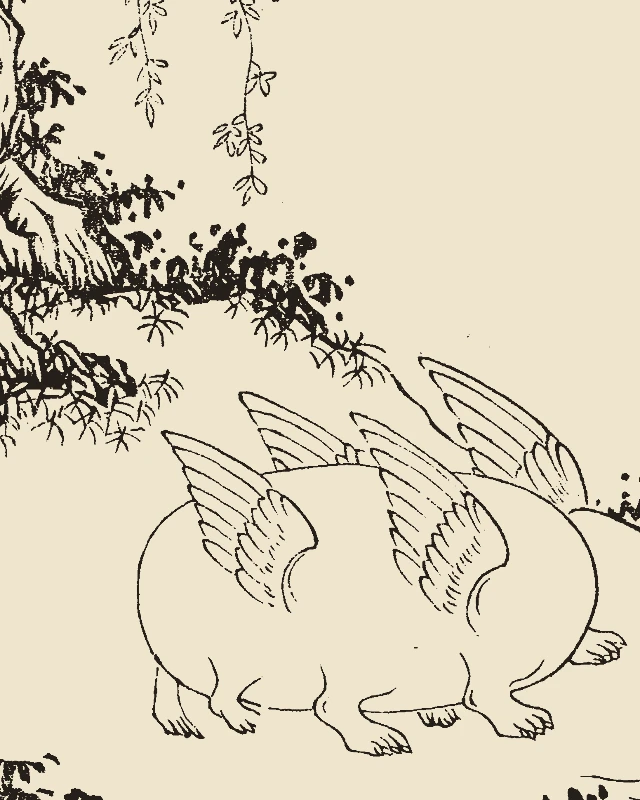
Sharing Mount Huaijiang with the imperial warden Yingzhao, the Yaoshui Celestial God stands as a chimeric bovine war-omen deity alongside Zhuyan and Fuxibird.
The story来历与故事

The eight-legged, two-headed bovine deity of Mount Huaijiang whose bellow resounds like Bo-huang, portending warfare.

The Lore of Yaoshui Tianshen淫水天神之古籍神异记述

On Mount Huaijiang the text records the Yin River and a celestial god in its waters:《山海经·西山经》记槐江之山:“爰有滛水,其清洛洛。有天神焉,其狀如牛,而八足二首馬尾。”

On Mount Huaijiang, the Classic of the Western Mountains records the Yin River (滛水), flowing clear and bright. In those waters dwells a celestial god shaped like an ox, with eight legs, two heads, and a horse’s tail.

His cry is said to sound like Bo-huang (勃皇), and the text warns that whenever he appears near a settlement, armed warfare follows (見則其邑有兵). The same passage sets this god beside the imperial garden of the Celestial Sovereign, where the winged warden Yingzhao patrols the four seas—but the omen beast belongs to the Yin River alone.

Mythological Legacy of Yaoshui Tianshen《山海經·西山經》典籍与文化传承

Preserved in classical demonological and musical lore, the Yaoshui Tianshen is celebrated for his unique voice resembling the archaic bronze instrument 'Bo-huang' (勃皇) and his chim

爰有滛水,其清洛洛。有天神焉,其狀如牛,而八足二首馬尾,其音如勃皇,見則其邑有兵。

Here is the Yin River (滛水), crystal clear. There is a celestial god here shaped like an ox, with eight legs, two heads, and a horse's tail; his voice sounds like Bo-huang, and when seen, there is warfare in that city.

— 山海經·西山經 · Shan Hai Jing · Classic of the Western Mountains

eric eight-legged iconography.

Record档案

Record Card档案卡

Type神
Also known asYaoshui Tianshen 淫水天神 / 滛水天神; Celestial Beast of Mount Huaijiang 槐江天神
HabitatClear Yin River waters on Mount Huaijiang (西次三經,槐江之山,滛水)
OmenHis appearance portends the outbreak of military warfare in that city (見則其邑有兵)
Earliest source山海經·西山經
Source books山海經·西山經
Image sourceChen Menglei 陳夢雷 (ed.) · Wikimedia Commons
LicensePublic domain

Frequently Asked Questions

What is the Yaoshui Tianshen in the Shan Hai Jing?

The Yaoshui Tianshen is a celestial water deity of Mount Huaijiang shaped like an ox with eight legs, two heads, and a horse's tail.

What does his cry sound like?

His voice is recorded as sounding like 'Bo-huang' (勃皇), an ancient heavy bronze bell or percussion instrument with an imposing, echoing clang.

What omen follows the sighting of the Yaoshui Tianshen?

His appearance in any mortal settlement directly portends armed warfare and violent military siege in that territory (見則其邑有兵).