Fúxī

鳧徯Fuxibird

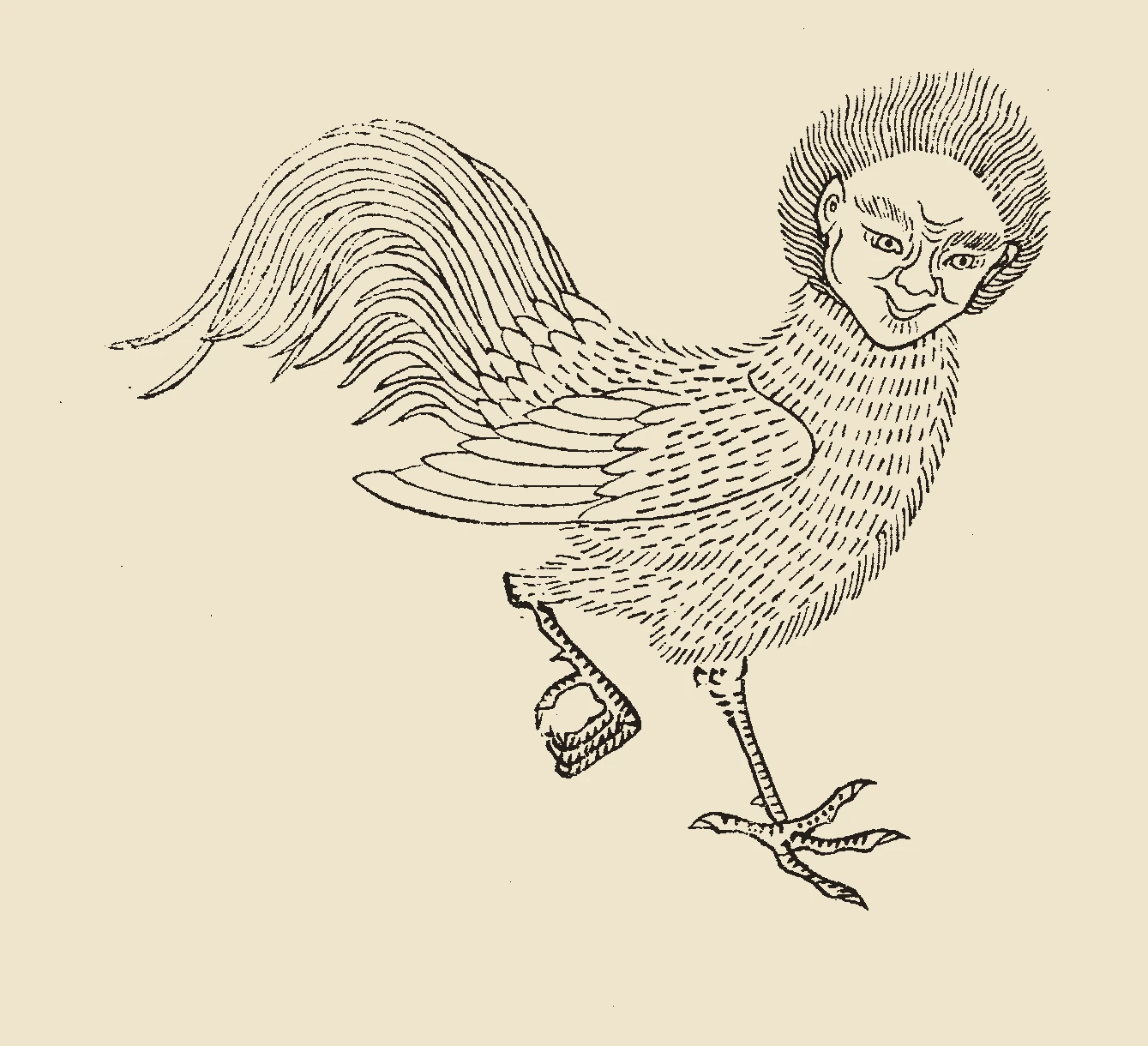
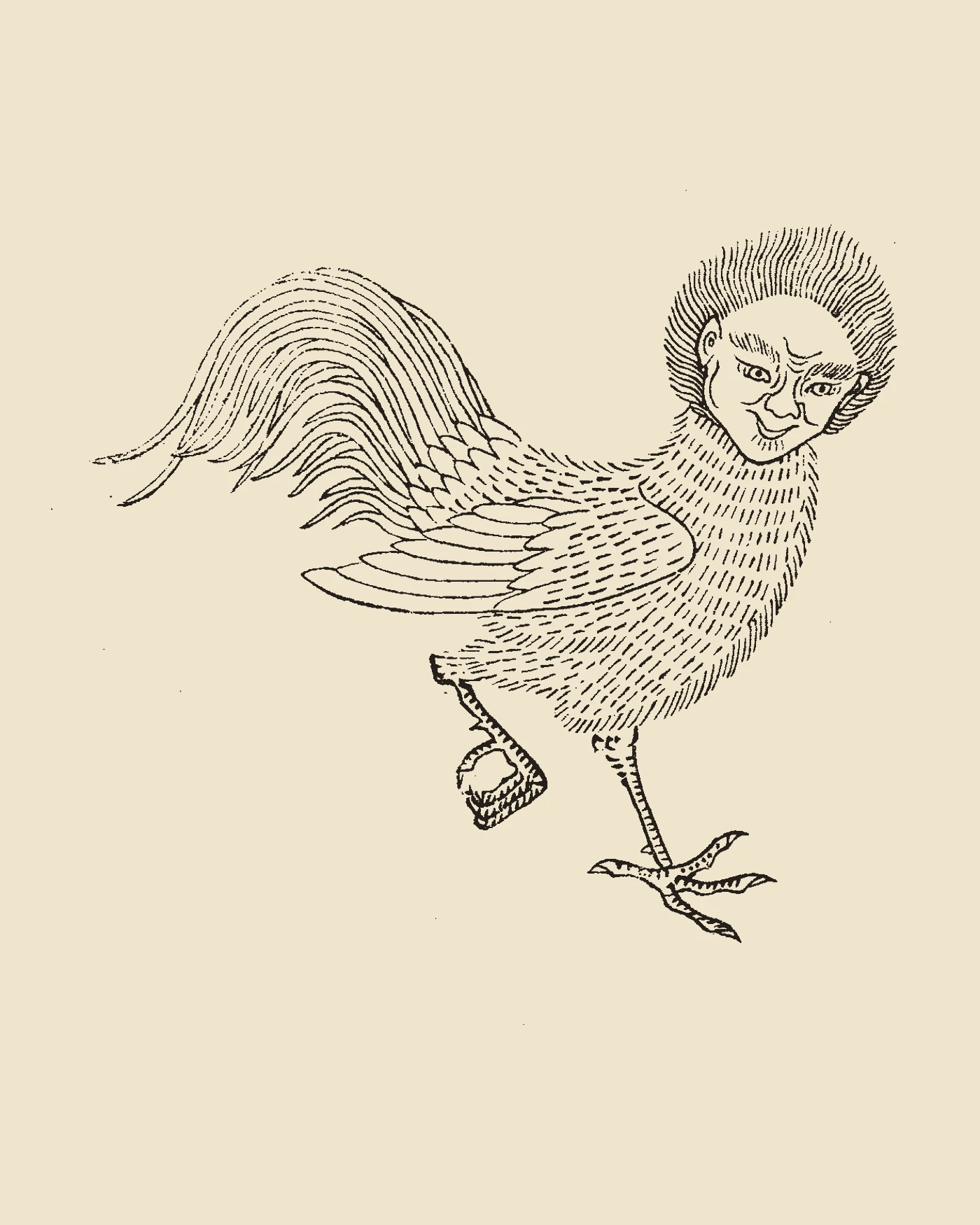
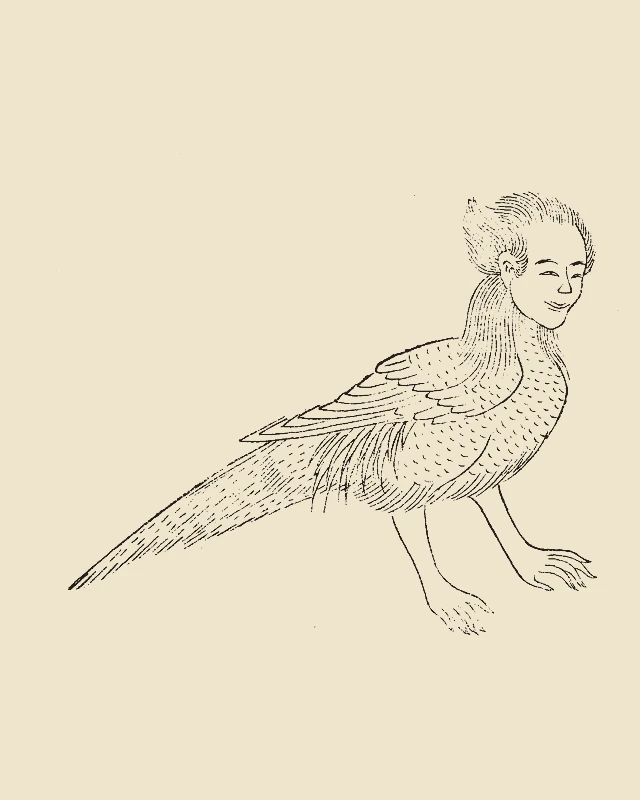
The human-faced rooster of Mount Lutai from the Shan Hai Jing: shaped like a cock with a human face, calling its own name, its sighting portends warfare.《山海经》记载鹿台山凶禽凫徯:其状如雄鸡而人面,其鸣自叫,见则有兵。

Form形貌

Like a rooster体态宛若高冠雄鸡

其狀如雄雞

Face面容

Human face生有神异人面

人面

Voice叫声

Calls its own name啼鸣呼唤本名

其鳴自叫也

Omen征兆

Brings armed warfare现世天下动兵

見則有兵

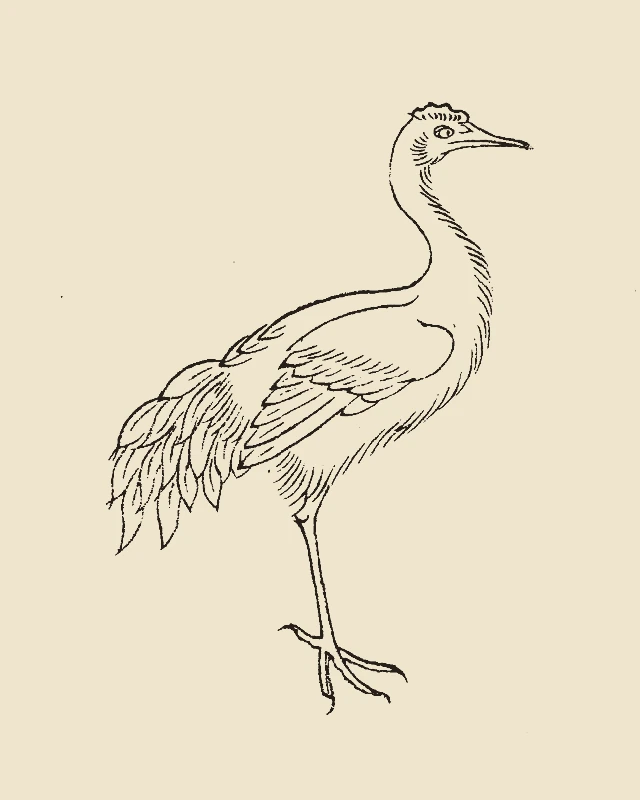
Woodblock print from Gujin Tushu Jicheng showing the human-faced rooster Fuxi standing on mountain crags, inscribed 'Fuxi Tu'人面Human face生有人面人面Human face生有人面雄雞Rooster body雄鸡羽躯雄雞Rooster body雄鸡羽躯翎羽Sweeping tail plumes高耸尾翎翎羽Sweeping tail plumes高耸尾翎利足Spurred legs带距双足利足Spurred legs带距双足
有鳥焉,其名曰鳧徯

There is a bird here; its name is Fuxi.

山海經·西山經
鳧徯圖, Gujin Tushu Jicheng 古今圖書集成, Qin Chong Dian (Section on Birds and Animals), woodblock print, 1726清·陈梦雷等编《古今图书集成·禽虫典》“鳧徯图”,雍正四年(1726)铜活字印本 · Public domain公有领域

Highlighted words: anatomy part · feature · form type — tap to jump标色词:形态部位 · 特征 · 形态类别,点击可跳转

The texts原文

Original Text & Translation原文与译文

山海經·西山經 · 山海經·西山經 · Wikisource

鹿臺之山,有鳥焉,其狀如雄雞而人面,名曰鳧徯,其鳴自叫也,見則有兵。
There is a bird here shaped like a rooster with a human face, named Fuxi; its cry is its own name, and when it appears there is warfare.

山海經·西山經 · 山海經·西山經 · Wikisource

鹿臺之山,有鳥焉,其狀如雄雞而人面,名曰鳧徯,其鳴自叫也,見則有兵。
There is a bird here shaped like a rooster with a human face, named Fuxi; its cry is its own name, and when it appears there is warfare.

Comparing the Books典籍对比

The Classic of the Western Mountains describes the Fuxi as a human-faced rooster on Mount Lutai whose self-calling crow sounds the alarm of incoming military invasion.
The story来历与故事

A grim herald of military conflict in the western skies: possessing the plumed body and comb of a proud rooster fused with an unblinking human face. Screeching its own harsh title across the valleys of Mount Lutai, its appearance signals the clash of bronze blades and widespread war.

The Human-Faced Rooster of Mount Lutai鹿台之山与鸣自叫之鸟

In the Classic of the Western Mountains, the Shan Hai Jing describes Mount Lutai《山海经·西山经》记载,又西二百里曰鹿台之山,其上多白玉,其下多银,兽多旄牛、羬

In the Classic of the Western Mountains, the Shan Hai Jing describes Mount Lutai, an imposing peak rich in white jade above and silver below. Amidst the roaming herds of yak and wild sheep nests the Fuxi, an avian that unites the familiar frame of a rooster with an articulate human face.

The Fuxi's call is distinctive: 'its cry calls its own name' ('qi ming zi jiao ye'). Whenever this piercing, human-inflected crow echoes over mountain passes, ancient rulers understood that diplomacy had failed: 'when it is seen, there is war' ('jian ze you bing'). Neighboring states would mobilize armies and border garrisons would be overrun.

Avian Omens and War Portents in Classical Lore从人面鸟身看古代兵戈预警

The synthesis of human-faced birds was a favored visual motif in early Chinese m在华夏上古神怪意象中,人面鸟身具有沟通天地鬼神的高深神性。与精卫衔木的悲壮誓愿不同,

The synthesis of human-faced birds was a favored visual motif in early Chinese mythology, frequently linked to cosmic authority and boundary crossings. While birds like the Jingwei represented tragic persistence, the Fuxi was strictly an instrument of martial destiny.

In subsequent dynastic compilations such as the Taiping Yulan and Gujin Tushu Jicheng, the Fuxi was depicted with somber majesty, reminding readers of the devastating human costs of imperial ambition.

Record档案

Record Card档案卡

TypeOmen Avian (human-faced rooster of war)
Also known asHuman-Faced Rooster; Rooster of Battles
Earliest sourceShan Hai Jing 山海經 (Classic of the Western Mountains)
OmenSightings directly portend armed invasion, military drafts, and warfare
HabitatDwells upon Mount Lutai amidst white jade and silver veins
Earliest source山海經·西山經
Source books山海經·西山經
Image sourceChen Menglei 陳夢雷 (ed.) · Wikimedia Commons
LicensePublic domain

Frequently Asked Questions

What is the Fuxi bird in Chinese mythology?

The Fuxi is a mythical rooster-like bird from the Shan Hai Jing with a human face. Its cry calls its own name, and its sighting portends impending war.

Where does the Fuxi bird live?

According to the Shan Hai Jing, the Fuxi lives on Mount Lutai, a mountain rich in white jade and silver.

Why does its sighting mean war?

In ancient Chinese omen lore, strange chimeric creatures with piercing cries were interpreted as cosmic warnings sent to caution rulers against hubris and conflict.