Zhūjiān

諸犍Zhujian

The one-eyed leopard-like beast of Mount Danzhang in the Shan Hai Jing: with a human face and ox ears, it bites its tail while walking.《山海经》记载单张山异兽诸犍:状如豹而长尾,人首牛耳而一目,善吒,行则衔其尾。

Body身形

Like a leopard通体生有钱斑

其狀如豹

Head头首

Human face, ox ears面容如人长耳

人首而牛耳

Eyes眼目

Single eye on face正中独具单眸

一目

Tail长尾

Bites tail when walking步履口含长梢

行則銜其尾

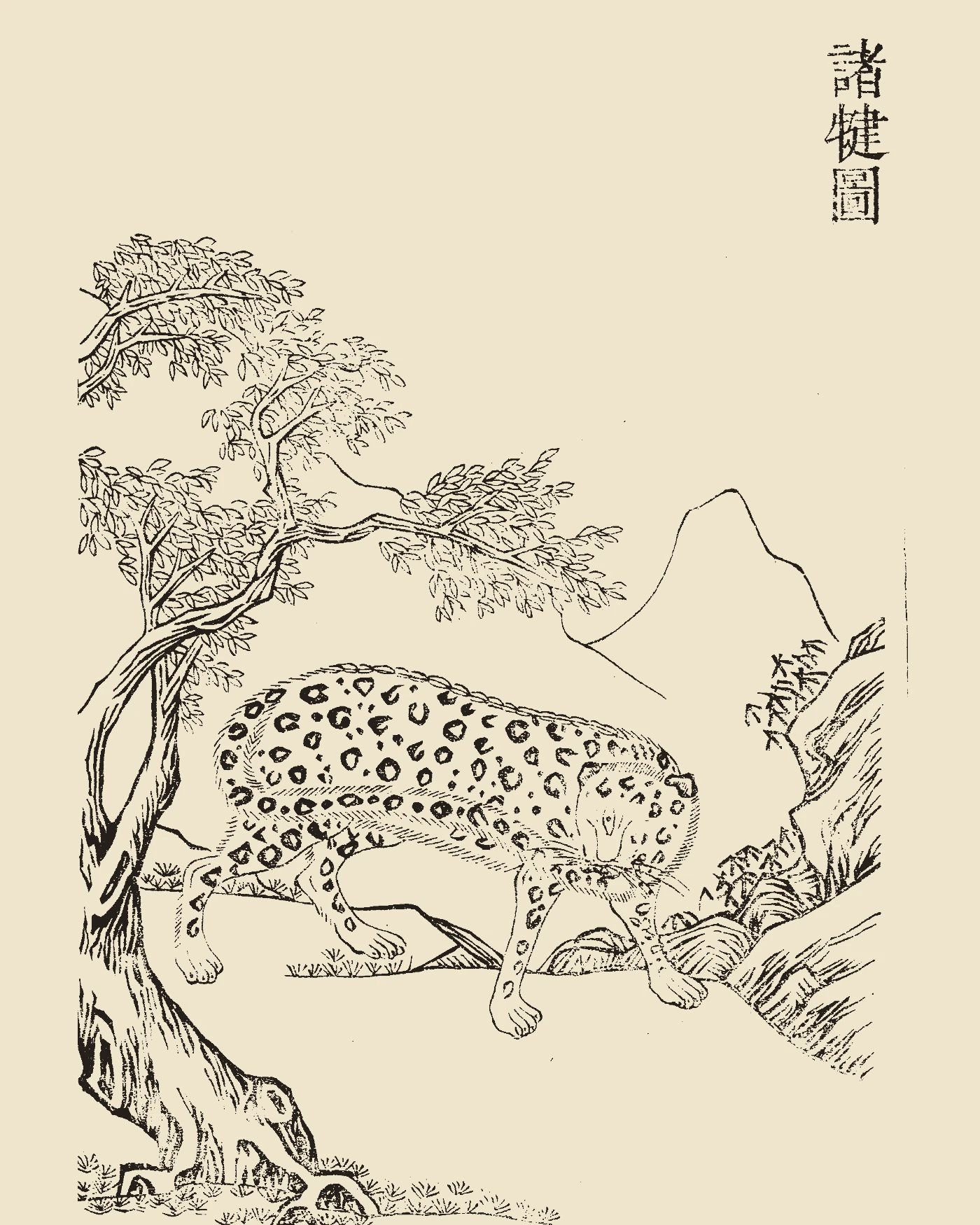
Woodblock print from Gujin Tushu Jicheng showing Zhujian, a one-eyed leopard-like beast holding its tail in its mouth人首而牛耳Human face and ox ears人面牛耳人首而牛耳Human face and ox ears人面牛耳其狀如豹Spotted leopard body如豹斑纹其狀如豹Spotted leopard body如豹斑纹行則銜其尾Tail clamped in jaws口衔其尾行則銜其尾Tail clamped in jaws口衔其尾長尾Long coiling tail盘曲长尾長尾Long coiling tail盘曲长尾
有獸焉,其名曰諸犍

There is a beast here; its name is Zhujian.

山海經·北山經
Zhujian Tu 諸犍圖, the one-eyed leopard-bodied beast that holds its tail in its mouth. Gujin Tushu Jicheng 古今圖書集成, Animal Kingdom, juan 264, woodblock print, 1726清·陈梦雷等编《古今图书集成·禽虫典》卷二百六十四“诸犍图”,雍正四年(1726)铜活字印本 · Public domain公有领域

Highlighted words: anatomy part · feature · form type — tap to jump标色词:形态部位 · 特征 · 形态类别,点击可跳转

The texts原文

Original Text & Translation原文与译文

山海經·北山經 · Shan Hai Jing · Wikisource

有獸焉,其狀如豹而長尾,人首而牛耳,一目,名曰諸犍,善吒,行則銜其尾。居則蟠其尾。
There is a beast here whose form resembles a leopard with a long tail, a human face and ox ears, and a single eye. Its name is Zhujian; it is given to loud scolding. When walking it holds its tail in its mouth; when resting it coils its tail.

Comparing the Books典籍对比

The Shan Hai Jing depicts Zhujian as an extraordinary one-eyed chimeric feline of Mount Danzhang known for its habitual tail-biting gait and shouting vocalizations.
The story来历与故事

The one-eyed leopard-like beast of Mount Danzhang in the Shan Hai Jing: bearing a human face and ox ears, it bites its tail while walking.

The Beast of Mount Danzhang单张异兽:其名曰诸犍

Zhujian is a one-eyed chimeric beast dwelling on Mount Danzhang.《北山经》记载单张之山其上无草木,其中有兽名曰诸犍。

In the Classic of the Northern Mountains, Zhujian roams Mount Danzhang, one hundred and eighty li north of Mount Danxun.

The mountain is barren of trees and grasses, home to strange birds and this tail-biting feline beast.

Leopard Form, Single Eye, and Tail Biting人面牛耳:行衔其尾

It has a human face, bites its tail, and roars loudly.经文记其状如豹,人首牛耳一目,善吒,行则衔其尾。

The Shan Hai Jing describes Zhujian as shaped like a leopard with a long tail, a human face with ox ears, and a single eye centered on its brow.

It is known for explosive shouting calls ('shan zha'); when traveling it holds its tail in its mouth, and when resting it coils its tail beneath its body.

The Gujin Tushu Jicheng Woodblock Print清代图谱:口衔长尾

Woodblock prints illustrate it biting its tail while pacing across cliffs.《古今图书集成》画其为一头通体钱斑、俯首衔尾大步前行的异兽。

The 1726 imperial encyclopedia Gujin Tushu Jicheng depicts Zhujian pacing along a cliff with its long tail firmly clamped in its jaws.

The woodblock print illustrates its rosette-patterned pelt, bovine ears, and title cartouche reading Zhujian Tu in the upper right.

Record档案

Record Card档案卡

TypeFierce Beast (one-eyed leopard with human face of Mount Danzhang)
Also known asZhūjiān 諸犍; Zhujian Beast (諸犍之獸)
HabitatMount Danzhang (單張之山) in the Northern Mountains, devoid of trees and vegetation
BehaviorHolds its tail in its mouth when walking, coils it when resting (行則銜其尾,居則蟠其尾)
Earliest source山海經·北山經
Source books山海經·北山經
Image sourceChen Menglei 陳夢雷 (ed.) · Wikimedia Commons
LicensePublic domain

Frequently Asked Questions

What does Zhujian look like in the Shan Hai Jing?

The classic describes it as a leopard-like beast with a long tail, human face, ox ears, and a single eye ('shaped like a leopard with a long tail, human face and ox ears, one eye').

Why does Zhujian hold its tail in its mouth?

The Shan Hai Jing observes that when walking it carries its tail in its jaws ('when walking it holds its tail in its mouth'), perhaps to prevent its extraordinary length from dragging.

What is meant by Zhujian being 'shan zha' (善吒)?

Ancient commentators explain 'zha' as explosive shouting or loud vocal scolding, reflecting a fearsome bellow echoing through northern crags.