Féiyí

肥遺Feiyi

The two-bodied serpent of Mount Hunxi in the Shan Hai Jing: with one head and two bodies, its appearance brings severe drought across the realm.《山海经》记载浑夕山异蛇肥遗:一首而分化两身,见则其国大旱。

Head头首

One serpent head独生灵蛇面额

一首

Body身形

Two snake bodies分化双条蛇干

兩身

Peril灾异

Causes severe drought现世赤地千里

見則其國大旱

Kind类别

Two-bodied serpent奇形分体神虺

有蛇一首兩身

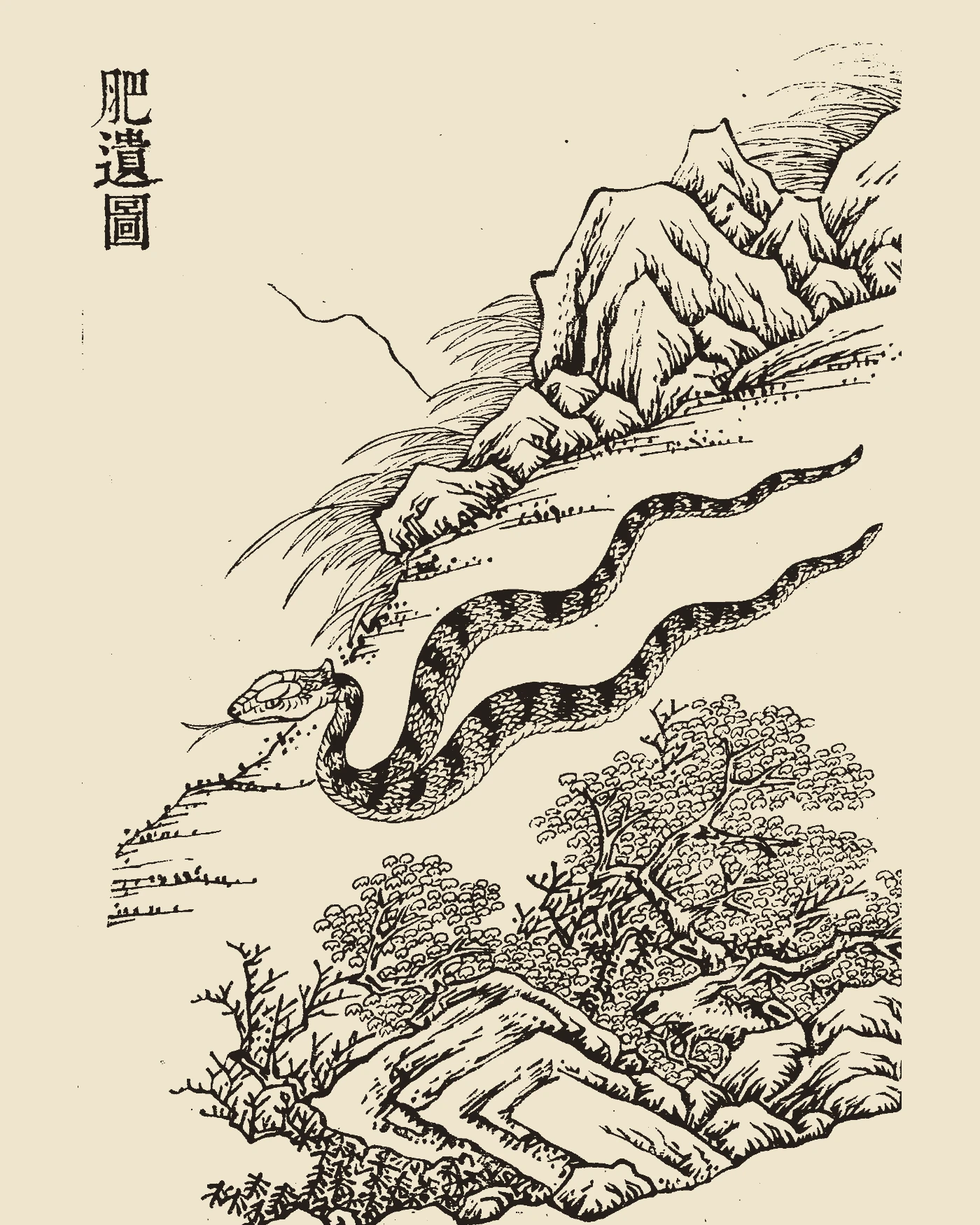
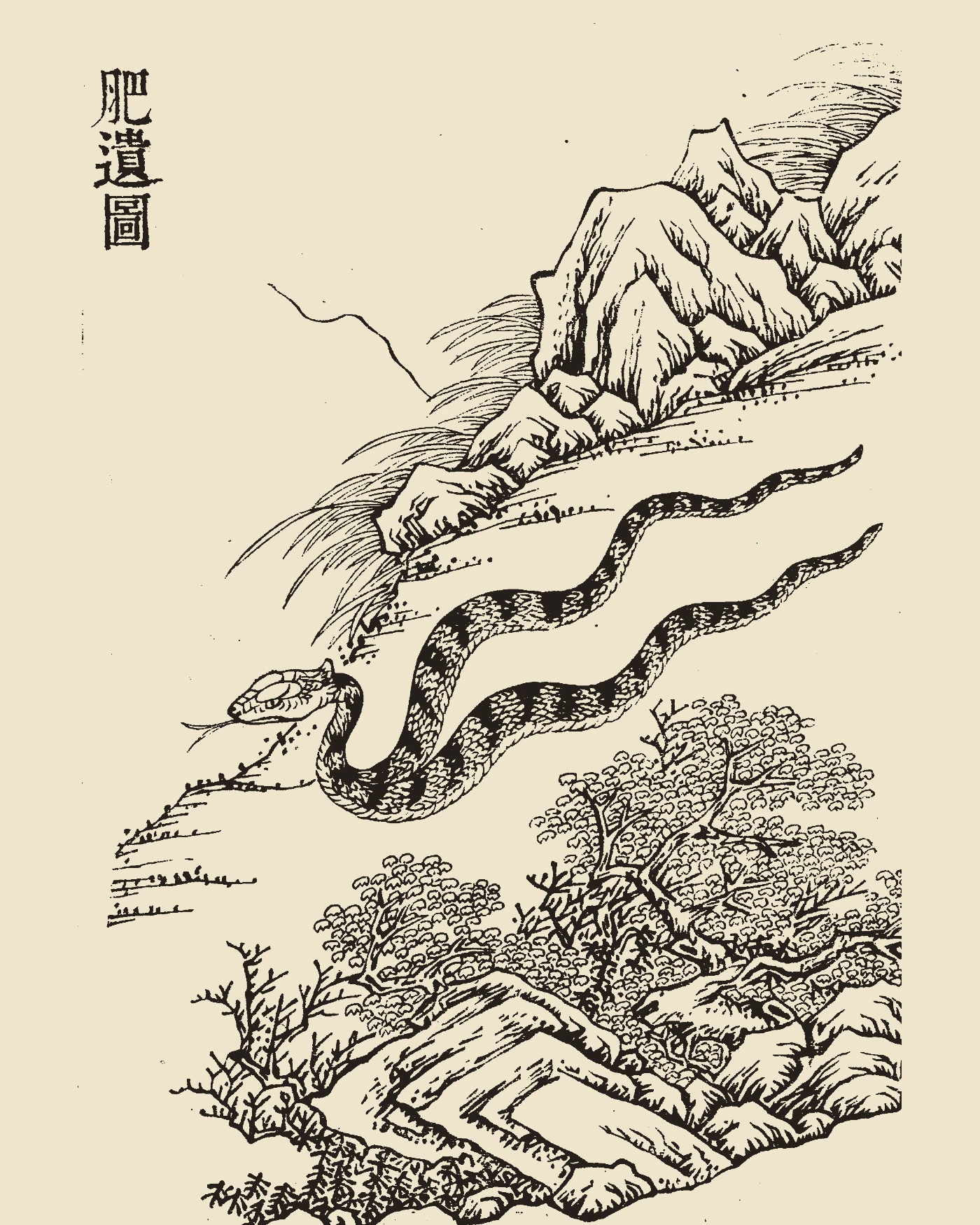
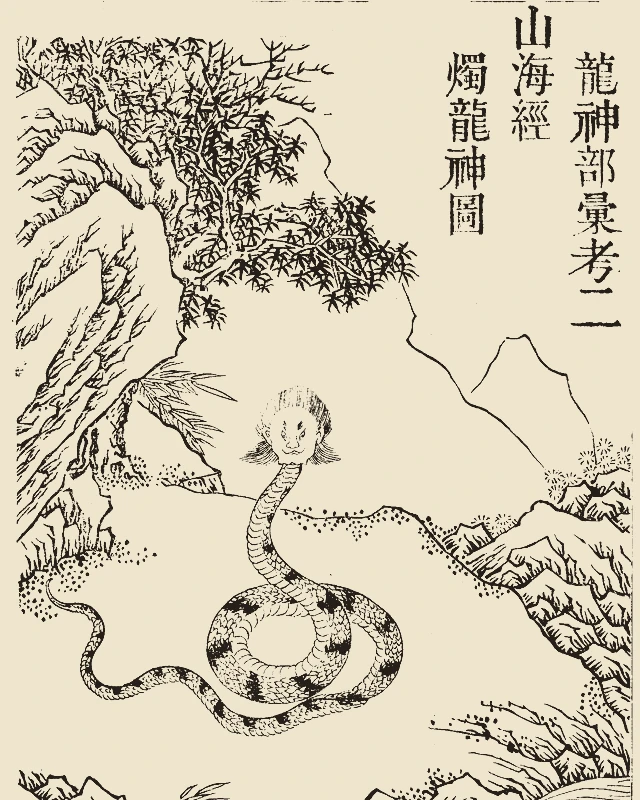
Woodblock print from Gujin Tushu Jicheng showing Feiyi, a serpent with one head and two bodies slithering on a rocky slope一首Single serpent head一首灵蛇一首Single serpent head一首灵蛇兩身Upper twin body两身并行兩身Upper twin body两身并行兩身Lower twin body并躯曲折兩身Lower twin body并躯曲折兩身Twin snake tails并尾蜿蜒兩身Twin snake tails并尾蜿蜒
名曰肥遺

Its name is Feiyi.

山海經·北山經
Feiyi Tu 肥遺圖, the two-bodied drought omen serpent. Gujin Tushu Jicheng 古今圖書集成, Animal Kingdom, juan 506, woodblock print, 1726清·陈梦雷等编《古今图书集成·禽虫典》卷五百零六“肥遗图”,雍正四年(1726)铜活字印本 · Public domain公有领域

Highlighted words: anatomy part · feature · form type — tap to jump标色词:形态部位 · 特征 · 形态类别,点击可跳转

The texts原文

Original Text & Translation原文与译文

山海經·北山經 · Shan Hai Jing · Wikisource

有蛇一首兩身,名曰肥遺,見則其國大旱。
There is a serpent with one head and two bodies, named Feiyi; when it is seen, there will be a great drought in that state.

Comparing the Books典籍对比

The Shan Hai Jing documents two creatures named Feiyi: a four-winged bird on Mount Taihua and this famous one-headed two-bodied drought snake on Mount Hunxi.
The story来历与故事

The two-bodied drought serpent of Mount Hunxi in the Shan Hai Jing: bearing one head and two bodies, its sighting heralds severe arid drought.

The Serpent of Mount Hunxi浑夕灵蛇:其名曰肥遗

Feiyi is a two-bodied serpent dwelling on Mount Hunxi.《北山经》记载浑夕之山无草木多铜玉,其中有蛇名曰肥遗。

In the Classic of the Northern Mountains, Feiyi inhabits Mount Hunxi, one hundred and eighty li north of Mount Zhuhuai.

The mountain is barren of vegetation yet rich in copper and jade, where the Xiao River flows northwest into the sea.

One Head, Twin Bodies, and Drought Omen一首两身:见则大旱

It has one head, two bodies, and portends severe drought.经文记其一首两身,见则其国大旱。

The Shan Hai Jing describes Feiyi as a unique serpent bearing a single head that divides into two independent slithering bodies.

Ancient chronicles regarded its appearance as a dread omen of prolonged drought ('jian ze qi guo da han') capable of scorching fields.

The Gujin Tushu Jicheng Woodblock Print清代图谱:两身异蛇

Woodblock prints illustrate its two banded bodies slithering in parallel.《古今图书集成》画其为一头一首两身、并躯滑行于山崖之异蛇。

The 1726 imperial encyclopedia Gujin Tushu Jicheng depicts Feiyi descending along a mountain slope with its twin scaly bodies parallel.

The woodblock print illustrates its broad viper head, banded diamond scales, and title cartouche reading Feiyi Tu in the upper left.

Record档案

Record Card档案卡

TypeCalamitous Serpent (one-headed two-bodied drought serpent of Mount Hunxi)
Also known asFéiyí 肥遺; Feiyi Serpent (肥遺之蛇)
HabitatMount Hunxi (渾夕之山) in the Northern Mountains, devoid of flora and rich in copper and jade
OmenSevere universal drought across the entire realm (見則其國大旱)
Earliest source山海經·北山經
Source books山海經·北山經
Image sourceChen Menglei 陳夢雷 (ed.) · Wikimedia Commons
LicensePublic domain

Frequently Asked Questions

What does Feiyi look like in the Shan Hai Jing?

The classic describes Feiyi as a serpent possessing one head and two bodies ('a serpent with one head and two bodies').

What omen is associated with the sighting of Feiyi?

Ancient texts state that whenever Feiyi is seen, the surrounding country will suffer severe drought ('when seen, its country suffers great drought').

Are there other creatures named Feiyi in ancient Chinese mythology?

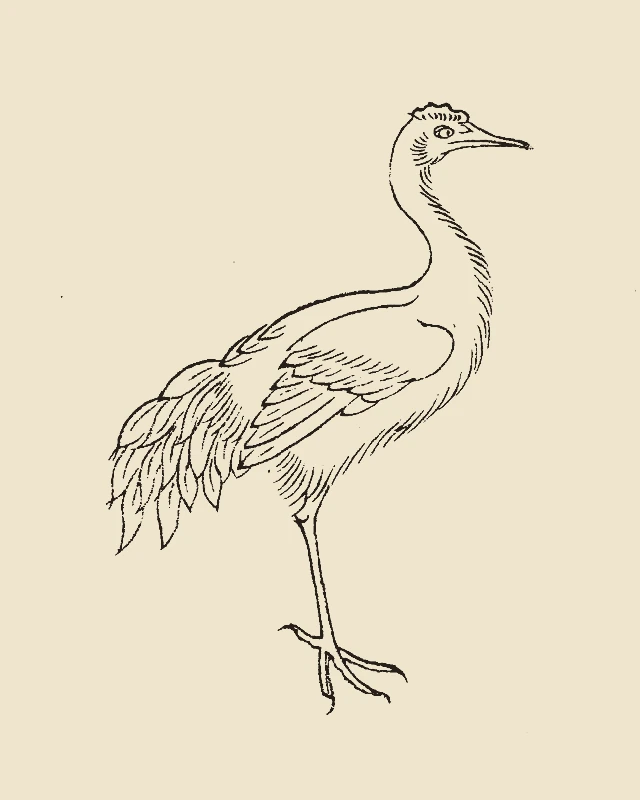
Yes: the Classic of the Western Mountains records a six-legged, four-winged bird also called Feiyi on Mount Taihua that likewise causes drought.